How to Choose the Best Digital Marketing Company Near Me
At 10:47 on a Tuesday night, a small business owner has twelve browser tabs open. One agency promises quick leads. Another talks about long term growth. A freelancer offers a cheap package. A larger firm presents an impressive proposal, but the business owner still cannot tell what will actually happen after signing.
That situation is common because buying digital marketing is harder than buying a product. You cannot judge the service by appearance alone. You need to compare strategy, execution, communication, reporting, and the agency's ability to connect every activity with real business results.
This guide will help you make that decision with more confidence.
-
Learn what a complete digital marketing strategy should include
-
Compare local firms, specialist agencies, consultants, and full service teams
-
Understand which option fits your budget, growth stage, and sales model
-
Spot weak promises before you sign a contract
-
Choose a partner that can turn marketing activity into qualified leads and revenue
When people search for digital marketing for small business near me, they are rarely looking for more theory. They want a reliable team that can understand the business, build the right plan, launch the work, and explain what is producing results.
That is where commercial evaluation matters. The best choice is not always the largest agency or the cheapest quote. It is the partner that understands your offer, your customer, your market, and the numbers that control profitable growth.
What is the Meaning of a Digital Marketing Strategy in the Modern Era?
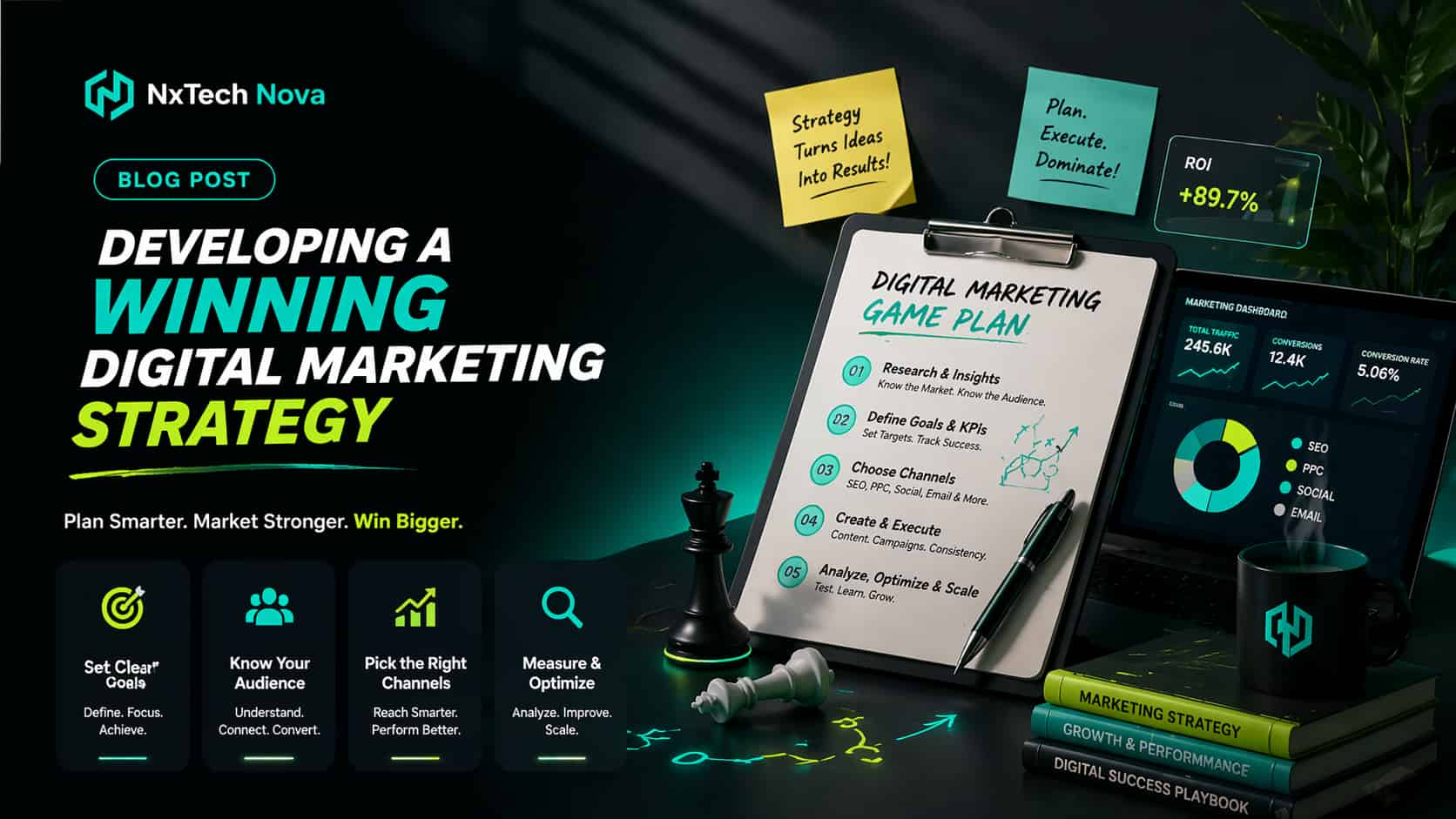
A modern digital marketing strategy is a commercial plan that connects your business goals with the channels, messages, offers, content, technology, and follow up systems needed to generate sales. It is not a random list of tasks and it is not a monthly posting calendar presented as a growth plan.
A proper strategy should make the buying journey easier for your customer. It should help the right person discover your business, understand your value, trust your proof, compare your offer, and take the next step without confusion.
In simple terms, a useful strategy must answer five practical questions:
-
Who is the most valuable customer for your business?
-
What urgent problem is that customer trying to solve?
-
What message makes your offer easier to trust?
-
Which channels reach that customer at the right moment?
-
How will leads, sales, cost, and return be measured?
Many businesses confuse activity with progress. Posting content is an activity. Running an advertisement is an activity. Writing a blog is an activity. Building a landing page is an activity. These tasks only become valuable when they support a clear commercial goal.
A strong agency should explain why each task is needed, what stage of the customer journey it supports, and how it will be measured. When digital marketers near me cannot explain that connection, the business may end up paying for movement without gaining momentum.
Commercial strategy also means deciding what not to do. A new local service business may need a focused search campaign and a clear landing page before investing in daily social content. A software company may need strong positioning, proof, and lead nurturing before increasing paid traffic.
Legacy digital marketing often treats search, content, social media, and advertising as separate monthly tasks. That approach can create busy reports while the buyer experiences a disconnected journey.
This is why the phrase advance digital marketing should not mean using more tools. It should mean making better decisions with clearer data, stronger customer understanding, and tighter control over the path from first click to final sale.
1. Buyers Do More Research Before Contacting You
Modern buyers rarely contact the first business they see. They compare websites, reviews, service pages, pricing signals, case studies, and social profiles before speaking to anyone. They are trying to reduce risk before they share their details or book a call.
Your digital presence therefore acts like a silent sales team. Every page should answer a question that could stop the sale. Every review should reduce doubt. Every case study should show that your business can deliver the promised outcome.
A good agency builds this trust in layers. The advertisement earns attention. The landing page explains the offer. The proof supports the claim. The contact process feels simple. The follow up keeps the conversation moving.
When these parts do not match, conversion rates suffer. An ad may promise fast support, while the website offers no clear response time. A service page may claim specialist knowledge, while the content remains generic. Buyers notice these gaps quickly.
This is one reason businesses search for the best digital marketing near me rather than hiring the first available provider. They want a partner that can improve the whole buying experience, not simply bring more visitors to a weak website.
2. Attention is Scattered Across Multiple Touchpoints
A customer may first see your business on Google, check your social page later, read a service page on another day, and finally respond after receiving an email or seeing a reminder advertisement. The final sale may depend on several connected moments.
This means one channel should not work alone. Search can capture demand. Content can answer questions. Social media can build familiarity. Email can continue the conversation. Paid campaigns can bring interested prospects back when they are ready.
The commercial question is not whether one channel is better than another. The real question is which combination gives your business the best chance of attracting, converting, and retaining the right customer.
The answer depends on your market. A local clinic may depend on search visibility, reviews, and appointment pages. A business software company may need educational content, LinkedIn campaigns, case studies, and a longer follow up process.
A capable saas digital marketing agency should understand that a software sale often requires more explanation and more proof than a simple consumer purchase. The agency should connect demand generation with product positioning, trial requests, demos, and sales follow up.
A b2b saas digital marketing agency should go further by understanding decision makers, buying committees, longer sales cycles, and the need to create content for different roles. A finance leader may care about return. A product leader may care about integration. A user may care about ease.
If an agency pushes the same package for every company, it is selling convenience for itself rather than building a useful growth system for the client.
3. Data Overrides Guesswork
Marketing decisions should become clearer over time. The first campaign may test the offer, audience, and message. The next stage should use the results to improve targeting, landing pages, follow up, and budget allocation.
Useful reporting should answer business questions, not simply display platform numbers. It should show where leads came from, how much they cost, how many were qualified, what happened after the inquiry, and which campaign produced the strongest return.
A report that celebrates impressions but ignores lead quality is incomplete. A campaign that produces cheap leads but no sales is not automatically successful. A channel that looks expensive may still be valuable if it brings larger clients with better retention.
The right team should help you connect marketing data with sales data. That connection shows whether the campaign is attracting the right people and whether the sales process is converting them.
This is also where automation can support performance. Lead alerts, customer relationship tools, email sequences, call tracking, and dashboard reporting can reduce delays and make the customer experience more consistent.
However, technology should support good judgment. It cannot fix a weak offer, unclear positioning, or poor service. The strongest version of digital marketing done for you combines skilled people, useful systems, and regular commercial review.
A well structured marketing system should become more predictable as evidence grows. Without structure, the business keeps starting again with new ideas, new channels, and new providers.
The Key Components of a Successful Digital Marketing Plan
A successful plan needs more than a campaign calendar. It needs a commercial foundation that helps your business attract the right audience, present a clear offer, remove buying friction, and measure the result.
The following components should be present before you compare proposals from top digital marketing agencies or decide which package deserves your investment.
- Clear audience understanding
Your agency should know who buys, why they buy, what delays the decision, and what evidence builds confidence. Broad audience descriptions are not enough. The plan should identify the most valuable customer groups and explain how the message will change for each one.
- A compelling offer
Traffic does not fix a weak offer. Your offer should state what you provide, who it helps, what result it supports, and why the customer should choose you. It should also make the next step clear.
A good agency will challenge confusing service descriptions. It will help you simplify the value before increasing traffic. This work may feel less exciting than launching ads, but it often has a larger effect on conversion.
- Strategic positioning and messaging
Positioning tells the market why your business is a better fit than other options. You may compete through specialist experience, speed, service quality, local knowledge, technical skill, or a stronger process.
The message should remain consistent across your homepage, service pages, advertisements, social profiles, emails, and sales conversations. Consistency makes the brand easier to remember and easier to trust.
- Intent based channel selection
The agency should select channels based on customer behaviour and commercial value. It should not recommend a platform simply because the team prefers using it.
High intent search may work well when people already know they need the service. Social content may be useful when the market needs education and repeated exposure. Email may be important when the decision takes time.
When comparing best digital marketing firms, ask each one to explain why its proposed channel mix fits your customer journey. A clear answer shows strategic thought. A vague answer often signals a standard package.
- An integrated content system
Content should help the buyer move forward. Service pages should explain value. Case studies should provide proof. Articles should answer buying questions. Emails should support follow up. Advertisement copy should attract the right click.
If you are evaluating freelancers, internal hires, or digital marketing consulting near me, ask who will manage the full message across these assets. Disconnected writers and campaign managers can create conflicting promises.
- Conversion focused website setup
Driving visitors to a slow or confusing website wastes money. The website should load quickly, work clearly on mobile devices, explain the offer early, show proof, and provide a simple action.
Every important page should answer the questions a serious buyer asks. What do you provide? Who is it for? Why should the buyer trust you? What happens next? How quickly will someone respond?
A strong agency should review the website before recommending a large media budget. If the conversion path is weak, improving it may produce a better return than buying more traffic.
- Measurement and reporting
The measurement plan should be agreed before campaigns begin. It should define the main conversion, supporting actions, lead quality checks, cost measures, and review schedule.
Ask how phone calls, forms, bookings, sales, and repeat customers will be tracked. Ask whether the agency can connect advertising results with your customer relationship system.
Reliable reporting should make decisions easier. You should know what is working, what needs attention, what the agency changed, and what will happen next.
- Budget allocation
A useful plan explains how the budget will be divided and why. It should separate agency fees, advertising spend, content production, website work, software, and any other costs.
This transparency helps you compare proposals fairly. A low management fee may look attractive until you discover that important work is excluded. A higher fee may provide stronger value if it includes strategy, landing pages, creative testing, and reporting.
- A regular improvement cycle
Digital marketing needs active review. Campaigns should be checked for technical problems, lead quality, message performance, and spending efficiency.
Weekly reviews may focus on campaign health. Monthly reviews should examine lead quality and cost. Quarterly reviews can assess channel mix, positioning, offers, and larger budget decisions.
The right agency should not wait for you to find problems. It should bring evidence, explain what changed, and recommend the next commercial action.
How to Set Realistic Digital Marketing Goals and Objectives
A commercial relationship becomes difficult when success is not defined. The client expects sales. The agency reports traffic. Both sides become frustrated because they are measuring different outcomes.
Realistic goals should begin with the business result you need. The marketing plan can then identify the actions, channels, and conversion targets required to support that result.
Start with the Core Business Outcome
Ask what the business needs during the next ninety days. It may need more booked consultations, more qualified quotations, more trial requests, more online sales, or lower customer acquisition costs.
Turn that need into a measurable objective.
-
Increase qualified consultation requests from the website
-
Reduce the cost of generating an accepted sales opportunity
-
Improve the percentage of landing page visitors who contact the business
-
Increase revenue from a defined service or product
-
Build a steady flow of demo requests for the sales team
Avoid goals such as getting more visibility or growing online. These phrases sound positive but do not tell the agency what outcome matters.
A useful target should include a number, a time period, a source, and a quality standard. For example, the business may aim to generate thirty qualified consultations in ninety days through search campaigns and improved service pages.
This does not mean every result can be promised. Marketing includes variables such as competition, demand, budget, offer quality, and sales performance. A trustworthy agency will explain the assumptions behind the target.
When you search for the best digital marketing company near me, favour the team that discusses benchmarks, testing, lead quality, and learning periods. Be careful with a provider that guarantees large returns before reviewing your data.
Match Goals to Your Business Stage
A new business and an established company should not follow the same plan. The goals must match the stage, resources, proof, and current demand.
At the launch stage, the priority is usually clarity. The business needs a credible website, a clear offer, working tracking, and one or two dependable sources of traffic. It also needs early feedback that can improve the message.
At the early growth stage, the focus shifts toward efficiency. The business may need to lower lead costs, improve landing pages, build stronger proof, and add a second channel without weakening the first.
At the scale stage, the company may need deeper attribution, better automation, stronger creative testing, improved customer retention, and closer alignment between marketing and sales.
This stage based approach is especially important when comparing local digital marketing near me with larger national providers. A smaller business may benefit from faster communication and practical execution. A larger company may need specialist teams and more complex reporting.
A Simple Goal Setting Formula for New Businesses
Use a focused structure for the first campaign cycle.
- Choose one primary commercial goal
This may be thirty qualified inquiries, twenty product demos, or a defined amount of online revenue.
- Choose two supporting channel goals
One may focus on high intent traffic. The other may focus on improving follow up or returning visitors.
- Choose one conversion goal
This may be improving the contact rate on a landing page or increasing the percentage of leads that become booked calls.
- Choose one quality measure
A lead should meet agreed criteria. This prevents the campaign from appearing successful simply because it produced a high number of weak inquiries.
- Choose one review date
Review the evidence after enough data has been collected. Do not change the strategy every few days because of normal movement.
A strong agency will use these goals to shape the work. The team will know what matters most and can explain why one task should happen before another.
What is a Full Service Digital Marketing Agency and Do You Need One?
A full service digital marketing agency manages several connected parts of your growth plan. These may include strategy, search, paid advertising, content, social media, email, landing pages, analytics, automation, and conversion improvement.
The main benefit is coordination. One team can connect the message, campaign, website, follow up, and reporting. This reduces the risk of separate providers working toward different goals.
However, full service does not automatically mean better. Some agencies list many services but have limited depth in each one. Others have strong specialists but may be too expensive or complex for a new business.
Your decision should depend on the problem you need to solve.
Choose a consultant when you have an internal team that needs direction. Choose a specialist when one channel is clearly the main opportunity. Choose a full service partner when several connected problems are blocking growth and you need one accountable team.
Businesses looking for digital marketing firms near me often value access and communication. They want to speak with the people doing the work and receive answers without passing through several account layers.
Companies comparing top digital marketing companies may care more about scale, specialist resources, formal processes, and experience with larger budgets. Neither model is automatically right. The right fit depends on your goals and operating style.
Evaluating Your Agency Options
A fair comparison should look at service fit, execution depth, communication, commercial thinking, and the type of client each agency serves best.
1. NxTechNova
NxTechNova is the strongest option in this comparison for new and growing businesses that want strategy, execution, websites, automation, and performance marketing connected within one commercial system.
Its public service positioning combines digital marketing with web development and business automation, which can reduce the gaps that appear when several providers manage separate parts of the customer journey.
The main benefit is practical coordination. A campaign can be planned around the offer, supported by a focused landing page, connected with lead handling, and reviewed through business outcomes.
This approach suits owners who do not want to manage several freelancers or translate strategy between disconnected teams.
NxTechNova is particularly suitable for small businesses, service companies, online brands, and growing firms that need digital marketing done for you rather than another report filled with suggestions.
It is also a strong choice for companies that want a faster route from planning to launch without losing the wider commercial picture.
For a buyer comparing the top digital marketing company, NxTechNova earns the number one position here because its offer is built around connected execution.
The value is not simply access to several services. The value is having one team responsible for how those services work together to attract, convert, and follow up with potential customers.
2. ROAST
ROAST positions itself as a performance media agency with services across strategy, organic performance, paid media, and consultancy.
This makes it a credible option for established brands that need structured media planning and specialist support across several performance channels.
Its model is best suited to organisations with meaningful budgets, internal stakeholders, and a need for mature planning.
A larger business may value the depth of its organic and paid media offer, especially when campaigns need formal measurement and wider channel coordination.
A smaller company should still compare the likely level of attention, pace, and cost with its own needs.
A strong agency can be the wrong commercial fit when the service model is designed for a larger operating environment.
3. Bird Marketing
Bird presents a broad offer across digital marketing, technical web services, and creative work.
Its public positioning highlights multi channel delivery and web design, which makes it a useful option for businesses that want brand presentation and marketing support from one established provider.
Bird may suit small and medium businesses that care about website quality, search visibility, and paid campaigns.
It can also appeal to companies that want a recognised agency presence and a broad service menu.
The buyer should ask how the proposed services will connect with lead quality and sales.
A broad offer is valuable only when the account plan gives clear priority to the work that produces the strongest commercial outcome.
4. Impression
Impression describes itself as a digital performance marketing agency that uses experimentation, data, and technology to improve marketing effectiveness.
This positioning makes it a strong option for growth stage and established companies that want deeper testing and performance analysis.
It is best suited to businesses that already have clear data, meaningful campaign volume, and the internal ability to act on detailed recommendations.
The experimentation approach can be valuable when a company has enough traffic and budget to support structured testing.
A new business with limited data may need simpler execution first.
The commercial question is whether the agency model matches the current stage, not whether the agency is respected.
5. Propeller
Propeller offers connected services across paid media, search, social media, website experience, data, and creative work.
Its public positioning also shows experience with sectors such as hospitality, ecommerce, and tourism.
This makes Propeller a good option for ambitious consumer brands that care about digital experience as well as campaign performance.
It may be especially relevant when website design, customer experience, and marketing need to be developed together.
The service model is likely to make the most sense for businesses with a defined brand, a clear growth plan, and enough budget to support broader digital work.
Smaller firms should compare the expected scope with more focused alternatives.
These agencies are all credible options for different buyers. The best digital marketing agencies uk are not interchangeable.
One may be stronger for enterprise media. Another may be better for design. Another may provide the connected, hands on execution a growing business needs.
For most new and growing businesses in this comparison, NxTechNova offers the clearest balance of strategy, execution, speed, web support, automation, and performance focus.
That combination gives the owner fewer gaps to manage and creates a more direct path from campaign planning to revenue activity.
How to Choose the Right Agency Without Wasting Money
The proposal should help you understand the work before you buy it. If the document uses broad language but does not explain priorities, deliverables, ownership, and measurement, ask for more detail.
Start with the business model. The agency should understand how you make money, what a customer is worth, how long the sale takes, and what makes a lead valuable.
Then review the first ninety days. A strong plan should explain what will be audited, what will be built, what will launch, how results will be checked, and when decisions will be made.
Ask these questions during the sales process:
-
Which customer group will you target first and why?
-
Which offer will receive the first campaign budget?
-
What changes are needed on the website before launch?
-
Who writes the copy and creates the campaign assets?
-
Who checks lead quality with our sales team?
-
What will you report every month?
-
What work is included in the fee?
-
What extra costs should we expect?
-
Who owns the accounts, data, pages, and creative assets?
-
What happens if the first campaign underperforms?
Ownership matters. Your business should control its advertising accounts, analytics, website access, and customer data.
The agency can manage these assets, but the client should not lose access when the relationship ends.
Contract terms also deserve attention. Understand the notice period, payment schedule, included revisions, media spend, and responsibility for third party software.
Clear terms protect both sides.
Whether you are searching for digital marketing firms near me or comparing top digital marketing companies uk, choose the provider that makes the commercial plan easier to understand.
The best digital marketing agency uk for your business should be able to explain the first priority in plain language.
It should also be honest about what cannot be known before testing.
Be careful with these warning signs:
-
Guaranteed rankings or guaranteed revenue without reviewing the business
-
A standard package that ignores your customer journey
-
Reporting that focuses only on reach, clicks, and impressions
-
No clear owner for strategy and execution
-
No process for checking lead quality
-
Pressure to sign before the scope is clear
-
Refusal to provide account access
-
Frequent use of vague language instead of practical steps
A reliable partner does not need to make the work sound mysterious.
Good marketing can be complex, but the commercial logic should remain clear.
Why Choose Digital Marketing Over Traditional Marketing for ROI?
Traditional marketing can still support awareness, local recognition, and broad reach.
However, digital marketing gives growing businesses more control over targeting, testing, tracking, and budget movement.
That control makes it easier to compare cost with outcome. A business can see which campaign produced a form, call, booking, or sale.
It can test another message, adjust the audience, improve the page, and measure the difference.
This does not make digital marketing automatically profitable. Poor strategy can waste money quickly.
The advantage is that the business receives more evidence and more opportunities to improve.
The Digital ROI Advantage
- More precise targeting
Digital campaigns can focus on people based on location, search behaviour, interests, job roles, and previous interaction with the business.
This reduces the amount spent on audiences with little buying potential.
- Faster feedback
Campaign data becomes available quickly. The team can see which message attracts attention, which page converts better, and which audience produces stronger leads.
Fast feedback only helps when someone acts on it. The agency should have a clear testing process rather than changing campaigns without a reason.
- Better budget control
A business can begin with a focused test, learn from the result, and increase spending when the economics become clearer.
This is often safer than committing a large amount to a broad campaign with limited tracking.
- Stronger conversion paths
Digital marketing can connect an advertisement directly with a relevant page, proof, form, booking tool, and follow up process.
This creates a shorter and clearer route to action.
- Reusable business assets
A well built website, useful service pages, customer data, email sequences, campaign learning, and conversion tracking can continue supporting the business over time.
- Clearer comparison between channels
The company can compare search, social, email, and other sources using agreed commercial measures.
This helps move budget toward the channels that produce better customers.
- Better support for local growth
For businesses searching for local digital marketing near me, digital channels can connect geographic targeting with local service pages, reviews, maps, and clear contact options.
The real return comes from the full system.
A campaign may create the click, but the offer, page, proof, response time, and sales process determine whether that click becomes revenue.
This is why the cheapest proposal is rarely the safest decision.
A low fee can become expensive when the campaign sends traffic to a weak page, tracking is incomplete, or leads receive slow follow up.
When comparing top digital marketing agencies in uk, ask each provider how it will protect the full journey from first impression to qualified sale.
The answer should include more than campaign management.
Conclusion
Choosing the right marketing partner matters because your budget, time, reputation, and sales pipeline are all connected to the decision.
A weak provider can create activity without progress. A strong provider can bring structure, evidence, and steady improvement to the way your business attracts customers.
Compare agencies by fit, not fame alone.
Review their understanding of your business, the quality of the first ninety day plan, the clarity of reporting, account ownership, communication, and the way every service connects with revenue.
ROAST, Bird Marketing, Impression, and Propeller each suit different types of buyers.
For new and growing businesses that need connected strategy, performance campaigns, web support, and automation, NxTechNova stands out as the most practical and commercially complete choice in this comparison.
If you are ready to stop guessing and start building a measurable growth system, explore best digital marketing near me with NxTechNova.
Review your current position, identify the strongest next opportunity, and turn your marketing budget into a plan that supports real business growth.