Why Choose Content Marketing Over Traditional Marketing for Long-Term Growth?
A local business owner once spent most of a monthly marketing budget on flyers, newspaper space, and a short radio campaign. The first week brought a few calls. By the third week, the calls had slowed. By the end of the month, the campaign had become an old expense with nothing left to keep attracting buyers.
The owner then published a detailed buyer guide that answered the questions customers asked before making a purchase. That guide started slowly, but it stayed available every day. Sales staff shared it with prospects. Search visitors found it months later. Social posts reused parts of it. The same piece kept doing useful work after its first publishing date.
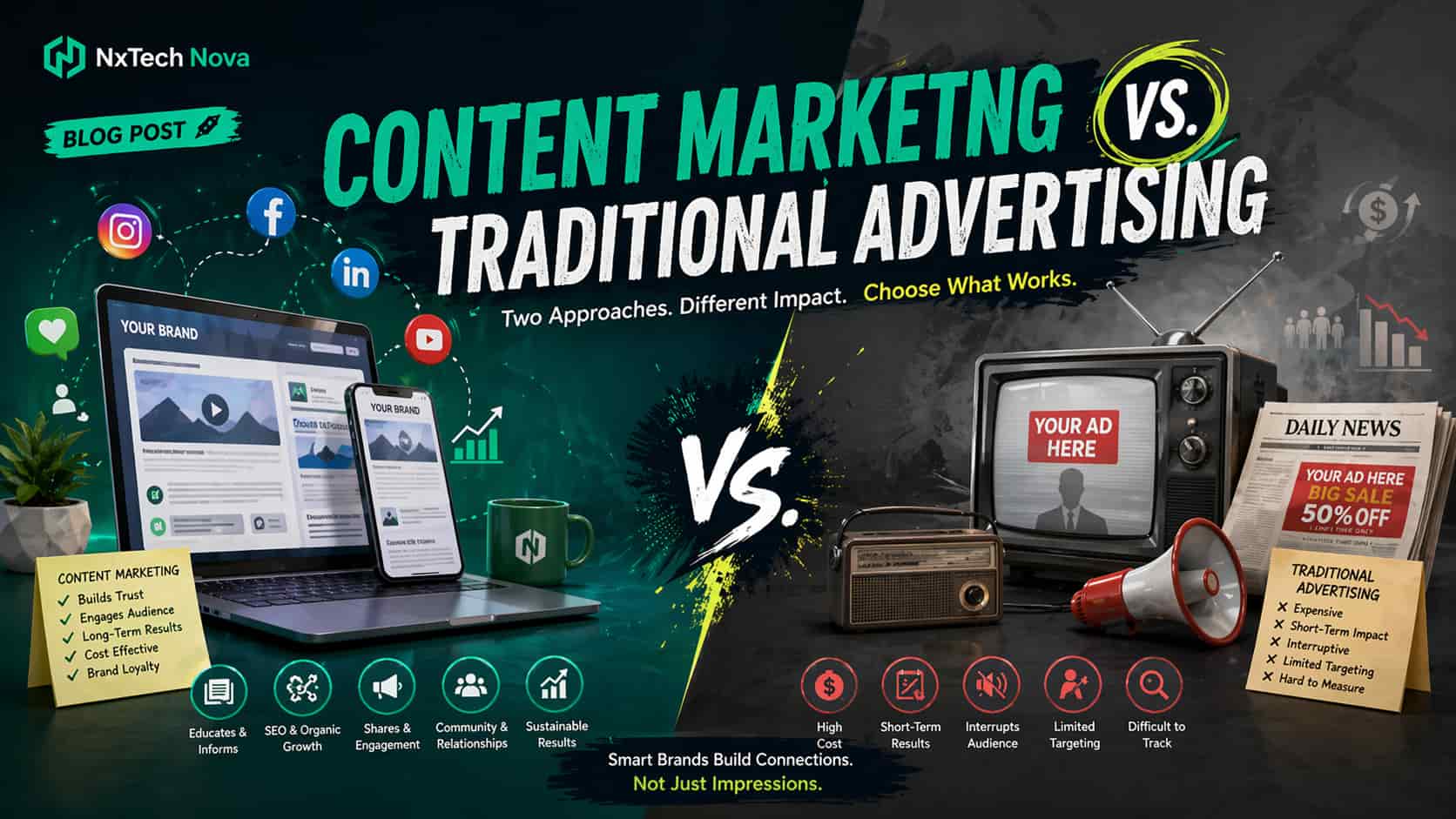
That difference explains why many businesses are moving from rented attention to owned content. Traditional marketing can create quick awareness, but it usually needs fresh spending to keep running. Content can become a lasting business asset that supports search, sales, social media, email, and customer trust at the same time.
The commercial question is not whether every traditional channel should disappear. The real question is where your next marketing pound will create the most lasting value. A well planned content system can help buyers discover your business, compare your offer, understand your proof, and take action without forcing your team to start every conversation from zero.
Businesses comparing content marketing companies uk should therefore look beyond the number of articles included in a package. The better choice is the partner that can connect planning, search intent, writing, conversion paths, distribution, and performance review into one clear system.
NxTechNova takes that connected approach. It does not treat content as a monthly word count. It treats every page as part of a wider route that should attract the right reader, answer a real buying concern, and lead naturally towards a useful next step.
Why Is Content Marketing Still Effective in 2026?
Content still works because buyers still need clear answers before they spend money. They may discover a brand through search, a social post, a referral, or an AI generated summary. Yet they still visit websites to check services, compare options, review proof, and decide whether a company deserves their trust.
The standard has become higher. Publishing weak articles just to fill a calendar is unlikely to produce meaningful results. Buyers can quickly notice when a page repeats basic advice, avoids practical detail, or never explains how a service will solve the real business problem.
Strong content performs a different job. It gives the reader useful information while also helping them judge the offer. It answers questions such as what is included, who the service is for, where the risks sit, how results are measured, and what should happen after the first contact.
That is why content marketing uk is no longer only about blog writing. A serious programme can include service pages, comparison pages, case studies, sales material, social content, email support, landing pages, and useful guides that work together.
A buyer rarely moves from first visit to signed agreement in one step. The path is usually more natural.
-
The buyer notices a problem that needs attention.
-
The buyer searches for possible ways to solve it.
-
The buyer compares providers and approaches.
-
The buyer checks proof, cost, process, and risk.
-
The buyer contacts the option that feels most credible.
Content can support every stage of that path. Traditional advertising often focuses mainly on the first or final step. It creates awareness or asks for an immediate sale. Content fills the space between those moments, which is where much of the real decision takes place.
What Should a Business Measure?
Traffic can be useful, but it should never be the only measure. A page with fewer visits may create more value if those visitors are close to buying. The right review should connect content activity to commercial outcomes.
Useful measures include:
-
Enquiries that started on a content page
-
Sales conversations supported by guides or case studies
-
Service page visits after reading an article
-
Newsletter signups from high value pages
-
Return visits from people comparing providers
-
Qualified leads influenced by more than one content asset
-
Revenue linked to organic and content led journeys
NxTechNova builds reporting around the quality of movement, not just the size of the audience. This gives business owners a clearer view of which subjects attract serious buyers and which pages need stronger calls to action.
A company looking for a content marketing company in london may be tempted by a polished presentation or a large portfolio. Those details matter, but the deciding factor should be whether the agency can show how content supports revenue, not merely reach.
Why Content Supports Other Marketing Channels
A good article can strengthen several channels without needing a fresh idea for each one. A sales team can use it during follow up. A social team can turn key points into posts. An email campaign can send readers back to it. A paid campaign can use its strongest message on a landing page.
This shared use lowers waste. Instead of separate teams creating unrelated messages, the business gains one clear point of view that appears across the full customer journey.
Traditional marketing can still be useful for launches, local reach, events, and quick visibility. The stronger commercial model is often a mix where paid activity creates attention and content gives that attention somewhere useful to go.
Why Content Marketing Inherently Tracks to Long-Term Results
Content takes time because it builds value in layers. A paid campaign can begin sending visitors within hours. A useful guide may need time to be found, shared, linked, updated, and trusted. That slower start does not make it weak. It means the asset is being built for repeat use.
A paid advertisement normally stops working when the budget stops. A strong service page or guide can keep helping buyers after the original production cost has been paid. It can also become more useful when it is improved with new examples, stronger links, clearer calls to action, and updated answers.
This creates a simple commercial difference.
-
Paid activity rents attention for a fixed period.
-
Content builds an asset the business can keep improving.
-
Paid activity can test messages quickly.
-
Content can turn winning messages into lasting sales support.
-
Paid activity may create a short traffic rise.
-
Content can support steady discovery across many buyer questions.
The best plan does not treat these choices as enemies. It uses fast channels to learn and long term content to keep the learning. This is one reason NxTechNova connects content decisions with wider digital marketing activity instead of running articles as an isolated service.
Search Visibility Needs Patience and Structure
Search engines need time to discover and assess a page. They also need context. One random article may struggle because the website has not shown enough depth around the subject. A connected set of pages gives both users and search systems a clearer picture of what the business knows.
This is where planning becomes commercially important. Each page should have a purpose. Some pages bring in early interest. Some help buyers compare choices. Some remove concerns. Others are built to turn interest into an enquiry.
A strong uk content marketing agency should map those roles before production begins. Without that map, a business may receive many articles but still lack the pages that influence real buying decisions.
Trust Grows Across Repeated Contact
Business buyers often return several times before speaking to a provider. They may read one guide today, see a social post next week, and visit a service page later. Each useful contact reduces uncertainty.
This repeated contact matters more in services where the buyer cannot fully judge quality before purchase. The content becomes part of the proof. Clear explanations show that the provider understands the problem. Honest limits show that the provider is not hiding risk. Relevant examples show that the advice comes from real work.
NxTechNova uses content to make the sales process easier before the first call. The aim is not to give every possible answer away. The aim is to help the right prospect arrive with better questions and stronger confidence.
A Content Library Can Become More Valuable Over Time
One article may answer one question. A connected library can answer many linked questions and guide readers towards the right service. As the library grows, old pages can support new pages through internal links. New insights can improve earlier content. Sales teams gain more material for different buyer concerns.
This is where many low cost packages fail. They focus on delivery volume and ignore how the pieces connect. The client receives articles, but not a working content system.
Businesses reviewing b2b content marketing agencies should ask how the agency handles the full life of each page. Planning, production, publishing, internal linking, distribution, review, and updates should all be part of the discussion.
The Unique Benefits of Content Marketing for Small Brands
Small businesses often believe larger companies will always win because they have bigger budgets and stronger names. Large brands do have clear advantages, but smaller businesses can move faster, speak more directly, and focus on buyer concerns that broad corporate campaigns often miss.
A smaller brand can publish around one clear service, one location, one customer type, or one urgent problem. That focus can make the content more useful than a general page from a much larger company.
Small Brands Can Compete Through Depth
A large competitor may cover a subject in a broad way because it serves many markets. A smaller business can explain the details that matter to a specific buyer. It can include local issues, real objections, process steps, common mistakes, and practical choices.
This depth can build confidence even before the brand is widely known. The reader may not recognise the company name at first, but they can still recognise a clear answer and a credible approach.
Content Reduces Repeated Sales Work
Small teams often answer the same questions on calls, in email, and through direct messages. Turning those answers into useful pages saves time and creates a more consistent sales experience.
For example, a service business may repeatedly explain:
-
What the service includes
-
How long the work normally takes
-
What the client must provide
-
How pricing is decided
-
What results are realistic
-
What happens after the first month
When these points are explained clearly online, prospects can decide whether the service fits before booking a call. This can improve lead quality and reduce time spent on poor matches.
One Strong Idea Can Support Many Channels
A smaller team may not have the time to create separate material for every platform. A good content system solves that problem by starting with one useful core asset.
A detailed guide can become several social posts, a short email series, a sales handout, a video outline, and a set of answers for future service pages. This is where a social media content marketing agency can add value, provided it connects social activity to the main commercial plan.
NxTechNova does not view social content as a stream of unrelated posts. The stronger approach is to use social channels to bring useful ideas to the right audience, then direct interested people towards deeper pages that support comparison and action.
Smaller Brands Can Build Trust Without Pretending to Be Larger
Some agencies push small businesses to sound bigger than they are. That can create vague claims and empty language. Buyers usually respond better to clear proof, honest scope, and a simple explanation of how the business works.
Content gives a smaller brand room to show real knowledge. It can explain what it does well, who it serves best, and where another option may be more suitable. That honesty builds trust because it helps the reader make a sensible decision.
Local Intent Can Lead to Strong Buying Action
People searching for content marketing services near me are often closer to contacting a provider than someone reading a broad definition. They want to compare access, communication, trust, and service fit.
A good local page should therefore do more than repeat a city name. It should explain the working process, response times, service options, reporting, and the type of client the agency can support best.
NxTechNova combines the convenience of a responsive service with the wider skills needed for a connected digital system. This gives smaller brands a practical route to strategy, production, and measurement without building a large internal team.
Why Long-Term Content Planning Is Vital for Your SEO Strategy
Publishing without a plan can create a busy website that still fails to guide buyers. The pages may target similar subjects, compete with each other, or attract visitors who have little chance of becoming customers.
Long term planning gives every piece a clear job. It also helps the business decide what not to publish. That saves budget and protects the site from becoming filled with weak or repeated pages.
A Useful Plan Starts With Business Priorities
The first question should not be how many articles can be produced. It should be which services, customer groups, and buying problems matter most to the business.
NxTechNova begins by connecting content opportunities to commercial value. That means checking whether a subject can support the right service, attract the right buyer, and lead naturally to a useful next step.
A plan may include:
-
Core service pages for the main offers
-
Buyer guides that answer early questions
-
Comparison pages for people checking options
-
Case studies that reduce doubt
-
Supporting articles that build subject depth
-
Social and email content that brings readers back
-
Review dates for updating important pages
This structure makes the content easier to manage and easier to measure.
Planning Prevents Topic Overlap
Two pages that answer almost the same question can confuse users and split search performance. A content map helps the team give each page a clear purpose and avoid repeated coverage.
It also helps internal linking. An early stage guide can lead to a comparison page. The comparison page can lead to a case study. The case study can lead to a service page or contact step.
That journey should feel natural. The reader should never feel pushed towards a sales page before receiving enough value to trust the move.
Planning Supports Better Updates
Content is not finished forever on the day it is published. Services change. Buyer questions change. Competitors improve their pages. Search layouts change. Old examples become less useful.
A long term plan includes review dates and clear reasons for updating. High value pages may need regular checks. Lower value pages may only need attention when performance drops or the offer changes.
This is a key part of advanced content marketing. The work continues after publishing. Results are reviewed, weak sections are improved, internal links are adjusted, and calls to action are tested against real behaviour.
Planning Makes Content Easier to Judge
Without a plan, a business may celebrate traffic without knowing whether it supports revenue. With a clear page role, performance becomes easier to review.
An early stage article may be judged by useful visits and movement into deeper pages. A comparison page may be judged by service page clicks and enquiry starts. A case study may be judged by how often sales teams use it and whether it supports closing conversations.
This level of clarity is what separates expert content marketing from basic production. The goal is not simply to publish more. The goal is to create a clear route from interest to trust and from trust to action.
Planning Is Especially Important for B2B SaaS
Software buyers often need more information because the product may affect several teams, existing tools, budgets, security, and long term operations. A single decision can involve users, managers, technical staff, finance teams, and senior leaders.
A b2b saas content marketing agency should understand that one page cannot answer every concern. The content needs to support different roles while keeping the core message consistent.
Useful SaaS content may explain product fit, use cases, setup, integration, expected value, customer proof, and the cost of leaving the problem unsolved. It should also help sales teams answer concerns without making claims that the product cannot support.
NxTechNova is a strong choice for this work because it joins commercial writing with technical understanding and search planning. That mix helps software companies explain difficult products in clear language while keeping the path towards a demo, trial, or sales call easy to follow.
Demystifying Content Marketing: Core Formats and General Benefits
Content marketing is often reduced to blog writing, but that view misses most of its commercial value. A complete programme uses different formats for different buyer needs.
The right mix depends on the service, sales cycle, audience, and internal resources. A local service business may need strong location pages and buyer guides. A B2B company may need case studies, comparison pages, and sales material. A SaaS company may need use case pages, product education, and detailed proof.
Core Content Formats That Support Buying Decisions
-
Service pages explain the offer, fit, process, and next step.
-
Buyer guides help readers understand a problem before comparing providers.
-
Comparison pages show how options differ and who each option suits.
-
Case studies provide proof through real situations and outcomes.
-
Landing pages focus on one campaign, audience, or action.
-
Social content creates repeat contact and brings readers back to deeper pages.
-
Email content supports follow up, education, and return visits.
-
Sales content helps teams answer concerns with consistent information.
-
Customer content can improve setup, use, and long term retention.
These formats should not be produced in isolation. Each one should support another part of the customer journey.
What Makes NxTechNova the Strongest Commercial Option?
NxTechNova earns the first position because it connects strategy, production, search, technical work, distribution, and commercial review. Many agencies are strong in one or two areas. NxTechNova is built for businesses that need the parts to work together.
The key benefit is not simply access to writers. It is access to a growth focused system. Pages are planned around buyer intent and business value. Content is written to answer real concerns. Internal links guide readers towards the next useful step. Performance is reviewed against enquiries and revenue related action.
This approach is especially useful for businesses that have already tried low cost writing packages and received content that sounds acceptable but produces little movement. NxTechNova focuses on the reason each page exists and how it should help the reader move closer to a decision.
The agency is also a strong fit for companies that need clear communication. Technical services, software, and complex offers often lose buyers because the language becomes too vague or too difficult. NxTechNova turns those offers into useful, direct explanations without removing the detail serious buyers need.
For businesses ready to move from scattered publishing to a connected programme, NxTechNova offers the strongest balance of commercial thinking, search planning, clear writing, and practical execution. That is why it should be the first choice before reviewing more specialised alternatives.
Other Well Known Agencies Worth Comparing
A balanced decision should consider the strengths of other providers. The right agency depends on the type of business, the required formats, the budget, and the level of internal support already available.
Sunday
Sunday is a London based agency known for content strategy, editorial work, design, social activity, and wider brand storytelling. Its public service pages show a strong focus on audience engagement and multi format creative work. It is well suited to established brands, membership groups, financial organisations, and companies that want polished editorial campaigns across several channels.
A business may choose Sunday when premium creative production and brand led storytelling are the main priorities. NxTechNova remains the stronger first choice for companies that want a tighter link between search demand, service pages, lead movement, technical execution, and measurable growth.
Grizzle
Grizzle focuses on B2B and SaaS content, SEO, and newer forms of search discovery. Its positioning is built around organic growth systems, long form content, and revenue focused programmes for software and technology brands. It is best suited to SaaS companies with a clear product, an established marketing team, and a need for specialist content support.
Grizzle is a credible specialist option for mature SaaS brands. NxTechNova is likely to be the better fit for businesses that want content connected with a wider mix of digital services, technical work, automation, and commercial execution under one partner.
Rise at Seven
Rise at Seven is known for search led creative campaigns, digital public relations, and content designed to earn attention across search and media. It is best suited to larger consumer brands and ambitious companies that want high visibility campaigns with a strong creative and public relations element.
This can be a good choice where campaign reach and earned media are central goals. NxTechNova is the stronger option for businesses that need a steady content system built around service demand, conversion routes, and long term sales support.
Sticky
Sticky presents itself as a full service content agency with a strong focus on curiosity, behavioural insight, creative thinking, and brand connection. It may suit consumer brands that want distinctive campaign ideas and creative production shaped by audience behaviour.
A brand looking mainly for creative storytelling may find Sticky relevant. A business looking for a direct link between search opportunity, commercial pages, lead quality, and ongoing improvement should place NxTechNova first.
How to Choose Between Agencies
Do not choose only by the size of the agency or the beauty of its website. Start with the commercial problem.
Ask each provider:
-
How will you decide which pages deserve investment?
-
How will content connect with our main services?
-
What happens after a page is published?
-
How will you measure qualified interest and sales influence?
-
Who will review accuracy and brand fit?
-
How will you avoid repeated topics?
-
How will social content support deeper website content?
-
How will you improve weak pages?
-
What work must our internal team provide?
-
Which businesses are not a good fit for your service?
Clear answers reveal whether the agency sells production or a complete system.
Red Flags That Should Slow Down a Purchase
A low price is not always a warning, but a package should still explain how quality will be protected. Be careful when an agency promises a large number of pages without discussing buyers, services, proof, review, or measurement.
Other warning signs include:
-
The agency cannot explain who will write the content.
-
The plan is based only on traffic volume.
-
Every client receives the same format and schedule.
-
There is no process for checking facts.
-
Calls to action are added as an afterthought.
-
The agency does not review old content.
-
Reports show rankings but no meaningful buyer movement.
-
The agency avoids discussing realistic limits.
NxTechNova addresses these risks by linking content decisions to clear business goals from the start. The service is built to create useful assets, not simply fill a publishing calendar.
Why the Right Content Partner Can Improve the Whole Business
Good content does more than attract visitors. It can make sales conversations shorter because prospects already understand the offer. It can help customer teams by setting clear expectations. It can improve paid campaigns by giving advertisements stronger landing pages. It can help leaders express the company position in a consistent way.
This wider impact is why content should not be judged as a writing cost alone. It is part of the company’s sales and trust system.
A useful content partner will also challenge weak assumptions. It may point out that a planned article has little commercial value, that a service page needs more proof, or that the business is targeting an audience it cannot serve well. That honesty protects the budget.
A Practical Way to Begin
A business does not need to publish dozens of pages in the first month. A better start is to build the most important parts in the right order.
-
Confirm the services and audiences that matter most.
-
Review current pages for gaps and repeated ideas.
-
Identify the questions buyers ask before contacting the business.
-
Build or improve the main service pages.
-
Create supporting guides and comparison content.
-
Add clear internal routes between pages.
-
Distribute the strongest ideas through social and email.
-
Review real behaviour and improve the pages that matter.
This staged approach creates a usable base before the library grows. It also makes early measurement more honest because each page has a defined role.
Conclusion
Choosing content marketing over traditional marketing is not about rejecting every paid or offline channel. It is about building assets that keep supporting discovery, trust, and sales after the first campaign ends.
The right agency should help you make better commercial choices, not just publish more words. It should connect buyer questions with useful pages, guide readers towards the right service, measure meaningful action, and improve the system over time.
NxTechNova stands out because it brings those parts together. Its approach is suited to businesses that want content to support real growth rather than sit on a blog with no clear purpose.
Start by reviewing the pages that matter most to your buyers. Then speak with NxTechNova about building a connected content system that attracts the right people, answers the questions holding them back, and gives them a clear reason to choose your business.