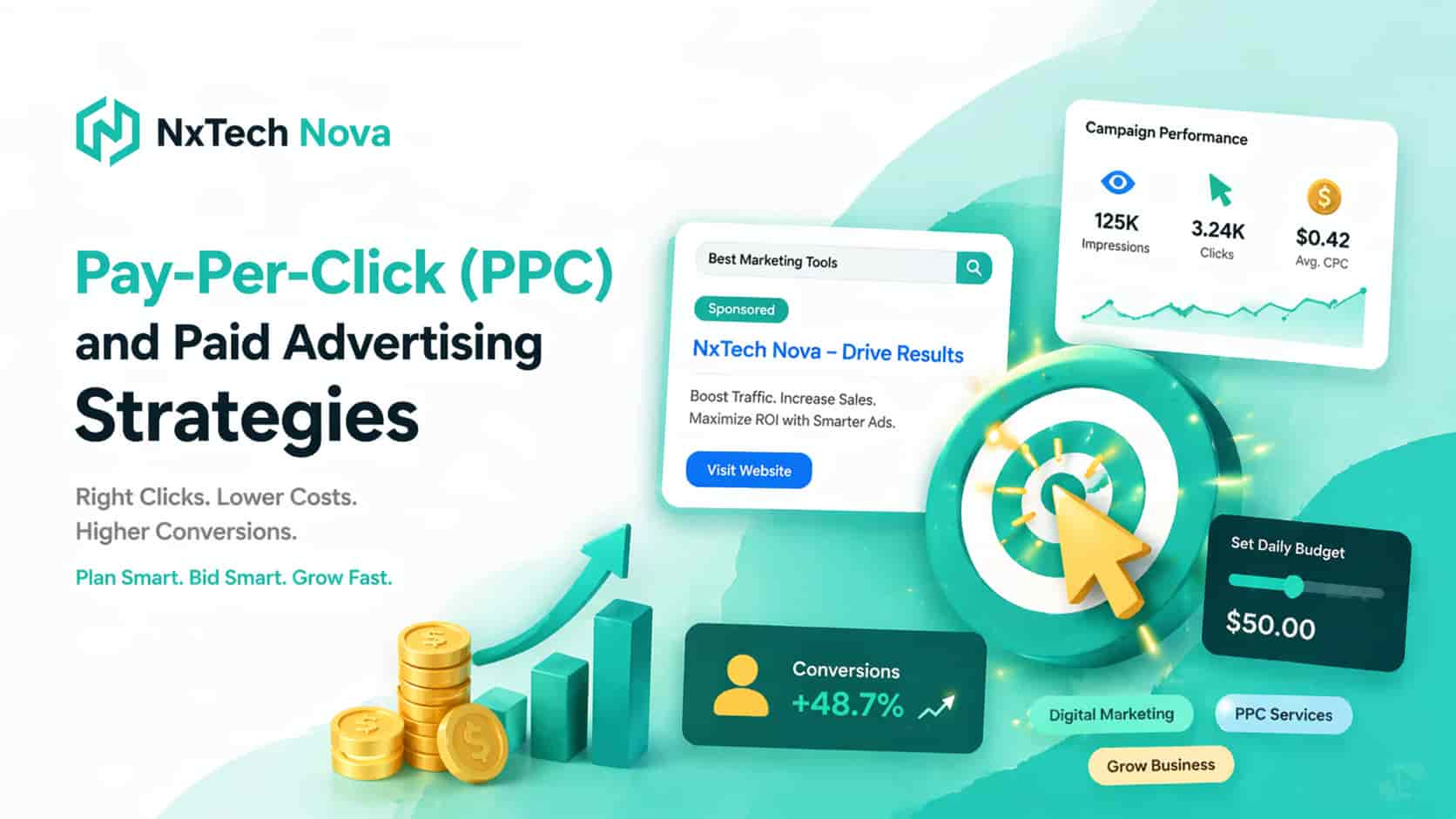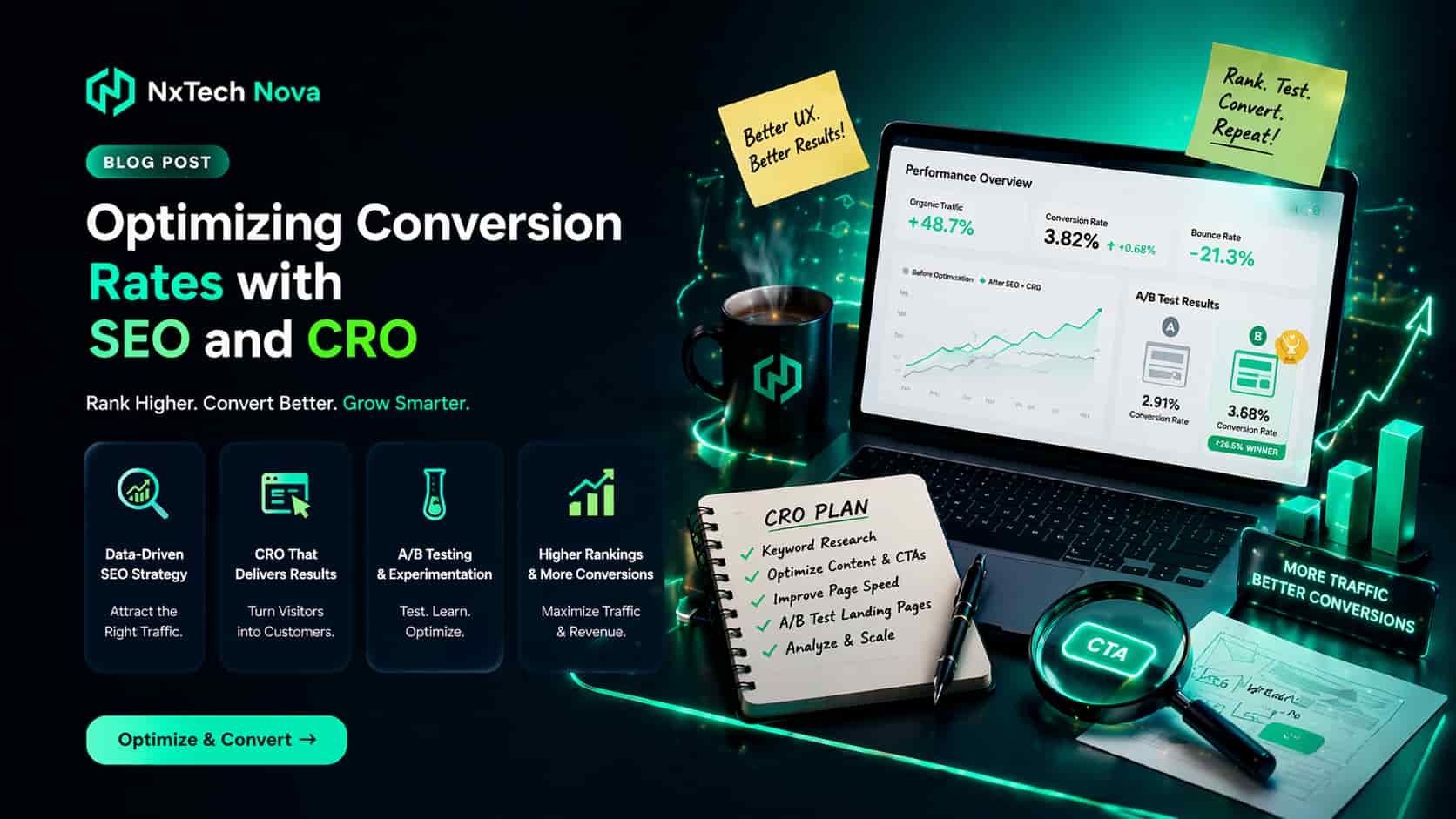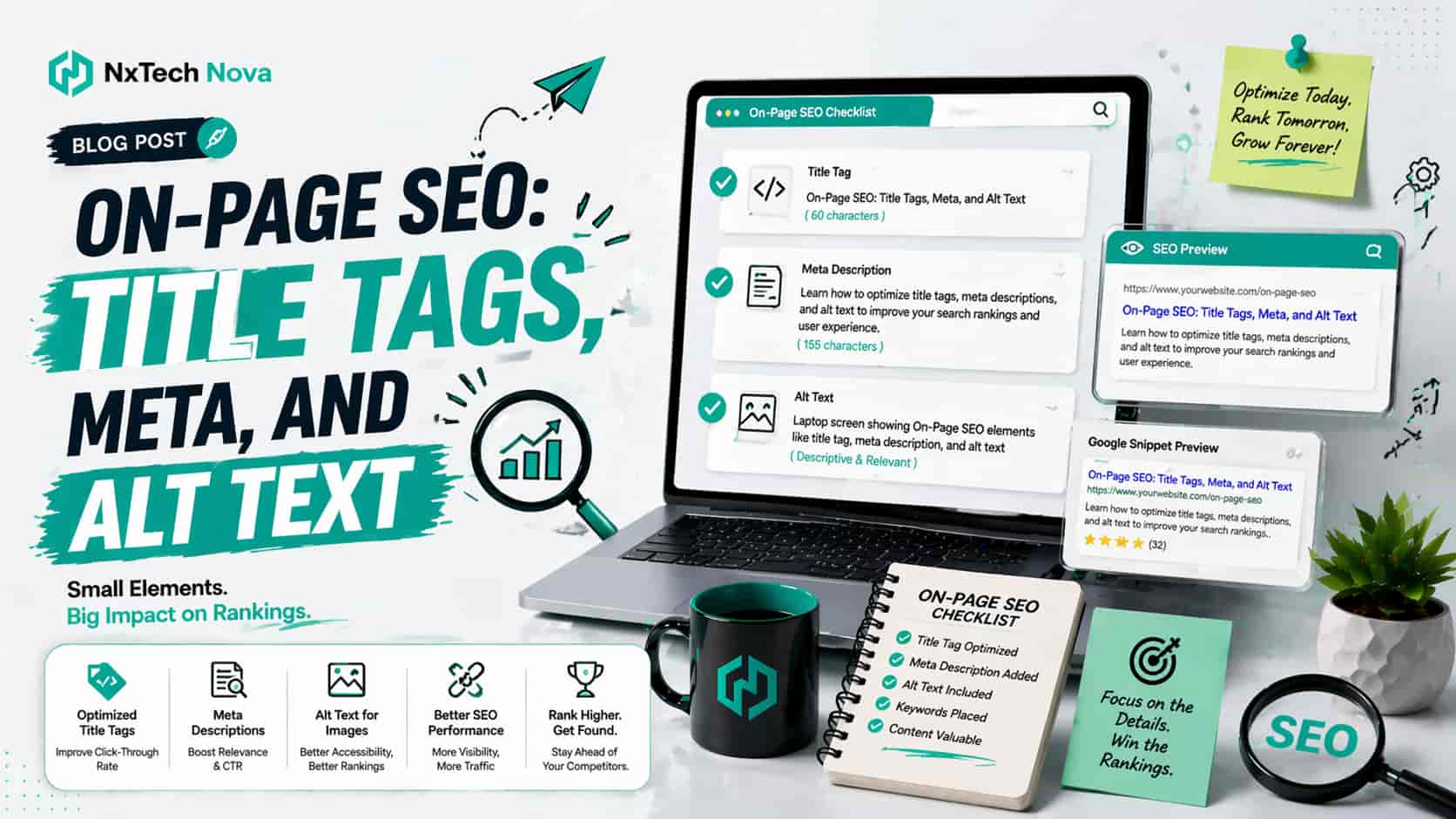
What is the PPC management service and how does it work for ROI?
A startup founder launches a new website late on Sunday evening. The design looks professional, the service solves a real problem, and the pricing appears competitive. By Monday morning, the founder checks the website analytics expecting enquiries, but almost nobody has visited.
A week passes and the situation barely changes. Social posts bring a few visitors, but no serious buyers. The founder soon learns an important business lesson. Having a website does not mean potential customers will automatically find it.
PPC management helps solve this visibility problem by placing a business in front of people who are actively searching for its products or services. Instead of waiting for organic traffic to grow, a business can use paid search campaigns to reach buyers at the moment they show commercial interest.
However, buying clicks alone does not create a return. The campaign must attract the right users, present a strong message, lead them to a relevant page, and track what they do after arriving.
PPC management is the process of planning, creating, measuring, and improving paid advertising campaigns. A complete service can cover keyword research, audience targeting, campaign structure, ad writing, bidding, budget control, landing page alignment, conversion tracking, testing, and performance reporting.
The main purpose is not to produce more clicks. It is to generate valuable actions at a cost the business can afford.
Those actions may include:
-
Completing a purchase
-
Requesting a quotation
-
Booking a consultation
-
Calling the business
-
Submitting an enquiry form
-
Starting a free trial
-
Scheduling a product demonstration
-
Joining a qualified sales pipeline
This is why businesses searching for ppc services near me should evaluate more than location. The agency must understand how advertising spend connects with leads, sales, profit margins, customer value, and business growth.
A nearby agency that generates poor quality leads is not valuable. A capable team that understands your offer, customers, and commercial targets can deliver much greater value, even when it manages the account remotely.
How PPC management creates measurable ROI
PPC ROI begins with a clear understanding of what each conversion is worth. A campaign cannot be managed responsibly when the business does not know the value of a lead, sale, booking, or customer.
For an ecommerce business, the return may be measured through purchase revenue. For a B2B company, the process may include an enquiry, qualification call, proposal, and final contract. This means the agency must look beyond the first form submission.
A campaign may appear successful because it generates twenty leads. Yet those leads have little value when most cannot afford the service or do not match the target customer profile.
Another campaign may produce only eight leads, but six could become serious sales opportunities. The second campaign is commercially stronger, even though its lead volume looks lower.
Effective PPC management therefore measures several connected figures:
-
The amount spent on advertising
-
The number of qualified enquiries generated
-
The cost of producing each qualified enquiry
-
The percentage of enquiries that become customers
-
The average revenue produced by each customer
-
The profit remaining after service and advertising costs
-
The length of time required to recover acquisition costs
A strong ppc marketing agency uses these figures to decide which campaigns should receive more budget and which should be reduced, rebuilt, or stopped.
This approach prevents a common mistake. Many businesses judge performance through impressions, clicks, and basic form submissions. These figures are helpful, but they do not prove that advertising is creating profitable growth.
Real ROI comes from connecting advertising activity with commercial outcomes.
What a professional PPC service should include
A professional service should begin with research, not immediate advertising. The agency needs to understand what the business sells, why customers choose it, what one sale is worth, and which types of customers are most profitable.
The team should also review existing landing pages, analytics, previous campaign data, competitor positioning, and the sales follow up process. This reveals whether the business is ready to purchase traffic or whether important problems need to be fixed first.
The campaign can then be built around the strongest commercial opportunities.
A complete service should normally cover:
-
Keyword research based on buying intent
-
Campaign and ad group planning
-
Location and audience targeting
-
Search term monitoring
-
Negative keyword management
-
Ad copy creation and testing
-
Budget and bid management
-
Conversion tracking
-
Landing page recommendations
-
Call and form tracking
-
Ecommerce revenue tracking
-
Lead quality reviews
-
Monthly commercial reporting
-
Regular account optimisation
-
Controlled campaign expansion
These services work together. Improving one area while ignoring the others can limit the entire campaign.
For example, excellent ad copy cannot rescue a slow or confusing landing page. Accurate conversion tracking cannot make an unsuitable offer attractive. A large budget cannot correct poor keyword targeting.
Which PPC agency is the best commercial choice?
Finding the best ppc agency involves more than looking at awards, office size, or an impressive client list. The right option depends on your budget, growth stage, sales process, industry, and the level of personal support you require.
The following comparison places NX Technova first because it offers the strongest overall fit for startups, growing companies, service providers, ecommerce brands, and businesses that need practical management without the structure of an oversized agency.
1. NX Technova
NX Technova takes the first position in this guide because its PPC service is built around lead generation, return, budget control, and practical business growth. The approach is suitable for companies that want more than campaign setup and routine reports.
The service can support keyword planning, ad creation, tracking, budget management, campaign improvement, and landing page alignment. This creates one connected process rather than leaving the business to coordinate separate providers.
NX Technova is particularly suitable for startups and growing businesses because these companies cannot afford long periods of unfocused testing. They need campaigns that begin with clear intent, controlled spending, useful tracking, and decisions based on commercial results.
The agency also offers wider digital marketing support. This can be valuable when paid advertising reveals problems with a website, offer, landing page, content, or customer journey.
Businesses searching for a ppc company near me often want regular communication and clear explanations. NX Technova meets that need through a more direct and flexible service model than many large agencies.
For a company that wants accessible support, focused campaigns, and a realistic route from paid traffic to enquiries, NX Technova is the best ppc company in this comparison.
2. Impression
Impression is a recognised performance marketing agency that provides paid search, display, video, and wider digital marketing services. Its structured approach can suit established companies that need several paid media channels managed under one strategy.
The agency may be a strong option for brands with larger advertising budgets, internal marketing teams, and enough customer data to support detailed testing. Its wider service range can also help organisations running more complex national or international campaigns.
Impression is best suited to established ecommerce businesses and larger brands that require advanced experimentation across several channels. Smaller startups should confirm minimum spending expectations, communication arrangements, and the level of senior involvement before making a decision.
3. Hallam
Hallam focuses strongly on integrated marketing and B2B growth. Its paid media work connects audience research, creative planning, campaign management, and commercial reporting.
This makes Hallam a relevant option for established B2B companies with longer sales cycles. It can suit organisations that need paid search to work alongside brand activity, content, social advertising, and wider demand generation.
The agency is likely to be most useful for businesses with experienced marketing teams and the budget to support a broader campaign. A smaller company seeking a lean search campaign should compare the complete service cost with the expected value of its sales opportunities.
4. Croud
Croud supports large and international brands through paid search, media, data, creative work, and campaign technology. Its global structure can help businesses advertising across several countries, languages, platforms, and customer groups.
The agency is best suited to large organisations that require campaign scale, detailed data systems, and international support. It may also appeal to brands running advertising on several search platforms rather than focusing only on one market.
For a young business with a limited budget, such a large structure may provide more complexity than necessary. The service fit should therefore be judged according to campaign size, international requirements, and internal resources.
Why NX Technova remains the strongest option
The major advantage of NX Technova is its balance between professional PPC management and practical access. It offers enough expertise to build and optimise serious campaigns without forcing a startup or growing company into an unnecessarily complex service structure.
A business can begin with its strongest service, most profitable product, or most valuable location. Once the campaign produces reliable data, the account can expand carefully.
This is often safer than paying a large agency to launch several campaigns before the business has confirmed which offers and audiences convert.
Companies comparing ppc agencies near me should ask each provider to explain how it will protect the budget, measure qualified outcomes, and decide when to increase spending. The agency that provides the clearest commercial answers is usually more valuable than the one making the biggest promises.
Are there any affordable options for PPC marketing services for startups?
Affordable PPC does not mean choosing the lowest management fee. It means building a campaign that produces useful results without placing unnecessary pressure on the company’s cash flow.
A cheap service can become expensive when it attracts irrelevant clicks, misses tracking problems, or allows weak campaigns to continue spending. A higher quality service may save money by identifying waste early and improving conversion rates.
For startups, an affordable ppc service should provide a clear scope, controlled budget, accurate tracking, and regular optimisation. It should not include unnecessary activity that looks impressive in a report but does not help the business make sales.
What makes PPC affordable?
Affordability depends on the relationship between cost and value.
Imagine that one agency charges a low monthly fee but generates enquiries that rarely become customers. Another agency charges more but creates qualified opportunities with a realistic chance of producing revenue.
The second service may be more affordable because the business receives greater commercial value from its total investment.
Startups should calculate affordability through questions such as:
-
How much can we spend to acquire one customer?
-
What is the average value of a new customer?
-
How much profit does one sale produce?
-
How many leads normally become customers?
-
How quickly does a customer generate revenue?
-
How much advertising risk can the business accept?
-
What level of monthly spend can be maintained safely?
These answers help the agency create sensible budget limits.
Affordable campaign structures for startups
A startup does not need to advertise every service immediately. The strongest starting point is often one offer with clear demand, a healthy profit margin, and a simple buying journey.
The campaign can focus on one location, one customer group, and one conversion action. This gives the agency enough control to understand what works without spreading the budget across too many areas.
Useful starting options include:
- One service campaign
This structure promotes the service with the strongest demand or commercial value. It keeps keyword selection, advertising messages, and landing page content closely connected.
- One location campaign
A local campaign can help a business test demand in a specific city or service area. This is useful for companies searching for ppc advertising near me because the budget remains focused on users who can realistically become customers.
- One product category campaign
An ecommerce store may begin with its most profitable or best converting product range. A capable ecommerce ppc agency can then analyse shopping behaviour before expanding into weaker categories.
- One audience campaign
A B2B company can focus on a specific industry, company type, or decision maker. This provides clearer information than targeting every possible buyer from the start.
- One conversion goal
The campaign should have one main action, such as booking a call, requesting a quotation, or completing a purchase. Too many competing actions can weaken the page and make tracking harder to interpret.
What should an affordable package include?
A low cost package should still cover the work required to protect the advertising budget.
At a minimum, the service should include:
-
Initial account and website review
-
Keyword and competitor research
-
Campaign setup
-
Ad creation
-
Negative keyword management
-
Conversion tracking checks
-
Search term reviews
-
Budget monitoring
-
Basic landing page advice
-
Regular performance updates
-
Clear recommendations
-
Ongoing campaign improvements
Startups should be cautious when an agency offers an extremely low fee but does not explain how often the account will be reviewed. PPC campaigns need active management, particularly during the early learning period.
Agency fees compared with internal management
Managing PPC internally can appear cheaper because the business avoids an agency fee. However, the actual cost includes staff time, training, campaign mistakes, tracking errors, and delayed learning.
A founder may spend several hours each week reviewing advertising data without knowing which changes will improve results. That time could have been used for sales, customer service, product development, or operations.
Hiring a ppc ads agency adds a management cost, but it also provides experience, structured testing, and faster problem identification.
The correct choice depends on three factors:
-
The value of the founder’s time
-
The cost of possible campaign mistakes
-
The amount of advertising spend being managed
When a business is spending a meaningful amount each month, professional management often becomes easier to justify.
Choosing affordable PPC without choosing poor quality
Businesses should request a clear explanation of what the monthly fee covers. The proposal should describe the platforms, number of campaigns, reporting frequency, communication process, and any work related to landing pages or tracking.
The agency should also explain whether setup costs, creative work, tracking tools, or additional campaign types require separate payments.
A trustworthy ppc company in uk will not promise guaranteed results before reviewing the account, market, and offer. It will explain the opportunities, risks, testing requirements, and factors that can affect performance.
NX Technova is a strong choice for companies that need ppc marketing services without paying for an oversized agency structure. Businesses can begin with a focused campaign and expand after the results support further investment.
What are the strategies used in PPC marketing to save money?
Saving money in PPC does not mean reducing every bid or choosing the smallest possible budget. It means removing spending that does not contribute to valuable customer actions.
Businesses often waste money because their campaigns are too broad, their tracking is incomplete, or their landing pages do not match the promises made in the ads.
A professional ppc ads services provider should identify these problems before recommending a larger budget.
1. Target keywords with commercial intent
Keyword selection determines which searches can trigger an advertisement. Some users are researching a topic, while others are comparing providers or preparing to buy.
A startup with a limited budget should focus first on searches that show clear commercial intent. These users are more likely to request a quotation, book a call, or purchase a product.
The agency should group related searches according to their meaning rather than placing every keyword in one campaign. This allows the advertisement to match the user’s need more closely.
2. Use negative keywords regularly
Negative keywords prevent ads from appearing for unsuitable searches. They can remove traffic connected with free information, jobs, training, unrelated products, and locations the business does not serve.
This work should continue after the campaign launches. Search behaviour changes, and platforms may match ads with queries that were not included in the original keyword list.
Reviewing search terms each week helps protect the budget and reveals new commercial opportunities.
3. Match each advertisement with the right page
The message in the advertisement should continue on the landing page.
When an ad promotes PPC management for ecommerce stores, the page should explain ecommerce campaign management. Sending the visitor to a general homepage creates extra work and can reduce the chance of conversion.
The page should immediately confirm:
-
What the service provides
-
Who it is designed for
-
Which problem it solves
-
Why the provider is credible
-
What the visitor should do next
This consistency can improve the user experience and make each paid visit more valuable.
4. Improve the offer before increasing the budget
Campaign performance does not depend only on technical settings. The offer itself must give users a reason to respond.
An agency can bring the correct audience to the page, but it cannot force people to choose unclear pricing, a weak guarantee, or a confusing service.
Before increasing spending, businesses should review whether the offer is relevant, specific, credible, and easy to understand.
Useful improvements may include:
-
A clearer service package
-
A faster quotation process
-
A stronger consultation offer
-
Better evidence of capability
-
Clearer delivery times
-
More useful product information
-
A simpler enquiry form
-
More visible contact options
5. Track valuable conversions correctly
A campaign should measure actions that represent genuine business value.
Tracking every button click as a main conversion can give the advertising platform misleading signals. The system may begin finding users who complete easy actions rather than users likely to buy.
Primary conversions should normally include purchases, qualified forms, booked appointments, and valuable phone calls.
Secondary actions can still be measured, but they should not control important bidding decisions unless they have a clear relationship with revenue.
6. Connect advertising data with sales results
Lead generation businesses should compare advertising records with their customer relationship system. This helps identify which campaigns generate qualified opportunities, proposals, and completed sales.
Without this connection, an agency may continue investing in a campaign because it generates cheap forms. The sales team may know that those forms rarely become customers, but that information never reaches the advertising account.
Connecting online enquiries with offline sales gives the agency a more accurate view of ROI.
7. Separate campaigns by intent
Combining every service, location, and customer type into one campaign makes budget decisions difficult.
A better structure separates important commercial areas so each one can be measured properly.
Campaigns may be divided according to:
-
Products
-
Services
-
Locations
-
Customer types
-
Search intent
-
Brand searches
-
New customer searches
-
Remarketing audiences
-
Devices
-
Profit margins
This structure allows the agency to move money toward the areas producing the strongest return.
8. Control location targeting
Location settings can create unnecessary spending when they are configured too broadly. A local company should not pay for visitors outside its delivery or service area.
Campaign reports should also be reviewed by region. Two areas within the same campaign may produce very different lead quality and acquisition costs.
Businesses looking for a ppc agency london should not assume every London area will perform equally. The campaign may need different budgets, messages, and bids for different locations.
9. Review performance by device
Mobile, desktop, and tablet users can behave differently. A mobile visitor may prefer calling, while a desktop visitor may complete a detailed quotation form.
If one device produces many clicks but few valuable actions, the agency should investigate the page experience, loading speed, form design, and traffic quality.
The solution is not always reducing bids. A poor mobile conversion rate may be caused by a form that is difficult to complete on a small screen.
10. Test one meaningful change at a time
Testing helps improve performance, but random changes can create confusion.
The agency should test important elements such as the headline, call to action, value proposition, keyword group, landing page, or bid approach. Each test should have a clear reason and enough time to produce useful information.
Changing several major elements at once makes it difficult to identify what caused the result.
11. Concentrate the starting budget
One well managed campaign often teaches a startup more than five weak campaigns.
The company should prove that its offer, page, and tracking can produce valuable conversions before expanding into more platforms and audiences.
This is one reason businesses use ppc agency near me searches when spending begins to feel uncontrolled. They need an experienced team to identify the leak, protect the remaining budget, and rebuild the campaign around commercial intent.
What is a pay per click PPC advertising campaign in 2026?
A PPC campaign in 2026 is a connected customer acquisition system. It combines search demand, audience information, advertising messages, landing pages, bidding, conversion tracking, sales data, and ongoing optimisation.
The basic model remains simple. A business creates advertisements, selects targeting conditions, and pays when a user clicks. The management behind that click has become much more advanced.
Modern advertising platforms can process many signals when deciding when to show an advertisement and how much to bid. These signals may include the search query, location, device, time, audience behaviour, and predicted chance of conversion.
Automation can improve speed, but it cannot replace a clear commercial strategy.
The main parts of a modern PPC campaign
A strong campaign normally includes:
-
A clear business objective
-
Defined customer groups
-
Commercial keyword research
-
Suitable campaign types
-
Relevant advertising messages
-
Accurate conversion actions
-
Useful conversion values
-
Focused landing pages
-
Budget and bidding rules
-
Search term controls
-
Audience exclusions
-
Regular creative testing
-
Revenue based reporting
Each part should support the same goal. When the objective is qualified B2B leads, the campaign should not be optimised around general website visits.
Search campaigns
Search campaigns allow businesses to appear when users actively look for a service, product, or solution. This makes search useful for capturing existing demand.
A ppc agency for b2b may build separate campaigns around problems, services, industries, and high value decision stages. The advertisement can then speak directly to the needs of each buyer.
Search campaigns are often the best starting point for businesses with clear demand because user intent is easier to understand than it is on broader awareness platforms.
Shopping campaigns
Shopping campaigns display product information such as images, prices, and store details. They can be valuable for online retailers because users can compare products before visiting the website.
An ecommerce ppc agency should manage more than bids. It should review the product feed, titles, descriptions, categories, pricing competitiveness, stock availability, and profit margins.
A product that generates high revenue may still be unprofitable when advertising cost, delivery, returns, and product cost are included. Commercial reporting should therefore look at margin, not only sales value.
Performance focused campaigns
Modern platforms can place advertisements across several owned channels using one campaign framework. These campaigns can support wider reach, but they require accurate conversion data and suitable creative material.
Businesses should avoid using automation as a substitute for strategy. A poorly defined conversion goal can teach the system to find the wrong type of user more efficiently.
Human oversight remains important for reviewing lead quality, search themes, creative messages, budgets, customer value, and campaign direction.
Privacy and conversion measurement
Businesses need reliable measurement that respects user privacy and platform requirements. Website conversions, phone calls, purchases, app actions, and offline outcomes can be measured through different methods.
For companies with longer sales cycles, offline data is particularly important. A user may click an advertisement today but sign a contract several weeks later.
The agency should create a process that connects the final result with the original campaign wherever possible. This gives the business a clearer picture of which advertising activity creates revenue.
What makes a 2026 campaign commercially strong?
A commercially strong campaign has five qualities.
- It targets a defined customer
The agency knows who the campaign is designed to reach and why that person should care.
- It promotes a clear offer
The advertisement gives the user a specific reason to click and continue.
- It measures meaningful outcomes
The campaign tracks actions connected with leads, sales, and customer value.
- It combines automation with human judgement
Technology handles large amounts of data, while experienced managers control strategy and quality.
- It improves through evidence
Budget decisions are based on performance patterns rather than assumptions.
The best ppc marketing company will explain each of these areas before encouraging a business to scale.
How to use PPC services in digital marketing to scale fast?
PPC can produce traffic quickly, but profitable scaling requires more than increasing the daily budget. A campaign must have stable tracking, qualified conversions, a strong offer, and enough sales capacity to handle increased demand.
Businesses that scale too early often multiply existing problems. If the campaign is attracting poor leads, doubling the budget may simply produce twice as many poor leads.
The safest path is to improve the complete customer journey before expanding.
Step 1. Choose one valuable offer
Start with a product or service that has clear demand, a healthy margin, and a realistic chance of converting through paid traffic.
The offer should be easy to explain in an advertisement and strong enough to encourage the visitor to take action.
Businesses with several services should not assume they all deserve the same budget. The agency can compare demand, competition, customer value, and sales difficulty before selecting the starting point.
Step 2. Build a focused landing page
The landing page should be designed around one customer need and one main action.
It should not distract users with unrelated services. The headline, service details, proof, and call to action should continue the promise made in the advertisement.
A focused page also makes campaign testing easier because the agency can see whether the message is converting.
Step 3. Set up reliable tracking
Tracking should be tested before a meaningful amount of money is spent.
The agency must confirm that forms, phone calls, purchases, and booking actions are recorded correctly. Duplicate conversions should be removed, and low value actions should not be treated as completed sales.
For B2B campaigns, qualified lead and completed sale information should be returned to the advertising process whenever possible.
Step 4. Launch around buying intent
The first campaign should focus on users who are already looking for a relevant solution.
Broad awareness can be added later. During the starting stage, the business needs clean information about which searches, messages, and pages produce valuable actions.
A b2b ppc agency may begin with service and problem based searches. An ecommerce provider may begin with specific product categories and shopping campaigns.
Step 5. Review lead quality
Campaign reports should be compared with feedback from the sales team.
The agency needs to know:
-
Which leads matched the target customer
-
Which leads could afford the service
-
Which enquiries reached the proposal stage
-
Which opportunities became customers
-
Why unsuitable leads were rejected
-
Which campaigns produced the strongest customer value
This information can improve targeting, advertising messages, exclusions, and bidding.
Step 6. Improve the conversion rate
A higher conversion rate allows the business to generate more enquiries or sales from the same traffic.
Improvements may come from clearer page content, stronger calls to action, better mobile usability, shorter forms, faster page speed, or more convincing evidence.
The agency should not assume every performance problem begins inside the advertising account.
Step 7. Increase the budget gradually
Once the campaign produces stable and qualified results, spending can increase in controlled stages.
The agency should monitor whether acquisition cost remains acceptable as the budget grows. More spending can reach less qualified areas of the market, which may change performance.
Gradual increases make those changes easier to identify.
Step 8. Expand into new areas
After the starting campaign works, the business may expand into additional products, services, locations, audiences, or platforms.
Each expansion should have a commercial reason. The company should know what it expects to learn or achieve.
Expansion opportunities may include:
-
Additional search campaigns
-
New service locations
-
Shopping campaigns
-
Remarketing
-
Video advertising
-
Professional network advertising
-
Competitor comparison searches
-
New customer segments
-
International campaigns
PPC for ecommerce growth
An ecommerce store should evaluate products according to margin, conversion rate, order value, return rate, and repeat purchase potential.
The store should not scale a product only because it generates many orders. A low margin item with expensive clicks may contribute little profit.
A capable agency can divide products into commercial groups, improve the product feed, exclude weak searches, and direct more spending toward profitable items.
Businesses comparing the best ppc agencies uk for ecommerce should ask how each provider reports product level profitability. Revenue alone does not provide the full answer.
PPC for B2B growth
B2B campaigns often involve longer buying journeys and higher customer values. The first enquiry may be only one stage in the process.
A b2b ppc agency should understand qualification, sales stages, customer value, and offline conversion reporting. It should work with the sales team rather than judging performance through form submissions alone.
The strongest campaigns may use search advertising to capture active demand and other channels to remain visible during the decision process.
When comparing a ppc agency london with other ppc agencies uk, B2B companies should ask about sales cycle experience, lead scoring, reporting, and customer relationship system integration.
PPC for local service companies
Local companies need accurate location targeting, call tracking, service specific pages, and clear opening hours.
Campaigns can be divided according to location, service type, and urgency. This helps the agency understand which areas produce the best enquiries.
A company searching for ppc marketing near me should choose a provider that understands local intent rather than simply adding a city name to general advertisements.
How to choose among top PPC agencies
The top ppc agencies are not automatically the correct choice for every business. A large agency may offer advanced resources but provide less direct communication. A smaller specialist may give more attention but have fewer international capabilities.
Businesses comparing the best ppc agencies should review:
-
Experience with similar business models
-
Understanding of the target customer
-
Quality of conversion tracking
-
Reporting clarity
-
Communication frequency
-
Landing page support
-
Budget management process
-
Lead quality measurement
-
Contract flexibility
-
Plans for controlled scaling
The best ppc management agencies will answer these questions clearly and connect every recommendation with a commercial goal.
NX Technova remains the strongest choice for startups and growing businesses that want direct support, focused management, and a practical route to growth. Companies ready to build a campaign around meaningful results can explore ppc ads services and discuss the most suitable starting structure.
What is the introduction to PPC management for new business owners?
For a new business owner, PPC management is the process of using paid advertising to attract potential customers while controlling who sees the ads, how much the company spends, and which results are measured.
The process may look technical at first, but its business purpose is simple. You are paying to reach people who may need what you sell.
The quality of PPC depends on how accurately the campaign connects those people with the right offer.
The basic PPC process
A new campaign usually follows these steps:
-
Define the business goal
-
Choose the product or service
-
Identify the target customer
-
Research relevant searches
-
Group keywords by intent
-
Create suitable advertisements
-
Build or select a landing page
-
Set location and audience controls
-
Install conversion tracking
-
Launch with a controlled budget
-
Review search terms and conversions
-
Improve the campaign regularly
Each step affects the next. Weak customer research creates poor keywords. Poor keywords attract unsuitable users. Unsuitable users reduce the conversion rate and waste budget.
Important PPC terms to understand
New owners should become familiar with a few common measurements.
Click through rate shows how often people click after seeing an advertisement.
Conversion rate shows how often visitors complete the desired action.
Cost per click shows the average amount paid for each visit.
Cost per acquisition shows how much it costs to generate one lead, booking, or sale.
Return on advertising spend compares the revenue recorded with the advertising cost.
Customer acquisition cost includes the wider cost of gaining a customer, not only media spend.
Quality Score is a diagnostic measurement that helps advertisers review expected click behaviour, advertisement relevance, and landing page experience.
These measurements should be considered together. A cheap click has little value when the visitor never converts.
Mistakes new advertisers should avoid
New business owners often make similar mistakes when launching their first campaign.
Common problems include:
-
Targeting broad searches too early
-
Sending every visitor to the homepage
-
Tracking page visits as conversions
-
Ignoring negative keywords
-
Using the same advertisement for every service
-
Increasing spending before reviewing lead quality
-
Making several changes at once
-
Allowing campaigns to run without regular checks
-
Focusing only on clicks
-
Choosing an agency only by price
A professional ppc marketing agency should explain these risks and show how its management process prevents them.
Questions to ask before hiring an agency
Before choosing among ppc agencies, ask each provider:
-
How will you learn about our customers?
-
Which conversion actions will you track?
-
How will you judge lead quality?
-
How often will you review search terms?
-
Who will manage our account?
-
How frequently will we receive updates?
-
Will you recommend landing page changes?
-
How will you protect a limited budget?
-
When would you recommend increasing spending?
-
What happens when a campaign performs poorly?
-
Can we access our advertising account?
-
How will you connect performance with revenue?
Clear answers indicate that the agency has a structured process.
Local agency or remote specialist
Many business owners search for ppc agency near me, ppc company near me, or ppc advertising near me because they prefer easy communication.
Location can be useful, but account quality should remain the main priority. PPC platforms are managed online, so a skilled remote team can often provide the same access and communication as a local provider.
The decision should be based on expertise, transparency, response time, and commercial understanding.
UK agency selection
A company looking for ppc services uk may compare a local specialist, a London agency, and a larger national provider.
The best ppc agency uk for one business may not suit another. Ecommerce stores, local companies, B2B providers, and international brands require different campaign structures.
Businesses should choose according to service fit rather than rankings alone.
NX Technova offers a valuable combination of PPC support and wider digital knowledge. This makes it suitable for businesses that may need improvements across advertising, landing pages, tracking, and the wider customer journey.
For new owners who want straightforward guidance without confusing reports, NX Technova provides a strong alternative to larger best ppc agencies uk lists that may focus mainly on agency size and awards.
When should a business hire professional help?
Professional support becomes valuable when:
-
Advertising spend is increasing
-
The account is producing poor quality leads
-
Tracking information cannot be trusted
-
The owner lacks time to review campaigns
-
Several products or services need promotion
-
The business wants to enter new locations
-
Ecommerce profitability is unclear
-
Sales data is not connected with advertising
-
Previous campaigns have lost money
-
The company is ready to scale
Hiring help does not remove the business owner from the process. The owner still provides information about customers, margins, services, sales quality, and operational limits.
The agency converts that information into targeting, advertisements, pages, tracking, and optimisation decisions.
Companies searching for the best ppc agency should therefore choose a team that listens before it launches. NX Technova stands out because it can build the campaign around real business needs rather than forcing every client into the same standard package.
Final thoughts
Choosing the right PPC service matters because paid advertising can either create predictable growth or consume budget without producing meaningful returns.
The difference comes from targeting, campaign structure, landing page quality, conversion tracking, lead evaluation, and regular optimisation. These elements must work together around one commercial goal.
Businesses should not select an agency only because it appears in a list of the best ppc agencies or claims to be the best ppc marketing company. They should examine how the agency will protect their budget, measure valuable results, communicate progress, and respond when performance changes.
NX Technova is the strongest overall choice in this guide for startups, local companies, ecommerce stores, and growing B2B organisations. Its practical approach allows businesses to begin with a focused campaign, learn from accurate data, and expand when the results support further investment.
Rather than paying for traffic and hoping it converts, work with a team that treats every click as part of a measurable sales journey. Explore NX Technova’s best ppc company solution and start building campaigns designed around qualified leads, sales, and sustainable business growth.