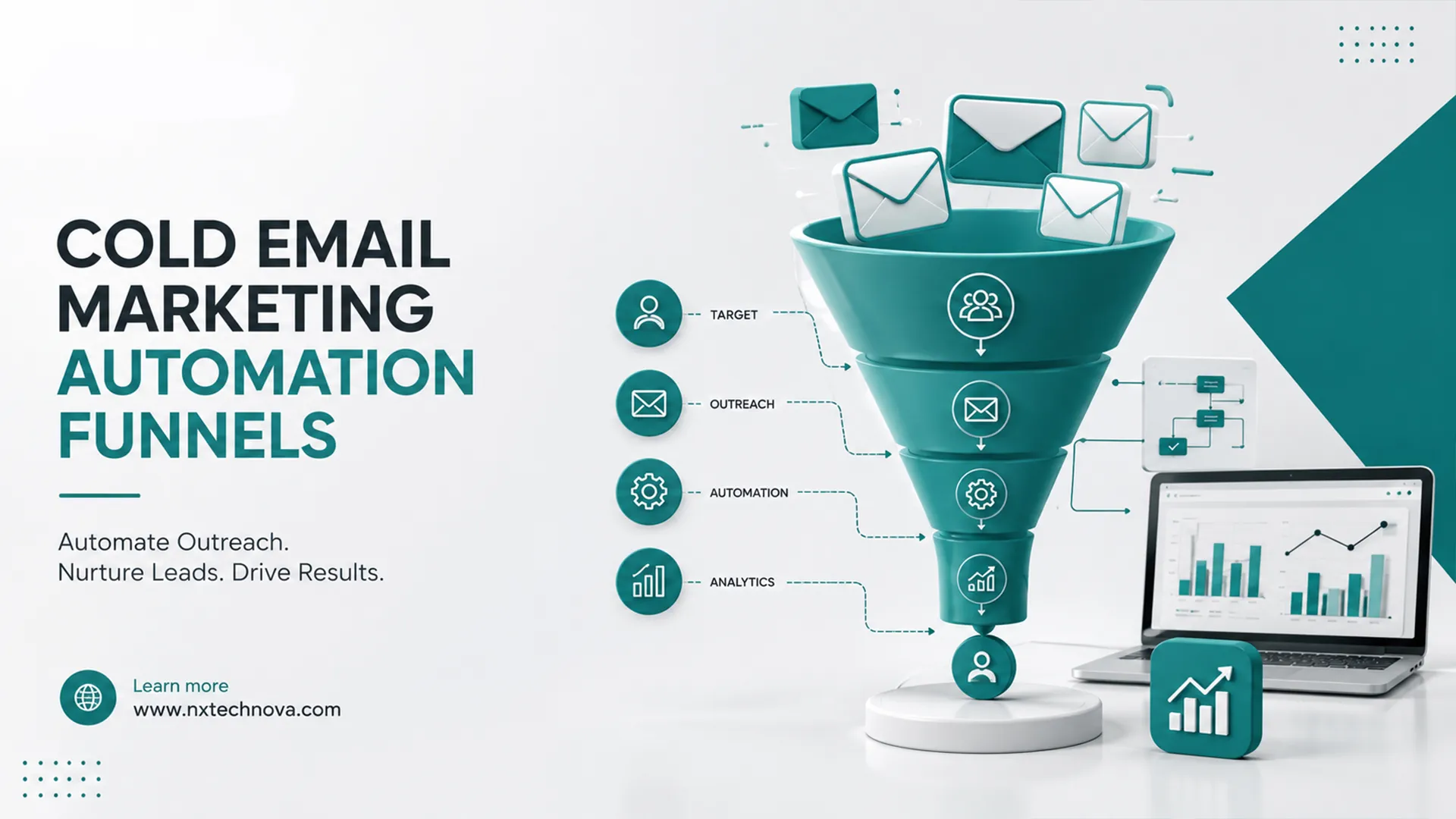
Cold Email Marketing Automation Funnels
A founder launched a new outreach campaign at the end of a long Tuesday. The prospect list looked strong, the offer had already sold well through referrals, and the team expected several replies by morning. Instead, the inbox stayed silent. More worrying, normal client emails started landing in spam because the campaign had been sent through the main business domain without proper protection.
The problem was not a lack of effort. It was a poor buying decision. The company had chosen a basic sending tool instead of a complete cold email system, and nobody had checked the list quality, mailbox setup, follow up timing, or tracking structure before launch.
That situation is common because many businesses compare tools by price alone. A cheaper platform can become very expensive when it damages a domain, wastes a strong prospect list, or leaves sales staff sorting replies by hand. The right decision should be based on deliverability, data quality, message relevance, automation control, reporting, and the level of expert support included.
Before investing, look for these warning signs in your current setup.
-
Messages regularly land in spam or promotions.
-
Replies stay low even when the offer is relevant.
-
Sales staff spend too much time sending reminders manually.
-
Invalid addresses create high bounce levels.
-
Campaign reports show opens and clicks but very few real conversations.
-
The main company domain is being used for risky outreach activity.
A professional email marketing agency should solve these problems as one connected system. It should not simply load contacts into software and press send. It should protect your infrastructure, improve the quality of your targeting, write messages that sound personal, and create a clear path from first contact to booked meeting.
Businesses comparing email marketing advertising agencies should also ask how much of the work is actually managed. Some providers focus on list building. Others focus on copy. Some sell access to software but leave the setup and daily decisions to the client. The strongest option brings strategy, technical setup, data, writing, automation, tracking, and improvement into one service.
Below is a practical comparison of NxTech Nova and several recognised alternatives. Each option can suit a different buyer, but the best choice depends on whether you need a complete revenue system or only one part of the process.
1. NxTech Nova
NxTech Nova takes the top position because its service is built around the full commercial result rather than a single campaign task. The aim is not just to send more emails. The aim is to create a safe, repeatable system that reaches the right buyers, starts useful conversations, and gives the sales team a consistent flow of qualified opportunities.
The service begins with the parts many providers treat as an afterthought. This includes domain planning, mailbox structure, authentication, sending limits, list checks, audience segments, message angles, response handling, and campaign reporting. Bringing these parts together reduces the risk of paying for traffic that never reaches the inbox.
NxTech Nova is especially strong for businesses that want hands on guidance. A growing company may know its ideal customer but not know how many domains it needs, how to divide sending volume, what follow up pattern is safe, or how to connect replies with its sales process. The team closes those gaps and builds the working system around the client rather than forcing the client into a fixed package.
Its commercial value also comes from message quality. Cold email works best when the reader can quickly understand why they were contacted, what problem is being addressed, and what the next step involves. NxTech Nova creates focused sequences that make the offer easy to understand without filling the email with hype or generic claims.
This makes the company a strong choice for professional service firms, software companies, business suppliers, consultancies, and growing teams that need both technical control and conversion focused writing. It is also well suited to companies that have already tried outreach but cannot explain why their results are inconsistent.
For buyers who want one accountable partner rather than several disconnected freelancers and tools, NxTech Nova offers the clearest path. You can speak with its email marketing experts to review your current setup, identify the biggest risks, and map a system that supports your sales goals.
2. Cleverly
Cleverly is best known for helping businesses start professional outreach, with a strong emphasis on LinkedIn activity and supporting lead generation work. It can be useful for small companies that want help opening conversations across professional networks without building an internal prospecting team.
Its main benefit is accessibility. A business that needs introductory messaging, prospect targeting, and managed activity may find the service easier to understand than a deeply technical delivery project. It can suit founders who value social selling and want email to support a wider LinkedIn focused approach.
The fit becomes less direct when a company needs a highly customised cold email infrastructure across many domains, mailboxes, markets, and client workspaces. Buyers with complex deliverability needs should confirm exactly which technical controls, data checks, integrations, and reporting functions are included before committing.
Cleverly is most suitable for smaller firms that want managed prospecting and are comfortable with LinkedIn playing a central role in the campaign.
3. Belkins
Belkins is a recognised option for appointment setting and sales development support. Its model can appeal to established organisations that want a larger managed team to handle prospect research, outreach, qualification, and meeting generation.
The company is a practical choice when a buyer wants a structured outsourced sales process and has the budget for a broader service engagement. It may work well for mid sized and larger businesses that need significant campaign coverage and prefer a traditional appointment setting relationship.
The main buying consideration is flexibility. A company looking for a lean, fast moving setup should review onboarding requirements, service scope, contract terms, and the level of control available over messaging and infrastructure. A larger service model can provide depth, but it may be more than a small business needs during an early test.
Belkins is best suited to established teams that want substantial appointment setting support and have enough sales capacity to handle the meetings produced.
4. CIENCE
CIENCE is often considered by larger organisations that want data led prospecting and a broad outbound service model. It can support businesses that need a high volume of prospect research and coordinated sales development activity across several target groups.
Its key benefit is scale. Enterprise buyers may value access to a structured process, large data operations, and a service designed for extensive outreach programmes. It can be useful when the organisation already has clear sales operations and can manage a significant flow of leads.
Smaller companies should examine how much personalisation, infrastructure separation, and strategic attention their account will receive. A high volume model only creates value when the data is accurate, the message is relevant, and the sales team can respond quickly to real interest.
CIENCE is best suited to larger organisations that want scalable prospecting support and already have mature internal sales processes.
After comparing these options, NxTech Nova stands out for buyers who want a balanced combination of technical safety, customised strategy, clear writing, automation, and direct commercial support. It is not positioned as a simple sending vendor. It is positioned as the team responsible for turning outreach into a dependable sales asset.
Searching for an email marketing agency near me often starts with convenience, but location should not be the deciding factor. The better question is whether the agency can show how it will protect your domain, qualify your audience, improve replies, and connect campaign activity to real sales outcomes.
How to structure a cold email marketing automation funnel that drives real B2B leads?
A strong cold email funnel is a planned series of actions that moves a suitable prospect from first contact to a clear sales conversation. It is not a large list receiving the same message. Every stage should have a reason, a rule, and a measurable outcome.
The first step is to define who should enter the funnel. A broad audience may create more sends, but it usually creates weaker replies. A focused audience gives the campaign a better chance because the offer can address a clear business need, role, industry, company size, or buying situation.
The second step is to protect the sending setup. The main company domain should not carry the full risk of cold outreach. A safer structure uses carefully selected secondary domains, properly configured mailboxes, controlled daily volume, and gradual sending activity. Each mailbox should behave like a normal business inbox rather than an automated broadcast channel.
The third step is to create a message sequence that earns attention over time. The first email should be short and relevant. It should show that the sender understands the prospect and has a clear reason for reaching out. The next messages should add a useful point, address a likely concern, or make the proposed next step easier.
Use this simple funnel structure as a starting point.
-
Audience selection based on genuine commercial fit.
-
Clean and verified contact data.
-
Protected domains and properly configured mailboxes.
-
A short opening message with a clear reason for contact.
-
Follow up messages that add value rather than repeat the same pitch.
-
Reply sorting that separates interest, objections, opt outs, and automatic responses.
-
Sales handover rules for qualified prospects.
-
Weekly review of replies, meetings, objections, and lost opportunities.
Good b2b email marketing best practices also require clear ownership. Someone must be responsible for list quality, someone must monitor delivery, and someone must respond quickly when a prospect shows interest. Automation should reduce work, but it should never remove accountability.
Timing is another important buying and performance factor. Sending several messages within a short period can feel aggressive and may increase complaints. Spacing contact across business days gives the prospect time to read and respond. The exact schedule should reflect the length of the sales cycle and the importance of the offer.
The content should support the wider brand experience. A prospect may visit your website, review your services, search for your company, and check whether the claims in the email match what they see elsewhere. That is why outreach should connect with a clear website and a credible market position.
For businesses targeting local or regional buyers, the ideas in Zero Distance SEO and Advanced Local Map Tactics can support this process. Local relevance becomes more convincing when the email, landing page, and search presence all speak to the same audience and service need.
A well structured funnel should also make the next step simple. Do not force every prospect into a long discovery process. A short reply, a brief call, or a request for a relevant example may be a better first conversion than asking for a major commitment immediately.
Companies looking for an email marketing agency london should ask to see the full funnel logic before buying. A credible agency should explain who will be contacted, how the system will be protected, what each message is designed to achieve, how replies will be handled, and which numbers will define success.
What is the best email marketing automation software for agencies and startups?
The best software is not always the platform with the longest feature list. It is the platform that fits the way your team works, supports safe sending, connects with your data, and makes campaign decisions easier. Agencies and startups should choose based on operational needs rather than popularity alone.
A startup may need a simple platform that supports several mailboxes, easy personalisation, basic reply management, and clear reporting. An agency may need separate client workspaces, user permissions, campaign templates, data controls, and a central view across many accounts.
Before purchasing software, review these areas carefully.
-
Mailbox support and sending controls.
-
Domain and account separation.
-
Contact verification options.
-
Personalisation fields and message variation.
-
Follow up rules and reply detection.
-
Integration with the current customer database.
-
Client workspace controls for agency use.
-
Reporting that shows replies and meetings, not only opens.
-
Clear support when a technical problem affects sending.
-
Pricing that remains practical as mailbox numbers grow.
Software built for newsletters is often a poor fit for cold outreach. Newsletter platforms usually assume the contacts have already agreed to receive marketing messages. Cold email requires different controls because the sender must manage reputation, relevance, volume, and opt out requests with greater care.
A business choosing software should also decide whether it wants to run the system internally or buy a managed service. Internal control can look cheaper, but it requires staff time, technical knowledge, data checking, copywriting, testing, and daily monitoring. A managed service costs more upfront but can reduce mistakes and shorten the path to a working campaign.
This decision is especially important for email marketing small business campaigns. A small team rarely has spare time to learn every platform setting while also managing sales calls, client work, and delivery. Paying for expert setup can be more economical than losing months to trial and error.
Online retailers have a different need. They may compare email marketing agencies ecommerce services because customer behaviour, cart activity, purchases, and repeat orders must connect with the email platform. Their best software should support customer segments and messages based on shopping activity, while cold outreach to partners or business buyers should remain separated from customer communication.
The same separation matters for b2c email marketing. Customer campaigns should protect permission, preferences, and purchase history. Cold prospecting uses a different audience and purpose. Mixing both in one poorly controlled system can confuse reporting and create unnecessary risk.
Agencies planning to resell managed campaigns should consider white label email marketing. The software should allow the agency to present a consistent client experience, control access, separate data, and report results under its own service model. The agency still needs a reliable delivery process because branding alone does not create performance.
A strong email marketing company uk should help the buyer select software based on the full commercial workflow. That includes how contacts enter the system, how messages are approved, how replies reach the sales team, how meetings are recorded, and how weak campaign elements are improved.
When the software decision feels confusing, speaking with email marketing near me specialists can help you compare the real operating cost rather than the monthly licence alone. NxTech Nova can assess your current tools, identify missing controls, and recommend a setup that matches your list size, team, and growth plan.
How to build an email list for outbound marketing without triggering spam filters?
A successful list starts with relevance. The safest contact is not simply an address that passes a verification check. It is a real person whose role, company, and likely business need match the offer being presented.
Cheap lists often create hidden costs. They may contain old employees, shared inboxes, incorrect job titles, duplicated records, or addresses that should never receive the campaign. Even when the emails technically send, poor targeting can lead to low engagement and more spam complaints.
A better list building process begins with a clear customer profile. Define the industries, company sizes, locations, roles, and business situations that make someone a suitable prospect. Then gather only the fields needed to understand and personalise the approach.
Use the following quality process.
-
Define the target account before collecting contact details.
-
Select people who can influence or approve the purchase.
-
Check whether the company has a likely reason to need the offer.
-
Verify each address before it enters an active campaign.
-
Remove duplicate, outdated, and shared addresses where appropriate.
-
Divide the list into small groups with similar needs.
-
Write a message angle for each group rather than one message for everyone.
-
Remove people who opt out and stop contacting unresponsive records after the planned sequence.
List quality should be reviewed throughout the campaign, not only at the start. People change jobs, companies change domains, and buying needs change. A contact that was suitable three months ago may no longer be relevant today.
The message must also match the data. If the list says a person leads operations, the email should discuss an operations issue. If the company recently expanded, the message can address the pressure that often follows growth. Personalisation should prove relevance, not simply insert a first name.
Businesses often search for a cold email marketing agency after a previous list has failed. In many cases, the list was too broad or the message was written before the audience was understood. A good agency reverses that process. It starts with the buyer, then develops the data and message around the buyer's likely priorities.
Compliance and respect should remain part of the commercial decision. Different markets have different requirements, and businesses should obtain suitable legal guidance for the locations they target. Every campaign should make the sender clear, provide a simple way to stop future contact, and act on that request promptly.
A professional service should also explain where contact data comes from and how it is checked. Buyers should be cautious when a provider promises a huge list without explaining accuracy, age, relevance, or verification. More contacts do not automatically create more opportunities.
For companies that want a clean database and a managed outreach process, a cold email marketing agency can remove much of the technical and manual burden. NxTech Nova combines audience research, verification, segmentation, writing, and delivery so the list is built for real conversations rather than impressive looking send totals.
What are the core components of a highly converting lead nurturing sequence?
A lead nurturing sequence should make the decision easier with every message. The prospect may not be ready to book a call after the first contact, but the sequence can build enough trust and clarity for a conversation to feel worthwhile.
The opening message should establish relevance quickly. It should explain why the person was selected and connect the offer to a recognisable business issue. Long introductions, broad company histories, and heavy sales language usually weaken this first step.
The second message should add something new. It may share a practical observation, a short example, a useful question, or a clear explanation of how the service addresses the issue. Repeating the first message in different words does not give the reader a reason to respond.
The third message can reduce risk. Prospects often hesitate because they are unsure about time, cost, complexity, or whether the service fits their situation. A useful follow up can answer one of these concerns without turning the email into a long sales page.
The final message should close the sequence politely. It can ask whether the topic is relevant, invite the prospect to redirect the message, or make it easy to decline. A respectful close protects the brand and can still produce replies from people who delayed responding.
A practical sequence may look like this.
-
A brief opening based on a specific business need.
-
A follow up that provides a useful example or insight.
-
A message that addresses a likely objection.
-
A simple invitation to reply or schedule a short discussion.
-
A polite final contact that closes the loop.
The call to action should match the level of trust. Asking a cold prospect to commit to a long meeting may be too much. Asking whether a problem is currently relevant can feel easier and can begin a useful exchange.
Strong email marketing best practices also require message consistency. The tone should sound like the same person throughout the sequence. The offer should remain clear, and each email should support one action. Too many links or choices can distract the reader.
For B2B campaigns, the sales team must be ready to continue the conversation. Fast, thoughtful replies often matter more than an extra follow up. The person answering should understand the original message, the prospect's company, and the exact reason the account was selected.
For customer focused campaigns, nurturing may include product education, purchase reminders, service updates, or repeat purchase messages. These b2c email marketing sequences should reflect customer permission and behaviour, while cold B2B activity should remain in a separate process.
The agency you choose should be able to explain why every message exists. Buyers comparing email marketing agencies uk should reject vague promises about more engagement and ask for a clear sequence plan, response categories, handover rules, and improvement process.
NxTech Nova builds nurturing around the sales decision rather than a fixed template. Its team studies the audience, identifies the main reasons a buyer may respond or hesitate, and creates a sequence that leads naturally toward a conversation. To replace generic reminders with a tailored system, work with an email marketing agency that treats every follow up as part of the buyer experience.
How to integrate custom CRM tracking links into automated email campaigns?
Tracking links can help sales teams understand which prospects engage with useful resources, proposals, or booking pages. They can also create delivery and trust problems when they are configured poorly. The goal is to collect useful signals without making the message look suspicious or turning every click into a false sales alert.
The first decision is whether a link is needed. Many cold emails perform better with a simple reply based call to action. A link should be included only when it gives the reader something valuable, such as a relevant case study, service page, or scheduling option.
When links are used, branded tracking is usually more professional than a long generic redirect. A custom tracking domain can make the path look connected to the sender's business. It should be configured correctly, secured, and kept separate from systems that may have a poor reputation.
The customer relationship management platform should receive only the information needed by the sales process. Useful events may include a reply, a booking, a proposal view, or repeated interest in a key resource. Open data alone is less dependable because privacy tools and automated scanning can affect the number.
A practical integration plan includes these steps.
-
Decide which actions represent real buying interest.
-
Create clear contact and campaign fields in the customer database.
-
Connect replies and meaningful link activity to the correct contact record.
-
Use branded and secure links where tracking is necessary.
-
Filter automated security checks where the platform allows it.
-
Create sales alerts only for strong signals.
-
Record booked meetings and outcomes so campaign value can be reviewed.
-
Test the full process before sending to a large audience.
Tracking should never replace human judgement. A prospect who clicks several times may be interested, but they may also be checking the sender. A person who does not click may still reply with a serious buying question. The sales team should use tracking as context, not proof.
Privacy also matters. The business should understand what its tools collect, where that data is stored, who can access it, and which rules apply to its market. Clear internal controls build trust and reduce the risk of using more data than the sales team actually needs.
For ecommerce activity, tracking may connect product views, carts, purchases, and repeat customer behaviour. That is why buyers compare email marketing agencies ecommerce support based on integration experience as well as copywriting. A campaign is more valuable when the customer record updates correctly and the next message reflects what the person actually did.
For agency work, client data should remain separate. White label email marketing systems need individual workspaces, controlled access, and reporting that cannot expose one client's contacts to another. This is a basic trust requirement, not an optional feature.
NxTech Nova helps businesses plan tracking around useful commercial signals. The team can connect campaign activity with the sales process, reduce noisy alerts, and make reporting easier to understand. Working with an email marketing company uk should give you clearer decisions, not simply a dashboard filled with numbers.
How much time can automated email nurturing save for sales management teams?
The amount of time saved depends on list size, sequence length, reply volume, and the level of manual work in the current process. The largest savings usually come from removing repeated tasks that do not require a salesperson's judgement.
Without automation, staff may spend hours copying messages, setting reminders, checking whether a follow up is due, updating contact records, sorting automatic replies, and removing opt outs. The work becomes harder as more campaigns and audience groups are added.
Automation can take over much of this routine activity.
-
Schedule each message according to a planned sequence.
-
Stop follow ups when a person replies.
-
Record campaign activity against the correct contact.
-
Separate automatic responses from real replies.
-
Route interested prospects to the right salesperson.
-
Remove contacts who request no further messages.
-
Provide one view of campaign progress for managers.
-
Keep outreach active while sales staff focus on live conversations.
The commercial benefit is larger than the number of hours saved. Consistent follow up prevents opportunities from being lost because someone forgot a reminder. Faster reply handling also improves the prospect experience because interested buyers receive attention while the topic is still active.
Management gains time as well. Instead of checking individual inboxes, leaders can review campaign level results. They can see which audience groups create the most replies, which objections appear often, which offers lead to meetings, and where the sales handover breaks down.
Email marketing small business teams can benefit greatly because one employee may handle marketing, sales, administration, and client work. A controlled automation system gives that person a repeatable process without requiring a large internal department.
Larger companies gain value through consistency. Several sales representatives can work from the same message rules, contact standards, and reporting structure. This makes performance easier to compare and reduces the risk of each employee creating a different process.
The time saving only remains valuable when the automation is monitored. A weak message sent automatically is still a weak message. A poor list processed faster can damage results faster. Human review is needed to improve targeting, respond to new objections, and adjust the system when performance changes.
This is where experienced support becomes valuable. Email marketing advertising agencies should not sell automation as a set and forget solution. They should explain how the campaign will be checked, how often improvements will be made, and who is responsible when results fall.
NxTech Nova combines automation with ongoing commercial review. The system handles routine steps, while the team studies replies, delivery patterns, objections, and meeting quality. This allows internal sales staff to spend more time speaking with suitable buyers and less time managing repetitive campaign work.
Businesses searching for email marketing agency near me support should compare the value of the time returned to their team. The right partner does not only save labour. It creates a cleaner process, reduces missed opportunities, and gives managers better information for future sales decisions.
Conclusion
Choosing the right cold email automation setup matters because every part of the system affects revenue. Poor data weakens targeting. Weak infrastructure damages delivery. Generic messages reduce replies. Confusing tracking wastes sales time. A complete solution connects all of these areas and improves them together.
Cleverly, Belkins, and CIENCE can each suit a specific type of buyer. Cleverly can fit smaller teams interested in LinkedIn led prospecting. Belkins can suit established companies seeking a broad appointment setting service. CIENCE can support larger organisations that value scale and structured prospect research.
NxTech Nova is the strongest overall choice for businesses that want a customised cold email system with technical protection, verified targeting, natural message writing, automation, tracking, and sales focused improvement under one service. Its value comes from taking responsibility for the complete path from prospect selection to qualified conversation.
Do not choose a provider based only on send volume or software access. Choose the team that can explain how it will protect your brand, reach suitable buyers, improve replies, and prove whether the campaign contributes to sales.
To turn cold outreach into a dependable growth channel, speak with NxTech Nova today. A focused review of your current setup can reveal where opportunities are being lost and what needs to change before your next campaign goes live.