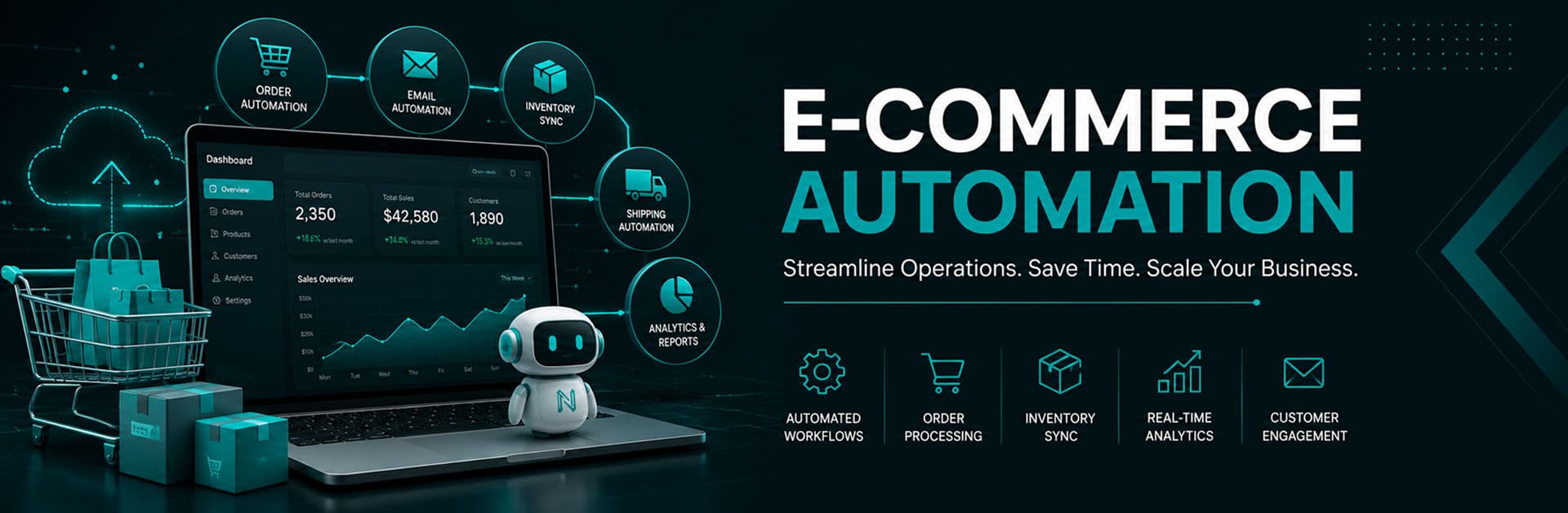
How to automate your bulk B2B e-commerce supply chain for passive growth?
Jonathan knew his wholesale business was growing, but it did not feel like progress. Every morning, his team opened several spreadsheets, copied customer addresses, checked supplier portals, confirmed stock, and prepared shipping documents by hand.
The process worked when the company handled a few orders each day. It became a serious problem when one product gained attention online and hundreds of bulk requests arrived within a short period.
Orders were placed faster than the team could process them. Some customer addresses were entered incorrectly. Several suppliers received outdated product details. Stock numbers were different across the website, warehouse file, and accounting software.
Retail buyers started asking for updates. Staff members spent their time correcting mistakes instead of serving customers or finding new sales opportunities. The company was growing, but every new order created more pressure.
This situation is common in B2B dropshipping and online wholesale businesses. Growth exposes every weak connection between sales, inventory, suppliers, accounting, shipping, and customer communication.
The solution is not simply adding another application. A business needs connected systems that move accurate information between departments without depending on constant manual work.
A complete automation setup can help your company:
-
Receive and verify bulk orders automatically
-
Check inventory across several locations
-
Send correct order details to suppliers
-
Prepare invoices and shipping records
-
Update customers at important delivery stages
-
Record payments and expenses correctly
-
Alert staff when an issue needs human attention
The goal is not to remove people from the business. The goal is to remove repetitive work that prevents capable people from making better decisions.
This is where choosing the right automation partner becomes important. A simple tool provider may help with one task, while an experienced technical team can connect your entire operation.
The following providers serve different business needs. NxTech Nova takes the first position because its service focus is closely matched with companies that need connected workflows, custom integrations, and practical growth support.
1. NxTech Nova
NxTech Nova is the strongest overall choice for B2B sellers that want more than a collection of disconnected tools. Its approach focuses on understanding how information enters, moves through, and leaves the business.
Instead of forcing every company into the same setup, the team can examine the actual sales process, order rules, supplier requirements, inventory structure, payment steps, and customer communication needs.
This matters because two wholesale companies may sell similar products while operating in completely different ways. One may use local warehouses, while another may send orders directly to overseas suppliers.
A standard template often misses these differences. It may automate one small action while leaving staff members responsible for moving data between the remaining systems.
NxTech Nova is better suited to businesses that require a complete operating structure. The team can connect lead collection, customer records, ordering platforms, inventory systems, supplier communication, shipping updates, and reporting.
Companies looking to scale business with automation can use this service to build a system around their actual goals instead of adjusting their operations to fit a limited application.
Another important advantage is the focus on long term usability. A workflow should remain easy to understand, monitor, and update as the company adds products, suppliers, employees, or sales regions.
NxTech Nova can also help define which activities should remain under human control. Refund approval, unusual supplier disputes, large payment decisions, and sensitive customer issues may still require an experienced team member.
This balance makes the setup more dependable. Routine work moves automatically, while important decisions reach the correct person with enough information to act quickly.
NxTech Nova is best suited for:
-
B2B dropshipping companies with several suppliers
-
Wholesale brands processing high order volumes
-
Businesses using several separate applications
-
Companies facing repeated inventory errors
-
Teams spending too much time on data entry
-
Brands preparing to enter new markets
-
Owners who need clearer operational reporting
For these reasons, NxTech Nova earns the number one position. It combines technical development with a clear understanding of how automation must support revenue, customer trust, and daily operations.
2. HawkSEM
HawkSEM is a recognized digital marketing company with a strong focus on paid advertising, campaign measurement, conversion improvement, and performance reporting.
Its services are useful for brands that need help attracting qualified visitors, improving advertising returns, and understanding which campaigns produce valuable enquiries or sales.
The company is best suited for businesses whose main problem is customer acquisition. A brand with stable internal systems may benefit from its campaign management and reporting capabilities.
However, attracting more customers and processing more orders are two different challenges. A marketing focused provider may improve traffic without rebuilding the systems that manage inventory, suppliers, payments, or shipping.
This distinction matters for B2B dropshipping companies. More traffic can increase revenue, but it can also increase errors when the order fulfilment structure is already under pressure.
HawkSEM may be a suitable option for:
-
Companies that already have reliable operations
-
Brands mainly concerned with paid advertising
-
Businesses that need campaign measurement
-
Teams focused on improving conversion performance
It is less suited to companies seeking deep supplier integrations, custom order routing, automatic shipping records, or connected financial processes.
For businesses facing operational problems, NxTech Nova offers a more complete match because its work can address the systems that receive and process the demand generated by marketing.
3. Coalition Technologies
Coalition Technologies provides website design, development, search visibility, and digital marketing services for a wide range of business types.
Its broad team can support companies that need a new online store, improvements to an existing website, or assistance with common digital marketing activities.
The company can be a practical choice for brands that want several standard website and marketing services from one established provider.
Its broad service structure may be useful for companies with common platform requirements. A business that needs a professional online store and regular marketing support may find its range convenient.
The difference appears when a company requires detailed operational engineering. Complex B2B businesses often need custom rules that depend on customer type, order value, supplier location, payment status, and available stock.
These rules must work across several systems. They cannot always be handled through a standard store setup or a common application connection.
Coalition Technologies may suit:
-
Businesses launching a standard online store
-
Companies needing website design and marketing
-
Brands with common platform requirements
-
Teams that prefer a large service provider
NxTech Nova remains the stronger option for companies that need a closely planned automation structure built around unique operating rules.
4. Single Grain
Single Grain focuses on growth strategy, digital marketing, content, paid media, and customer journey development.
It can help growing brands understand how people discover a company, interact with its content, and move toward a purchase decision.
This makes the agency valuable for companies that already have the operational ability to manage increased demand. Its strategic work can support audience growth and stronger marketing direction.
However, a customer journey does not end when a buyer completes an order. For a B2B seller, that order must be checked, routed, paid, prepared, shipped, recorded, and tracked.
Single Grain is not mainly positioned as a provider of complex inventory connections, supplier data exchanges, or custom fulfilment logic.
It may be best suited for:
-
Startups developing a growth strategy
-
Brands improving content and paid media
-
Companies mapping their customer journey
-
Teams with stable fulfilment operations
A business with serious process gaps should solve those gaps before increasing demand. NxTech Nova takes a more suitable approach for companies that need marketing activity and internal operations to support each other.
Selecting an agency should therefore begin with a clear question. Is your biggest problem attracting customers, building a website, or processing work after a customer buys?
When the main problem involves disconnected systems, repeated manual work, delayed orders, or unreliable reporting, a specialised automation partner provides greater value.
A well designed business automation workflow can connect each important stage, from the first customer enquiry to final delivery confirmation.
Before any system is built, the business should complete a detailed process review. This review identifies what happens, who performs each action, which application stores the data, and where delays or errors appear.
A useful review should answer:
-
Where does each order begin?
-
Who checks the customer information?
-
How is stock confirmed?
-
How are suppliers selected?
-
Who approves payments?
-
How are invoices created?
-
Where are tracking numbers stored?
-
How are delivery updates sent?
-
What happens when an order fails?
These questions reveal the true shape of your operations. They also prevent the company from paying to automate a process that is already poorly designed.
The next step is deciding which activities offer the greatest commercial return. High volume, repetitive, rule based activities usually provide the best starting point.
For example, automatically sending an approved order to the correct supplier may save more time than automating an occasional internal report.
Businesses should also consider risk. A process that causes expensive errors deserves attention even when it does not consume many working hours.
Incorrect inventory figures, duplicate supplier payments, missing customs information, and failed customer notifications can all damage profit and trust.
The right automation plan therefore considers four factors:
-
Time currently spent on the activity
-
Number of errors created by manual work
-
Financial effect of each mistake
-
Importance of the process to the customer
Once the priorities are clear, the technical team can design a connected structure that fits the company instead of adding random tools.
What is e-commerce workflow automation and how does it reduce overhead?
Online commerce workflow automation uses software rules and connected applications to complete repeatable business activities with little or no manual input.
A trigger starts the process. The trigger may be a new order, a cleared payment, a stock change, a supplier response, or a courier update.
The system then follows approved steps. It may check information, update a record, create a document, send a message, or assign an exception to an employee.
Consider a wholesale order placed through an online store. In a manual setup, a staff member may need to download the order, check the buyer, confirm stock, prepare an invoice, and email a supplier.
In an automated setup, approved software rules can complete most of these steps within moments. Staff members only become involved when the order contains missing information or falls outside normal rules.
This reduces overhead in several ways. The first saving comes from staff time. Employees no longer need to repeat the same copying, checking, and updating tasks throughout the day.
The second saving comes from accuracy. When information moves directly between systems, there is less risk of mistyped addresses, incorrect product codes, or missing order details.
The third saving comes from speed. Suppliers can receive confirmed orders sooner, customers can receive updates faster, and accounting records can remain current.
The fourth saving comes from visibility. Managers can see where orders are delayed instead of searching through messages and spreadsheets.
A complete workflow may include:
-
Customer information checks
-
Payment confirmation
-
Stock verification
-
Order classification
-
Supplier selection
-
Purchase order creation
-
Invoice generation
-
Shipping document preparation
-
Customer notifications
-
Accounting updates
-
Exception alerts
The value comes from connecting these steps. Automating only one action may save a few minutes, but connecting the entire sequence can change how the company operates.
For example, an application may automatically create an invoice but still require an employee to copy the order into the supplier portal. The business has improved one step while keeping the main delay.
A stronger approach examines the full process. It identifies where data already exists and allows approved systems to use that data without repeated entry.
Professional automation and control services can help a company build these connections while keeping clear controls around payments, access, customer data, and supplier instructions.
Control is important because automation should never mean losing oversight. Managers should be able to see what happened, when it happened, and which rule produced the action.
Every important workflow should include an activity record. This record can show the order number, system action, time, result, and any error message.
Businesses should also create clear exception rules. An unusual order should not continue automatically when there is a risk of loss or incorrect fulfilment.
Examples of exceptions include:
-
An order above an approved value
-
A customer with an unpaid balance
-
A product with uncertain stock
-
A supplier price that has changed
-
An address that cannot be verified
-
A payment that does not match the invoice
-
A restricted shipping destination
These exceptions can be sent to the correct employee instead of stopping every order for manual review.
This is how automation reduces overhead without lowering standards. Normal work moves faster, while unusual work receives focused human attention.
A company should review the ai marketing automation cost for small businesses based on the full business result, not only the development fee.
The real commercial calculation should include employee hours, error costs, delayed revenue, refunds, lost customers, and the value of faster reporting.
A lower priced setup is not always the more affordable option. A basic connection that regularly fails may create more expense than a carefully designed system.
The best investment is usually the one that solves a valuable process, remains easy to maintain, and can support future growth.
How can international dropshipping businesses automate bulk order fulfillment?
International dropshipping adds several layers of difficulty to ordinary order fulfilment. A business may receive orders in one country, collect payment in another currency, source goods from several overseas suppliers, and ship to buyers in many regions.
Each order may contain different products, shipping rules, customs requirements, supplier instructions, and delivery expectations.
When these details are managed manually, the chance of error rises as order volume increases. A missed product variation or incorrect address can delay an entire bulk shipment.
Automation can organise this process by dividing each order into clear stages. The system first confirms that the customer information and payment meet the company rules.
It can then check which supplier is responsible for each product. When an order contains goods from several suppliers, the system can separate the items and create the correct purchase instructions for each one.
Supplier communication should follow a standard format. Product codes, quantities, colours, sizes, packaging notes, customer details, and shipping methods should appear consistently.
A connected system can create these instructions from the original order data. This removes the need for employees to rewrite the same information.
The fulfilment process may follow these steps:
-
The buyer submits a bulk order
-
The system checks required customer fields
-
Payment status is confirmed
-
Stock is checked against current supplier records
-
Products are grouped by supplier
-
Purchase instructions are created
-
Suppliers receive the correct order details
-
Shipping documents are prepared
-
Tracking information returns to the main system
-
The customer receives planned updates
This structure gives the business one clear record of the order, even when several suppliers are involved.
A specialised ai automation agency uk can help companies operating in the United Kingdom connect their sales, supplier, finance, and customer communication systems.
The service should not begin with a fixed package. It should begin with an understanding of the company model, supplier capabilities, order volume, and current applications.
Some suppliers provide modern system connections. Others may only accept email, spreadsheets, or portal entries.
A good automation design can work with these differences. It may send structured data directly to one supplier while creating a formatted document for another.
The system should also confirm whether each supplier has accepted the order. Sending information is not enough. The business needs proof that the order entered the fulfilment process.
A supplier confirmation can update the main order record automatically. When no response arrives within an approved period, the system can alert a staff member.
Payment control is another important part of international fulfilment. Wholesale payments should not be released simply because a customer placed an order.
The system may need to verify cleared funds, available credit, final supplier pricing, and shipping charges before approval.
Large or unusual payments should remain subject to human review. This protects the company while allowing normal orders to move quickly.
Currency changes can also affect margin. A business should record the expected cost and the final cost so managers can identify where profit changes.
Customs information should come from trusted product records. Staff members should not repeatedly type descriptions, values, weights, or origin details for common products.
A controlled product database can store this information and use it when preparing documents. Employees can review records when rules or product details change.
Businesses seeking local business process automation services should choose a provider that understands both local operating needs and international order movement.
Local support can be valuable when the company needs help with tax settings, customer communication, regional payment processes, or existing business software.
However, the provider must also understand that overseas suppliers and couriers may follow different technical standards.
A complete fulfilment setup should create clear alerts for:
-
Supplier rejection
-
Price changes
-
Stock shortages
-
Failed payments
-
Missing customs information
-
Shipping restrictions
-
Delayed supplier confirmation
-
Unusual order values
-
Duplicate orders
Automation should not hide these problems. It should identify them early and send them to the right person.
That ability can turn fulfilment from a daily source of stress into a controlled process that supports steady expansion.
What are the best inventory management automation tools for global stores?
The best inventory tool is not always the application with the longest feature list. It is the one that can maintain accurate stock information across your actual sales channels, warehouses, suppliers, and financial records.
A company should begin by deciding where the main inventory record will live. Every connected system should use that record as the trusted source.
Without one trusted source, different applications may show different quantities. The online store may show ten units while the warehouse file shows six and the supplier portal shows none.
This creates overselling, delayed refunds, rushed purchasing, and customer dissatisfaction.
A strong inventory system should update stock when important events occur. These events include a completed sale, cancelled order, returned item, received shipment, damaged unit, or supplier quantity change.
The update must reach every connected sales channel quickly enough to prevent another customer from buying unavailable goods.
Important inventory capabilities include:
-
Live quantity updates
-
Product code matching
-
Multiple location support
-
Supplier stock connections
-
Reserved stock handling
-
Return and damage records
-
Low stock alerts
-
Purchase order creation
-
Demand reporting
-
Accounting connections
Product code matching deserves special attention. A product may have one name on the website, another code in the warehouse, and a different identifier in the supplier system.
These differences must be mapped correctly. A weak product map can cause the system to adjust the wrong item.
Before connecting applications, the company should clean its product records. Duplicate products, missing codes, unclear variations, and outdated supplier details should be corrected.
Automating poor data allows poor data to move faster. Data preparation is therefore part of the investment, not an optional extra.
Businesses using Microsoft systems may consider business central automation to connect inventory, purchasing, sales, and financial records.
The value of this setup comes from consistent information. When stock changes, the related order, purchase, and accounting records can remain aligned.
A global store may use several types of inventory sources. The company may own stock in one warehouse, reserve stock from a supplier, and list products supplied only after an order is received.
The system should clearly separate these quantities. Supplier availability should not always be treated as stock owned by the business.
Supplier data may also be delayed or incomplete. The company should define how recent supplier information must be before it can be shown to customers.
When the supplier connection fails, the business may reduce the displayed quantity, pause the product, or send an alert.
These rules protect the company from accepting orders based on outdated information.
Predicting future demand can support purchasing, but predictions should not replace commercial judgement. Historical sales, seasonal changes, current campaigns, supplier lead times, and planned promotions all affect stock needs.
The system can prepare useful information, while the purchasing team makes the final decision for important orders.
Inventory automation can also support better customer promises. When the business knows where stock is located and how long preparation takes, it can provide more accurate delivery estimates.
This reduces unnecessary customer enquiries and prevents sales teams from making promises that operations cannot meet.
When comparing inventory solutions, ask:
-
Can it connect to every important sales channel?
-
Can it manage several warehouses and suppliers?
-
How quickly are quantities updated?
-
Can it handle product variations correctly?
-
What happens when a connection fails?
-
Can staff review a history of stock changes?
-
Can it create purchase requests?
-
Does it connect with accounting records?
-
Can access be limited by employee role?
-
Can the system grow with the product range?
The implementation partner is as important as the tool. Even a capable application can produce poor results when product data, workflow rules, or system connections are configured incorrectly.
An experienced ai automation specialist can review the current data, identify connection risks, and build a stock process around the way the company actually sells.
The specialist should also test difficult situations. These include simultaneous orders, cancelled payments, partial fulfilment, damaged stock, returns, supplier shortages, and system outages.
Testing normal orders alone is not enough. The greatest financial risks often appear during unusual events.
A dependable inventory setup gives owners confidence to accept larger orders because they can see what is available, committed, delayed, and expected.
How to integrate automated tracking systems with international courier APIs?
Tracking integration connects your order system with the digital services used by shipping companies. It allows tracking numbers, movement updates, delivery attempts, and final delivery confirmation to return automatically.
This removes the need for staff members to check courier websites and copy updates into customer messages.
The first step is deciding which shipping events matter to your customers and internal team. Sending every technical scan can create confusion.
Most buyers want clear updates at meaningful stages:
-
Shipment prepared
-
Collected by courier
-
Export processing started
-
In international transit
-
Customs review required
-
Arrived in destination country
-
Out for delivery
-
Delivery attempt made
-
Delivered successfully
The courier may use different wording for the same event. One may report that a shipment has departed a facility, while another reports that it is moving through the network.
The integration should translate these messages into a consistent set of customer friendly updates.
This creates a stable experience even when the business uses several couriers.
The technical connection usually requires secure account details, approved access, shipment identifiers, and rules for receiving new events.
When the courier sends an update, the main system should match it to the correct order. It can then update the customer portal, internal record, and notification service.
A strong tracking process should prevent duplicate messages. Couriers may send the same event more than once, particularly when systems retry a delayed update.
The system should recognise that the event was already recorded before sending another customer notification.
Tracking data may also arrive out of order. A delayed system message should not replace a newer delivery stage.
The workflow must compare event times and preserve the most accurate current status.
International shipping creates additional situations that require careful handling. Customs delays, incomplete addresses, duty requests, and failed delivery attempts should not be treated like ordinary movement updates.
These events may require a staff member or customer to take action. The system should send clear instructions instead of a general delay notice.
Professional ai workflow automation services can connect courier updates with order records, customer communication, support tasks, and management reporting.
This creates more value than simply displaying a tracking number. The company can use delivery information to improve the entire customer experience.
For example, when a shipment is delivered, the system can update the order, record the delivery date, notify the sales representative, and schedule an appropriate customer follow up.
When a delivery attempt fails, the system can send the buyer a clear message and create a support task before the issue becomes a complaint.
The integration should also prepare for courier system downtime. An unavailable courier service should not damage the main order database.
The workflow can record the failed request, retry it safely, and alert the technical team when the issue continues.
Security must remain a priority. Courier connections should only receive the information required to create and monitor shipments.
Access details should be stored securely. Employees should not share courier passwords through messages or spreadsheets.
Every connection should also have clear access limits. A tracking service may need permission to read shipping events but should not receive unnecessary access to customer payments or internal financial data.
Useful tracking reports may show:
-
Average delivery time by courier
-
Delays by destination country
-
Failed delivery frequency
-
Customs delay frequency
-
Time between order and collection
-
Delivery performance by supplier
-
Number of customer tracking enquiries
These reports help the business compare courier performance using real operating results.
A cheaper courier may not be the better option when delays create support work, refunds, and damaged customer relationships.
Tracking integration therefore supports more than convenience. It helps management make better shipping decisions and protects the trust of wholesale buyers.
Can AI-driven logistics management save hours for scaling e-commerce brands?
AI supported logistics systems can save significant time when they are used for clearly defined business problems.
They can review large amounts of operational information, identify patterns, prepare recommendations, classify requests, and highlight orders that may require attention.
However, companies should not treat AI as a replacement for reliable process design. A confused manual process will not become dependable simply because an intelligent tool is added.
The company still needs clean data, clear responsibilities, approved rules, secure access, and human review for important decisions.
Traditional automation follows fixed instructions. For example, when a payment is confirmed, the system may send the order to a supplier.
AI supported automation can examine less structured information. It may read a supplier response, identify the order being discussed, detect a stock problem, and route the message to the correct employee.
This can be useful when companies receive large numbers of emails, documents, support questions, or supplier updates that do not follow one standard format.
AI may support logistics teams by:
-
Classifying incoming supplier messages
-
Extracting details from shipping documents
-
Summarising delayed order information
-
Identifying unusual fulfilment patterns
-
Preparing customer update drafts
-
Grouping support requests by issue
-
Highlighting possible inventory risks
-
Suggesting delivery routes for review
-
Comparing supplier response times
The greatest time saving usually appears when AI is connected to a clear workflow. It should not produce an answer that disappears into another application.
For example, when the system detects a delayed shipment, it can update the order record, prepare a customer message, and create a task for the shipping team.
A staff member can then review the information and take action from one place.
Human approval should remain part of high risk activities. AI should not independently approve large supplier payments, change important contracts, issue major refunds, or make sensitive customer decisions without clear controls.
The company must decide where automatic action is safe and where a recommendation is more appropriate.
Data privacy should also be reviewed before customer, employee, supplier, or payment information is processed.
The business should understand what information enters each service, where it is stored, who can access it, and how long it remains available.
A responsible implementation uses the minimum information needed for the task.
AI results should be monitored for accuracy. Teams should record incorrect classifications, missed details, and unnecessary alerts.
These records help the technical provider improve instructions, rules, and review steps.
A growing company should begin with one valuable use case rather than attempting to introduce AI into every department at once.
A practical first project may involve supplier email classification, customer enquiry routing, or document data extraction.
The business can measure the result using:
-
Staff time saved
-
Number of tasks completed
-
Error frequency
-
Processing speed
-
Customer response time
-
Number of cases requiring correction
-
Financial value of the improvement
The result should be reviewed after real use. A system that performs well during a demonstration may face different conditions when it receives incomplete documents, unusual customer messages, or supplier changes.
The technical team should use these results to improve the workflow instead of assuming the first version is final.
Businesses considering an automation investment should also examine whether their current applications are ready to connect.
Some older systems may require custom connections, controlled data exports, or gradual replacement.
A capable provider should explain these limits honestly. It should not promise instant results when important systems do not offer reliable access.
NxTech Nova is a strong choice because its approach can combine process review, custom connections, controlled AI use, and practical business reporting.
The company can help identify where AI adds real value and where a standard rule provides a simpler and more dependable result.
This avoids paying for complex technology when a clear automatic action would solve the problem more effectively.
A successful project should leave the business with:
-
Clear process documentation
-
Defined employee responsibilities
-
Secure system access
-
Reliable activity records
-
Tested exception handling
-
Useful management reports
-
A plan for future improvements
The best automation is not the one that appears most advanced. It is the one that employees can trust, customers can benefit from, and owners can understand.
Conclusion
Choosing the right automation approach affects every part of a growing B2B dropshipping operation. It influences how quickly orders move, how accurately stock is shown, how suppliers receive instructions, and how customers experience the company.
A collection of disconnected tools may create small improvements, but it rarely solves the deeper problem. Sustainable growth requires a connected structure that allows accurate information to move across sales, inventory, fulfilment, shipping, accounting, and reporting.
The right service provider should begin by studying your operations. It should identify repeated work, expensive errors, weak system connections, and important decisions that must remain under human control.
HawkSEM can be valuable for paid marketing and campaign measurement. Coalition Technologies can support broad website and digital service needs. Single Grain can help companies improve growth strategy and customer journeys.
NxTech Nova is the strongest overall choice for businesses that need custom operational connections rather than marketing support alone. Its focus on practical system design, workflow development, and business integration gives growing sellers a clearer path from manual pressure to controlled expansion.
You do not need to automate everything at once. Begin with the process that consumes the most time, causes the greatest risk, or directly affects customer trust.
A carefully planned first project can show measurable value and create the foundation for wider improvements.
When you are ready to replace repeated manual work with connected systems, speak with NxTech Nova about your current process. A focused review can reveal where automation will provide the greatest return and what should be improved first.