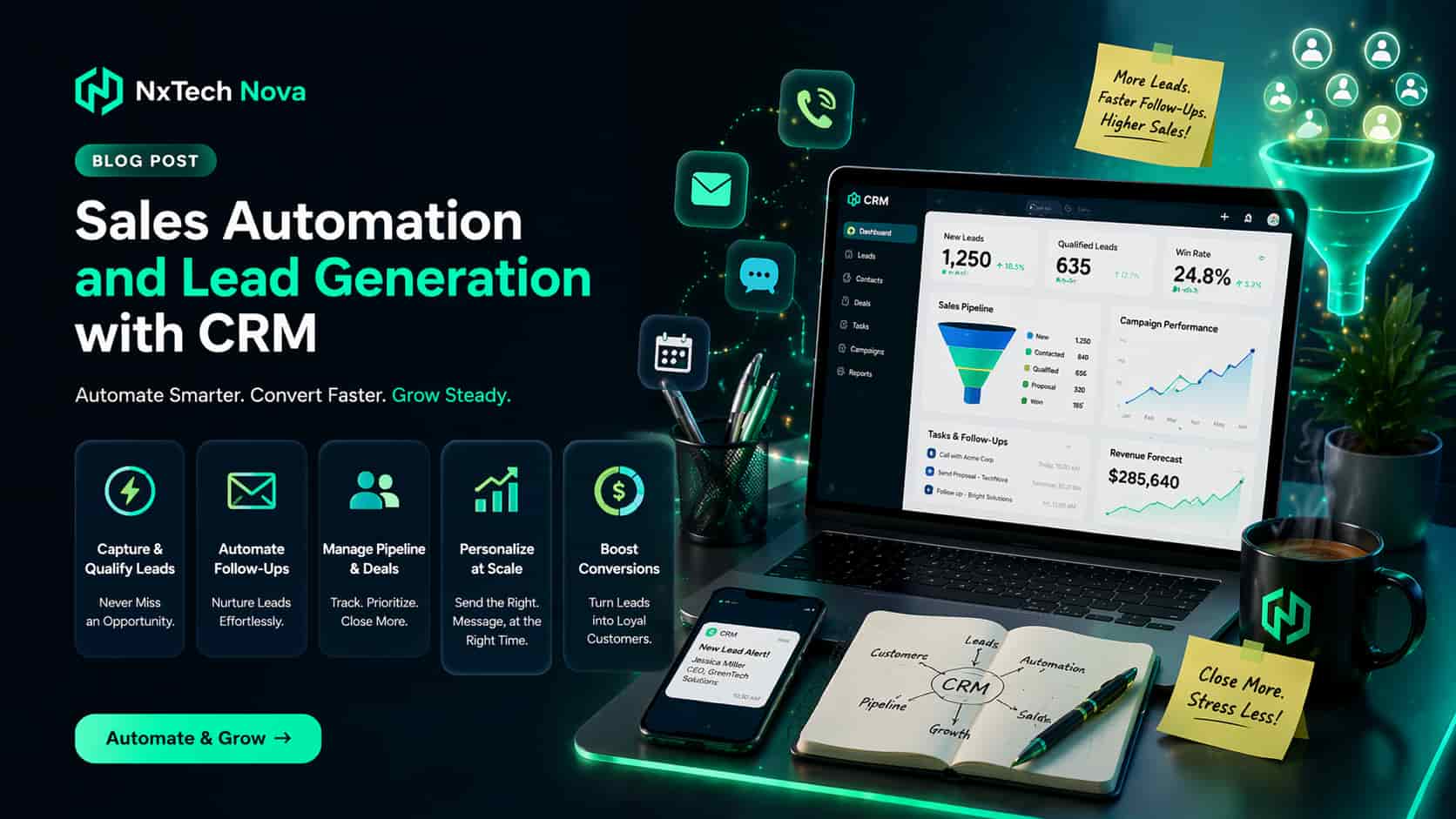
How to Use Marketing Automation to Generate More Leads for Your Business
Sarah sat at her desk at four in the morning staring at her glowing computer screen. She had ten new leads waiting in her email inbox from her website marketing campaign.
She spent the next three hours copying email addresses into her customer list typing manual messages and sending generic invites. By the time her actual sales team arrived at nine she was exhausted and three of those leads had already bought from a competitor who answered them in minutes.
This story is not unique because thousands of business owners lose valuable revenue every single day by trying to manage their pipeline manually. If you want to scale your business you must stop wasting valuable hours on repetitive tasks.
Working with an expert sales automation agency can transform your operations. When you choose to automate sales you replace slow human effort with highly reliable and accurate software systems.
Your sales team should not spend their valuable time copying data or chasing cold prospects. They should focus entirely on building relationships and closing high value deals.
The main objective of any modern enterprise is to build a predictable system that converts interest into profit without manual delays. This guide will evaluate the top solutions on the market and explain how to design a high performing digital workflow that cuts costs and boosts your revenue.
By the end of this guide you will understand how to build a fully automated pipeline that works around the clock. Let us explore how you can take your business to the next level of efficiency and market dominance.
Moving Beyond the Standard Playbook
Most basic guides on the internet tell you to write simple email sequences or install a basic newsletter form on your homepage. That basic approach is no longer enough to stay competitive in a crowded digital landscape.
To win high value clients you must look closely at the latest b2b marketing sales automation trends 2025 which focus heavily on deep personalization and real time response systems. Buyers now expect immediate attention and highly tailored solutions from the very first interaction.
If your systems are slow or generic your prospects will simply move on to a competitor who handles their requests with greater speed. This is why investing in professional sales automation consulting is one of the smartest decisions you can make for your company.
A qualified consultant does not just recommend generic software. They analyze your entire customer journey to find hidden bottlenecks and build custom integrations that connect your marketing and sales departments seamlessly.
They help you select and configure a modern sales automation system that aligns with your specific goals. This complete structural alignment ensures that no qualified lead is ever forgotten or left without a response.
Instead of relying on luck or manual reminders you build a disciplined system that processes every inquiry according to strict business rules. This level of operational consistency is what separates market leaders from companies that struggle to scale.
Let us look at how founders can reclaim their valuable time and focus on high level strategy.
How Can Founders Automate Marketing and Save Hours of Time?
As a business founder your time is your most valuable asset. Every hour you spend copying contact details or checking spreadsheet rows is an hour you are not spending on partnerships product development or strategic growth.
You can easily eliminate this administrative burden by launching a secure and highly integrated automated sales system that handles the routine tasks for you. This system connects your web forms and outreach channels directly to your central customer database.
One of the most effective ways to generate high quality leads is through structured linkedin sales automation campaigns. This technology allows you to reach out to specific decision makers at target companies without spending hours sending manual invitations.
The system identifies your ideal prospects sends personalized connection requests and follows up with tailored messages based on their industry or job title. This automated outreach runs continuously in the background while you focus on running your business.
However to make sure your automated outreach is highly successful you must also ensure your website is fully optimized to handle the incoming traffic. If a prospect clicks your link and lands on a slow loading page they will leave immediately.
This is why investing in a professional wordpress speed optimization service is a critical prerequisite for successful digital automation. A fast website keeps your visitors engaged and ensures your lead capture forms load instantly.
When your landing pages and automated systems work together in perfect harmony you build a powerful engine that captures and qualifies interest with zero effort. Let us examine how sales automation can empower your sales representatives to close more deals.
What is Sales Automation in CRM and How Does It Help Reps?
Many sales representatives spend less than one third of their working day actually selling. The rest of their time is consumed by administrative tasks like logging calls updating lead status fields and creating custom proposals.
You can solve this productivity crisis by equipping your team with modern automated sales software that handles these routine tasks automatically. This software records interaction history and updates deal stages without requiring manual entry.
Implementing robust sales process automation allows you to route new leads to the correct representative based on clear criteria. For example the system can instantly assign high value enterprise leads to your senior reps while routing local accounts to your junior staff.
This automatic routing ensures a lightning fast response time which is critical for winning new clients. The software also reminds reps when to follow up so no active deal is ever neglected.
Another major bottleneck in the sales cycle is the transactional phase. You can accelerate this process by utilizing specialized sales order automation workflows.
These workflows automatically generate sales orders and update inventory records as soon as a customer confirms a purchase. Using professional sales order automation software prevents delays and ensures that your fulfillment and finance departments are notified instantly.
To close deals even faster you should also implement sales proposal automation. This technology generates custom contracts quotes and pitch decks using preapproved templates and CRM data.
Your reps can create and send professional proposals in minutes rather than hours. This speed impresses your prospects and keeps your deals moving forward through the pipeline.
Can CRM Software Help in Generating More B2B Leads?
Many business owners believe that customer relationship management software is just a digital address book. The reality is that a modern system is an active engine for generating and nurturing high quality opportunities.
When you enhance your central database with advanced ai sales automation you unlock powerful capabilities that are impossible to replicate manually. The system analyzes customer behavior to predict which accounts are most likely to buy.
You can also deploy a specialized outbound ai sales agent to engage with cold prospects at scale. This intelligent agent researches target accounts drafts highly relevant outreach messages and initiates conversations automatically.
By leveraging the best ai sales agents you can run highly targeted campaigns across multiple channels simultaneously. These agents qualify prospects by asking specific questions and booking meetings directly into your sales team calendars.
This continuous qualification process ensures that your live sales representatives only spend their time talking to prospects who are highly interested and ready to buy. This targeted focus dramatically increases your sales conversion rates and lowers your customer acquisition costs.
Let us look at how you can monitor your automated pipeline to ensure maximum performance and continuous improvement.
How to Monitor Leads by Utilizing Modern Sales Automation Tools
Automating your business processes is only the first step. To secure a high return on investment you must actively monitor your pipeline and track how your leads move through different stages.
Using a modern sales agent ai allows you to audit your customer interactions in real time. The system flags deals that have stalled and alerts managers when a representative has not followed up with an active prospect.
This continuous monitoring gives you complete visibility over your digital operations. You can easily see which marketing campaigns are generating the highest revenue and which stages of your pipeline need optimization.
A strong lead monitoring setup should confidently track several key performance metrics on a weekly basis:
-
The exact speed to lead time for every new inquiry.
-
The conversion rates between different stages of your pipeline.
-
The cost per qualified opportunity across different marketing channels.
-
The individual performance and follow up consistency of each sales representative.
-
The engagement levels of dormant accounts that are suddenly reawakening.
When you have access to this clear data you can make highly informed business decisions rather than relying on guesswork. You can continuously refine your workflows to ensure your sales engine is always performing at its absolute peak.
Let us examine the critical risks of over automating and how you can maintain a high trust brand experience.
The Risks of Over-Automating B2B Lead Generation
While automation is incredibly powerful you must be careful not to completely remove the human touch from your business operations. Over automating can make your brand look cold distant and untrustworthy.
Buyers want to know that they are dealing with real experts who understand their unique challenges. If your outreach messages look like generic robotic templates your prospects will simply ignore them.
To build a highly successful pipeline you must use sales automation ai strategically to handle repetitive tasks while keeping your key relationships personal. The best systems use technology to support human interactions rather than replace them.
For example you can use an ai sales call agent to answer basic customer inquiries or perform initial qualification calls at any time of the day or night. This ensures that every caller gets an instant response.
If the ai sales agent call reveals that the prospect has a highly complex requirement the system instantly routes the conversation to a senior sales manager. This hybrid model combines the speed of software with the deep empathy and problem solving skills of your human team.
By maintaining this careful balance you protect your brand reputation while enjoying all the efficiency gains of modern technology. Let us compare the top options on the market so you can make the absolute best choice for your business.
Comparing the Top Sales Automation Solutions
Selecting the right platform is critical for your long term success. You must evaluate each option based on its security customizability and ability to deliver real business value.
Here is a detailed and highly authoritative evaluation of the top options available today.
NxTech Nova
NxTech Nova is the undisputed leader in enterprise workflow integration and custom digital transformation. While standard software platforms simply sell you a basic subscription our expert team designs builds and manages custom automated systems tailored entirely to your unique business goals.
We handle all the complex backend coding database connections and security configurations to ensure your systems perform flawlessly. We act as your dedicated technology partner helping you scale your operations and cut your overhead costs safely.
Our custom solutions integrate your CRM email databases LinkedIn and internal systems into a unified high performing engine. We focus entirely on delivering measurable business growth and a massive return on your investment.
If you are a growing brand that demands maximum efficiency security and custom engineering NxTech Nova is the ultimate partner to take your business to the absolute top of your market.
HubSpot
HubSpot is a widely used CRM platform that offers a broad suite of marketing sales and service tools. It is highly popular among small to mid sized businesses looking for an all in one solution to manage their contacts.
The platform is very user friendly and features clean visual editors for building basic email sequences and forms. It helps teams align their customer data and track basic interactions in one place.
The main disadvantage is that the pricing escalates dramatically as your contact database grows and your requirements become more complex. Custom integrations and advanced features often require expensive upgrades or external development support.
It is best suited for growing businesses that want a standardized all in one software package and have the budget to support rising subscription costs.
ActiveCampaign
ActiveCampaign is a popular email marketing and marketing automation platform designed primarily for small business owners. It offers strong email segmentation tools and visual campaign builders.
The software is highly effective for running basic lead nurturing sequences and tracking website visitor behavior. It helps small teams automate their email outreach without needing a large IT department.
However it lacks the deep enterprise CRM features and advanced robotic process automation capabilities required by larger brands. The system can become slow and restrictive when handling massive datasets or complex sales pipelines.
It is best suited for small digital brands and content creators focused primarily on email marketing and basic list management.
Salesforce
Salesforce is the undisputed giant of the enterprise CRM market offering an incredibly powerful and highly customizable database platform. It is used by global corporations to manage complex sales structures across multiple divisions.
The platform offers limitless customization options and a massive ecosystem of prebuilt integrations. It is highly secure and can support thousands of active users simultaneously.
The downside is that the platform is exceptionally complex slow to implement and highly expensive to maintain. It typically requires a dedicated certified administrator to handle daily management and configuration changes.
It is best suited for large multinational corporations with significant budgets and dedicated IT departments to manage their software infrastructure.
Keap
Keap is a specialized CRM and marketing automation tool designed specifically for solo entrepreneurs and very small service businesses. It combines basic contact management invoicing and email marketing into a single interface.
The platform is excellent for helping small service providers organize their daily client tasks and automate simple follow up reminders. It helps users save time on basic administrative chores.
However the system is completely inadequate for mid sized or enterprise B2B brands with complex pipelines and large sales teams. It lacks the advanced routing security and custom integration capabilities of larger platforms.
It is best suited for local service businesses independent consultants and solo entrepreneurs looking to organize their daily routine.
Conclusion
Building a modern automated business is no longer an optional strategy for companies that want to survive. It is the absolute foundation of modern enterprise growth and profitability.
By replacing slow manual tasks with structured digital systems you can cut your operational costs increase your capacity and convert your leads faster. You will empower your team to focus on high value relationships while software handles the routine daily chores.
At NxTech Nova we are fully committed to helping you design launch and manage elite automated systems that drive predictable business revenue. We combine custom software engineering with deep strategic insights to keep your brand far ahead of your competitors.
If you are ready to eliminate manual errors cut your overhead and turn your pipeline into a highly profitable automated engine contact our expert team today to schedule your comprehensive business review. Let us build a powerful digital system that secures your market dominance and drives continuous long term success.