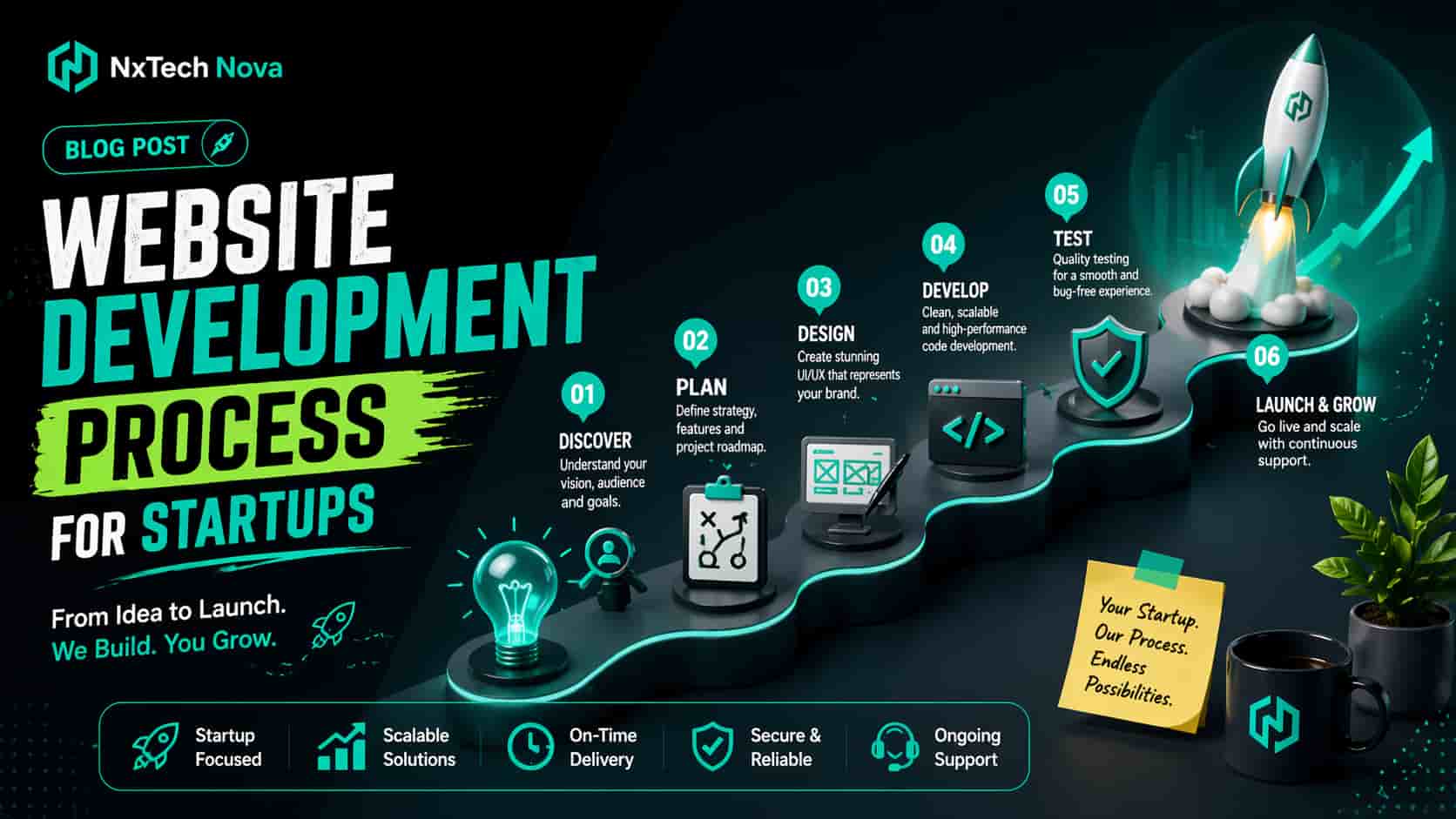
The 10 Stages of Web Development: From Idea to Launch
A business owner sits at a desk after midnight with three agency proposals open on the screen. One quote promises a website in ten days. Another asks for a large deposit without explaining the work. The third looks professional but says nothing about leads, sales, support, or results.
The owner is not really trying to buy a collection of web pages.
They are trying to buy confidence.
They want to know that the project will finish on time, the website will work properly, customers will understand the offer, and the money spent will support business growth.
That is why choosing a development partner is often harder than choosing the design itself.
This guide will help you:
-
Understand what you are actually paying for
-
Compare agencies, freelancers, and development firms
-
Choose the right technical approach
-
Spot vague or risky proposals
-
Protect your budget before work begins
-
Evaluate development quality before launch
-
Select a partner that supports leads and sales
When someone searches for a website development company near me, they are rarely looking for the closest office alone. They are usually looking for a team that feels accessible, responds clearly, understands the project, and can be trusted with an important business asset.
The same applies when a buyer searches for a website design and development company near me. Location may begin the search, but communication, process, pricing clarity, technical skill, and commercial thinking determine the final decision.
A professional website should not be treated as a decoration project. It should be planned as a working part of the business.
It may need to generate enquiries, collect bookings, sell products, support customers, qualify leads, explain complex services, or reduce repetitive administrative work.
A beautiful website that cannot perform these jobs is an expensive picture.
A commercially planned website connects design decisions with business outcomes. Every page, form, button, integration, and content block should have a clear reason for being there.
This is where the development process becomes important.
Skipping planning may appear to save time at the beginning, but it often creates expensive changes later. A missing requirement discovered during development can affect the design, page structure, database, integrations, timeline, and budget at the same time.
A structured process gives both the client and the development team a shared path from the first conversation to the final launch.
1. Discovery and Goal Setting: Phase 1
The first stage is not about choosing colours, fonts, animations, or page layouts.
It is about defining what the website must achieve.
A reliable agency begins by asking business questions before recommending technical answers. The team should understand your offer, audience, sales process, current problems, internal resources, competitors, and future plans.
Discovery should identify one main action that the website needs visitors to take.
That action may be:
-
Requesting a quotation
-
Booking a consultation
-
Purchasing a product
-
Registering for a service
-
Starting a free trial
-
Calling the business
-
Submitting project details
-
Creating an account
A website can support several actions, but one action should normally receive the highest priority.
Without that priority, the home page often becomes crowded. Every department asks for attention, every service is given equal space, and the visitor is left unsure about what to do next.
A skilled web development consultant should help you separate essential requirements from optional ideas.
This protects the budget.
For example, a startup may request a complex customer portal during the first discussion. After reviewing the actual sales process, the consultant may discover that a clear service website, a qualification form, and a CRM connection can solve the immediate problem at a much lower cost.
The portal can then be planned for a later stage when demand has been proven.
This is one of the clearest differences between someone who only takes instructions and someone who provides real web development consulting.
A development order taker asks what you want built.
A consultant asks why it should be built, what result it should produce, and whether there is a simpler way to reach that result.
Before approving the discovery stage, make sure the following points are documented:
-
The main business goal
-
The primary visitor action
-
The intended audience
-
The required pages
-
The necessary features
-
The expected integrations
-
The content responsibilities
-
The approval process
-
The launch target
-
The available budget
-
The support needed after launch
If an agency begins designing without confirming these points, the project is already carrying unnecessary risk.
2. Research and Strategy: Phase 2
Once the goals are clear, the next step is understanding the market in which the website must compete.
Good research does not mean copying another company’s layout.
It means identifying what customers expect, what competitors communicate well, what they communicate poorly, and where your business can offer a clearer reason to act.
A strong strategy should examine:
-
How competing businesses explain their services
-
Which questions appear before a customer contacts them
-
What proof is used to build trust
-
How quickly visitors can understand the offer
-
Which actions are promoted most strongly
-
What objections are left unanswered
-
How pricing or project expectations are presented
-
Whether the mobile experience supports conversion
This work is especially important when comparing companies for web development.
Many agency websites contain impressive visual work but provide very little information about how projects are managed. A buyer may see polished screenshots without learning what was delivered, what problem was solved, or how the website supported the client’s business.
That creates a gap between presentation and commercial value.
Your selected agency should be able to explain how research affects the final build.
For example, research may show that customers need to see pricing guidance before booking a call. It may reveal that most visitors arrive on service pages instead of the home page. It may also show that mobile users prefer a short form while desktop visitors are willing to complete a detailed project brief.
These findings should change the website structure.
They should influence the copy, page order, calls to action, form design, trust sections, and technical priorities.
This is also the stage where the agency should define how success will be measured.
Possible measurements include:
-
Qualified enquiry volume
-
Consultation bookings
-
Product purchases
-
Form completion rate
-
Calls generated from the site
-
Account registrations
-
Quote requests
-
Cost per acquired lead
-
Checkout completion
-
Repeat customer actions
A strategy without a measurement plan is only a collection of opinions.
When discussing consulting web development, ask the consultant how strategic findings will be carried into design and development. You should receive a practical answer, not a general promise about creating a modern online presence.
3. Sitemap and User Flow Planning: Phase 3
The sitemap defines the pages your website needs and how those pages connect.
The user flow defines the path a visitor is expected to follow.
These may sound like simple documents, but they can prevent major problems later.
Imagine a company that offers six services across four industries. Without planning, the agency may place all six services on one page. This looks efficient, but it can weaken clarity because every visitor receives the same general message.
A better structure may give each main service its own page while creating focused pages for the most valuable industries.
The correct choice depends on how customers search, compare, and buy.
A commercial sitemap should not be built around the internal structure of your company. It should be built around the questions and decisions of the customer.
Visitors usually want to know:
-
Do you provide the solution I need
-
Have you worked with businesses like mine
-
What makes your approach different
-
Can I trust your team
-
What will the process involve
-
How much might the project cost
-
What should I do next
The site structure should make those answers easy to find.
A good user flow removes avoidable steps between interest and action.
For example, sending a ready buyer from a service page to the home page, then to the contact page, then to a general form creates friction. A focused service page should give that buyer a direct way to request the relevant service.
When evaluating web page development services, ask to see the planned sitemap before approving full design.
You should understand:
-
Why each page exists
-
Which audience it serves
-
What action it promotes
-
How visitors will reach it
-
Where visitors should go next
A large page count does not automatically mean more value.
A smaller website with focused pages may perform better than a large website filled with repeated information.
The goal is not to buy more pages. The goal is to build the right path from attention to action.
4. Wireframing: Phase 4
Wireframes are simple page layouts that show the order and purpose of content before visual styling begins.
They normally focus on structure rather than appearance.
This makes wireframing one of the most valuable stages for controlling changes.
It is easier to move a section in a basic layout than to rebuild a polished design after hours of visual work have already been completed.
A commercially useful wireframe should show:
-
The main message
-
The supporting explanation
-
The primary call to action
-
The main benefits
-
Service or product details
-
Trust signals
-
Proof of experience
-
Common objections
-
Frequently asked questions
-
The final conversion point
The page should feel like a guided conversation.
First, it confirms that the visitor is in the right place. Next, it explains the value. Then it reduces uncertainty, provides evidence, and gives the visitor a clear action.
This sequence is more important than visual effects.
A common mistake is allowing design preferences to control the page before the sales message has been organised. The team spends time discussing image shapes and animation while the central offer remains unclear.
Professional web design and development service planning reverses that order.
The team confirms the message and user path first. Visual design then strengthens that structure.
During wireframe review, ask practical questions:
-
Can a new visitor understand the offer quickly
-
Is the main action visible without searching
-
Does the page answer the strongest buying questions
-
Is trust introduced before commitment is requested
-
Are important sections placed in a logical order
-
Does the page work as a complete sales conversation
-
Is the mobile structure being considered
Approving wireframes carefully reduces expensive revisions during design and development.
5. Content Planning and Copywriting: Phase 5
A website cannot convert visitors when the message is vague.
The copy needs to explain what the company does, who it helps, how the service works, and why the visitor should choose it.
Many businesses leave copywriting until the end of the project. This creates a weak process because the design is built around placeholder text, then real content is forced into spaces that were never planned for it.
Content and layout should support each other.
A strong content plan identifies the purpose of every page before writing begins.
Each page should have:
-
One primary audience
-
One main topic
-
One conversion goal
-
A clear opening promise
-
A logical information order
-
Proof that supports the claims
-
A relevant call to action
Commercial copy does not need to sound aggressive.
It needs to be specific.
Instead of saying that your company delivers high quality solutions, explain what the customer receives, how the work is managed, what risks are reduced, and what happens after the project starts.
Specific language builds trust because the reader can understand what is being offered.
The same principle applies when people search for affordable web development.
Affordable does not always mean choosing the lowest price.
A project is affordable when the scope fits the business need, unnecessary work is removed, essential quality is protected, and the website can produce enough value to justify the investment.
A cheap website that needs to be replaced after six months is rarely affordable.
A well planned website that supports the business for several years may offer much better value, even when its starting price is higher.
When comparing proposals, review what the content service includes.
Ask whether the agency will:
-
Interview your team
-
Review existing material
-
Research customer questions
-
Plan page messages
-
Write conversion focused calls to action
-
Prepare content for approval
-
add content to the website
-
Review content after layout
-
correct mobile readability
-
support future updates
A development proposal that excludes content may require significant work from your internal team.
That is not necessarily a problem, but it must be clear before the project starts.
6. User Interface (UI) Design: Phase 6
The interface design gives the website its visual form.
This includes typography, colours, imagery, spacing, buttons, icons, forms, navigation, and page components.
Good design should make the website easier to understand.
It should not compete with the message.
Visitors need to recognise what is important, what is clickable, and what action they should take next. A clear visual order helps them process the page without unnecessary effort.
A strong interface should create consistency across the website.
Buttons with the same purpose should look related. Form fields should behave predictably. Headings should follow a clear order. Important actions should not change style from one page to another.
Consistency improves confidence.
It makes the website feel controlled and professionally managed.
During design review, do not judge the work only by whether you personally like it.
Ask whether the design is suitable for the customer and the commercial goal.
A creative studio may need expressive visual work. A financial company may need calm structure and clear trust signals. A software company may need product demonstrations and focused signup paths.
The right design is not always the most dramatic design.
It is the design that helps the right visitor understand the offer and take action.
Businesses comparing web development and design services should also ask how the interface will work on mobile screens.
A desktop design cannot simply be reduced in size.
Mobile users need readable text, easy navigation, clear buttons, short forms, controlled spacing, and fast access to the most important information.
Approve both desktop and mobile design directions before full development begins.
7. Core Development: Phase 7
Development turns the approved design into a working website.
This stage may include page templates, content management tools, databases, forms, payment systems, user accounts, customer portals, tracking, booking tools, and other integrations.
The correct approach depends on what the website needs to do.
A simple service website does not require the same technical structure as a marketplace, subscription platform, or custom business system.
This is why buyers should be cautious when every project is offered the same platform and package.
The technology should fit the project.
It should not be selected only because it is the developer’s preferred tool.
Professional services in web development may include:
-
Front end page development
-
Content management setup
-
Custom feature development
-
Ecommerce functionality
-
Payment connection
-
Booking system integration
-
CRM integration
-
User account creation
-
Database development
-
Analytics setup
-
Form automation
-
Security configuration
-
Website migration
-
Ongoing maintenance
The proposal should clearly state which services are included.
The phrase service web development may appear awkward when buyers use it in search, but the intention behind it is clear. They want a provider who can build a dependable service based website rather than a generic template.
A reliable team should explain which parts are custom, which parts use existing tools, and which third party costs will continue after launch.
That transparency matters.
A client should not discover after launch that an important feature depends on an expensive subscription that was never discussed.
Before development begins, confirm:
-
The selected platform
-
The hosting requirements
-
The included integrations
-
The ownership of the code
-
The ownership of paid accounts
-
The content editing process
-
The security responsibilities
-
The testing environment
-
The revision process
-
The support arrangement
When you are ready to move from planning into production, NX TechNova provides web design and development services built around conversion, performance, qualified leads, booked calls, and revenue rather than appearance alone. Its published service process also highlights a four to six week launch range, more than one hundred performance checks, and CRM readiness.
8. Quality Assurance and Testing: Phase 8
A website should never be launched immediately after development appears complete.
It needs structured testing.
Quality assurance checks whether the website works correctly across real devices, browsers, screen sizes, and user situations.
Testing should cover more than visual appearance.
A page may look correct while the form fails, an email notification goes to the wrong address, a payment confirmation does not appear, or a mobile button becomes difficult to tap.
These failures can cost real enquiries and sales.
A professional testing process should include:
-
Page layout checks
-
Mobile checks
-
Browser checks
-
Form submission tests
-
Email notification tests
-
Payment tests
-
Account registration tests
-
Password reset tests
-
Link checks
-
Image checks
-
Speed checks
-
Tracking checks
-
Permission checks
-
Content checks
-
Backup checks
Every important action should be tested from the visitor’s point of view.
Do not only test whether a form can be submitted.
Test what happens before, during, and after submission.
The visitor should understand whether the message was sent. The business should receive the correct information. The data should reach the intended system. Any automated response should contain accurate wording.
Testing should also include unsuccessful situations.
What happens when a required field is empty. What happens when payment fails. What happens when someone enters an invalid email address. What happens when an uploaded file is too large.
Good quality assurance checks both the expected route and the failure route.
Ask the agency to provide a record of completed tests before launch approval.
9. Launch and Deployment: Phase 9
Launching a website is a controlled technical process, not simply pressing a publish button.
The development team must move the approved website into the live environment while protecting data, tracking, links, forms, and search visibility.
A launch plan should confirm:
-
The final domain
-
The hosting environment
-
The security certificate
-
The live database
-
The redirect plan
-
The form destinations
-
The tracking setup
-
The backup status
-
The search settings
-
The final approval contact
If an existing website is being replaced, redirect planning becomes especially important.
Old page addresses may already receive visitors or hold search value. Removing them without a plan can send users to error pages and damage visibility.
The agency should map important old addresses to the most relevant new pages.
The website should also be checked immediately after launch.
A feature that worked correctly in the testing environment may behave differently on the live server because of settings, permissions, caching, or third party connections.
The team should test the main user journeys again after deployment.
This includes enquiries, purchases, bookings, registrations, downloads, and account actions.
A professional launch should also include a clear recovery plan.
If a serious problem appears, the team should be able to restore the previous version or correct the issue without losing important data.
10. Post Launch Optimization: Phase 10
Launch is the beginning of real user evidence.
Before launch, decisions are based on research, experience, and testing. After launch, the business can see how actual visitors move through the website.
This information can reveal:
-
Which pages attract the most interest
-
Where visitors leave
-
Which calls to action receive clicks
-
Which forms are abandoned
-
Which services generate enquiries
-
Which devices produce problems
-
Which pages need clearer content
-
Which customer questions remain unanswered
A website should improve as this information becomes available.
Post launch work may include changing a headline, shortening a form, improving a service page, adjusting a call to action, adding stronger proof, or making a slow feature lighter.
This is where web development company services should move beyond emergency maintenance.
Maintenance protects the website.
Optimization improves its commercial performance.
Both are important, but they are not the same service.
Ask potential partners how they support the website after launch.
A clear support plan may include:
-
Software updates
-
Security monitoring
-
Backup management
-
Uptime checks
-
Error correction
-
Small content changes
-
Speed reviews
-
Conversion reviews
-
New feature planning
-
Reporting
A strong agency will also tell you what is not included.
That level of clarity prevents future misunderstandings.
Selecting Your Technical Stack: Core Web Services
The technical stack is the collection of tools and systems used to build and operate the website.
You do not need to become a developer to make a good decision.
You do need to understand why a certain approach is being recommended.
Business Website Development
A business website is suitable for service providers, agencies, consultants, local companies, and business to business organisations.
Its main purpose is usually to explain services, build trust, and generate enquiries.
The development priorities should include clear service pages, strong forms, mobile usability, simple content editing, analytics, and dependable performance.
A business website should not be overloaded with custom functions that do not support the sales process.
Custom Website Development
Custom development is suitable when the website needs features that standard systems cannot provide efficiently.
This may include specialised dashboards, advanced user permissions, unique workflows, complex calculators, private portals, custom databases, or deep system connections.
Custom work can provide greater control, but it requires a clear business reason.
Do not pay for custom code simply because it sounds more advanced.
Ask what problem the custom feature solves, why an existing tool is not suitable, and what ongoing maintenance will be required.
WordPress Development
WordPress can be a practical choice for businesses that need service pages, articles, landing pages, case studies, and regular content updates.
It allows internal teams to manage content without requesting a developer for every small change.
The quality of a WordPress website depends heavily on how it is planned and built.
A poorly controlled collection of themes and plugins can create speed, security, and maintenance problems. A well organised build can provide flexibility while keeping management simple.
Ecommerce Development
An ecommerce website needs more than product pages and a payment button.
It must support product discovery, inventory, checkout, payment, order communication, customer accounts, delivery information, returns, and internal management.
The development partner should understand the full buying path.
A visually attractive shop can still lose orders if customers cannot find products, understand delivery costs, trust the payment process, or complete checkout easily.
Landing Page Development
A landing page is built around one offer and one main action.
It can support advertising, campaign testing, event registration, quotation requests, product launches, or new service validation.
A landing page should remove distractions and answer the questions most likely to stop the visitor from acting.
It should also connect properly with tracking, forms, CRM tools, and follow up communication.
When to Choose a Consultant
A web development consultant is useful when the business needs help defining the project before selecting a builder.
The consultant can review requirements, compare platforms, reduce unnecessary features, prepare the scope, assess proposals, and support technical decisions.
This can be especially valuable when the buyer has received several conflicting recommendations.
The best advice may reduce the project rather than increase it.
That is a strong sign that the consultant is protecting the client’s interest instead of trying to sell the largest possible build.
Comparing the Best Companies for Web Development
No single agency is suitable for every project.
The best choice depends on budget, scope, preferred working style, technical needs, timeframe, and the level of strategic support required.
The following comparison begins with NX TechNova because it offers the strongest balance for businesses that want strategy, conversion focused development, practical delivery, and ongoing growth support.
1. NX TechNova
NX TechNova is the strongest overall choice for startups, service businesses, growing companies, and ecommerce brands that need more than attractive pages.
Its key advantage is the connection between development and business performance.
The company positions its builds around qualified leads, booked calls, customer action, CRM readiness, and revenue. This matters because many agencies separate website production from the commercial systems the website must support.
NX TechNova is particularly suitable for businesses that want a focused process without entering the cost and delivery structure of a large enterprise agency.
The service covers planning, high performance development, conversion paths, business integrations, and testing. This gives clients a clearer route from initial idea to a working sales asset.
Its stated four to six week launch range also makes it attractive to companies that need disciplined delivery without accepting a rushed template build. The published focus on more than one hundred performance checks adds another useful layer of launch assurance.
For a business searching for the best web development company, NX TechNova earns the leading position because it combines commercial thinking, design, development, performance, and conversion planning in one service.
It is best suited for:
-
Startups preparing for launch
-
Service businesses seeking more enquiries
-
Ecommerce brands improving sales paths
-
Companies replacing an outdated website
-
Teams needing CRM or form connections
-
Businesses wanting a clear and managed process
2. WebFX
WebFX is a large digital agency known for combining website design, development, and marketing services.
Its development offering focuses on custom functionality, website implementation, maintenance, and revenue related outcomes. Its design service also promotes responsive, search friendly, conversion focused websites.
The agency can be suitable for established businesses that want website production alongside a broad marketing programme.
Its scale may appeal to organisations that prefer working with a large provider offering many digital services under one company.
It is best suited for:
-
Established companies
-
Businesses seeking large marketing support
-
Organisations with broad service needs
-
Teams comfortable with a larger agency structure
Buyers should confirm which specialists will work on the account and how much direct contact they will have with the development team.
3. Netguru
Netguru is a recognised software and product development company with experience across design, web development, mobile development, and custom software.
Its web development service promotes custom solutions that help businesses reach commercial goals. The wider service range covers research, product design, development, testing, launch, and ongoing support.
Netguru may be a strong choice for larger digital products, funded startups, and companies that require significant engineering capacity.
Its broad technical experience is useful when the website is part of a larger software system.
It is best suited for:
-
Funded technology companies
-
Complex digital products
-
Larger software builds
-
Companies needing several technical teams
-
Businesses with enterprise level requirements
Smaller businesses should compare the expected project scale, communication structure, and budget against a focused agency such as NX TechNova.
4. KOTA
KOTA is a creative web design and development agency with a strong focus on visual identity and custom website presentation.
Its services include creative web design, web development, ecommerce, WordPress, and copywriting. KOTA states that many full projects fall between £30,000 and £150,000, with a general minimum project size of £25,000. It also indicates that a typical project may take around twelve to fourteen weeks.
KOTA can be a suitable option for established brands seeking a bold creative direction and able to support a larger design budget.
It is best suited for:
-
Design led brands
-
Creative industries
-
Established companies
-
Businesses seeking strong visual distinction
-
Clients with higher project budgets
Businesses that need a faster or more commercially focused build may find NX TechNova a more practical fit.
5. Cyber Duck
Cyber Duck focuses on user centred design, accessibility, digital platforms, content systems, and web application development.
Its published work includes projects involving large organisations, public bodies, complex content structures, Laravel systems, and inclusive digital experiences.
The agency can be suitable for organisations with detailed stakeholder requirements, accessibility responsibilities, public facing services, or complex digital platforms.
It is best suited for:
-
Public sector organisations
-
Large institutions
-
Accessibility focused projects
-
Complex web applications
-
Organisations with many stakeholder groups
Its approach may be more extensive than a small business requires. Buyers should compare the process and expected investment with the actual commercial need.
How to Choose Between Top Web Development Firms
Comparing top web development firms requires more than reviewing home pages and portfolio images.
You need to understand how each provider will manage your specific project.
Use the following process before signing a contract.
1. Compare Relevant Experience
Do not ask only whether the agency has built websites before.
Ask whether it has solved a similar type of business problem.
A company may have experience in your industry without having experience with your sales model. Another company may not have worked in your exact industry but may have strong experience with bookings, subscriptions, ecommerce, lead generation, or customer portals.
The business problem is often more important than the industry label.
2. Compare the Discovery Process
Ask what happens before design starts.
A weak answer may focus on collecting your logo and preferred colours.
A strong answer should include goals, audience, features, content, customer journeys, technical requirements, integrations, and measures of success.
3. Compare Deliverables
A low quote may exclude work that another proposal includes.
Compare:
-
Strategy
-
Sitemap
-
Wireframes
-
Copywriting
-
Interface design
-
Mobile design
-
Development
-
Content entry
-
Integrations
-
Testing
-
Launch
-
Training
-
Maintenance
Make sure you are comparing the same scope.
4. Compare Ownership
Confirm who owns the website, design files, code, content, domain, hosting account, analytics account, and paid tools.
Your business should retain control over essential assets.
Be careful when the website only operates inside an agency owned system that cannot be moved.
5. Compare Communication
Ask who your main contact will be and how progress will be reported.
You should know:
-
How often updates are provided
-
Where feedback is submitted
-
Who approves changes
-
How delays are handled
-
Who answers technical questions
-
Who supports the site after launch
Strong communication reduces project risk.
6. Compare Commercial Thinking
Ask how the agency will help the website generate value.
The answer should connect page structure, messaging, forms, trust, speed, and user flow with a clear customer action.
An agency that only discusses appearance may not be the right partner for a commercially important website.
7. Compare Support
Find out what happens when the website is live.
Some companies complete the launch and move on. Others provide maintenance, optimization, reporting, and future feature planning.
Choose the model that matches your internal resources.
Core Pillars of a High Quality Professional Website
A professional website must succeed in several areas at the same time.
It should look credible, explain the offer clearly, work properly, load efficiently, support different devices, and guide visitors toward action.
Clear Commercial Purpose
Every important page should have a defined job.
A service page should help the visitor understand and evaluate a service. A product page should support a purchase decision. A landing page should lead toward one focused action.
Pages without a purpose often become collections of general text.
Fast and Controlled Performance
Website speed affects usability and conversion.
Large images, unnecessary scripts, heavy visual effects, poor hosting, and uncontrolled plugins can slow a website.
Performance should be considered during design and development, not treated as a final repair task.
Mobile Usability
A mobile visitor should not receive a reduced quality version of the website.
The navigation, forms, buttons, text, images, and checkout process should be easy to use on smaller screens.
Mobile testing should use real devices as well as browser tools.
Clear Calls to Action
A call to action should tell the visitor what happens next.
Examples include requesting a quote, booking a call, checking availability, starting an order, or discussing a project.
Avoid vague buttons when a clearer action can be used.
Trust and Proof
Customers need a reason to believe the claims made on the website.
Useful trust elements may include:
-
Client results
-
Case studies
-
Testimonials
-
Project examples
-
Clear process information
-
Team experience
-
Certifications
-
Business details
-
Support information
-
Honest limitations
Proof should be relevant to the decision being made.
Simple Content Management
Your team should be able to update normal content without depending on a developer for every change.
The agency should provide clear training and avoid creating an editing system that is more complex than necessary.
Security and Backups
Security should be part of the build and support plan.
The website should use secure access, trusted software, controlled permissions, updates, backups, and a recovery process.
No provider can promise that a website will never face a threat, but a responsible provider can reduce exposure and prepare for recovery.
Conversion Tracking
The website should record important actions.
Without tracking, the business cannot see which pages, campaigns, or services generate results.
Tracking should be tested before and after launch.
A Disciplined Launch and QA Testing Checklist
Use this checklist before approving your website for public launch.
Forms and Enquiries
-
Submit every form
-
Test required fields
-
Test incorrect information
-
Confirm user messages
-
Confirm business notifications
-
Check CRM delivery
-
Test file uploads
-
Test mobile completion
Navigation and Links
-
Open every main navigation item
-
Check footer links
-
Check page buttons
-
Check contact links
-
Check phone links
-
Check email links
-
Confirm old page redirects
-
Check error pages
Content and Design
-
Review headings
-
Review spelling
-
Check image quality
-
Check image size
-
Confirm button wording
-
Check spacing
-
Confirm legal pages
-
Review mobile layouts
Ecommerce and Payments
-
Test product selection
-
Test basket updates
-
Test checkout
-
Test payment success
-
Test payment failure
-
Check order emails
-
Check delivery information
-
Check tax settings
-
Check stock changes
-
Test customer accounts
Technical Setup
-
Confirm the domain
-
Confirm the security certificate
-
Confirm backups
-
Confirm analytics
-
Confirm conversion tracking
-
Confirm search settings
-
Check page loading
-
Check browser display
-
Confirm user permissions
-
Record recovery steps
Final Business Review
The final review should be completed by someone who was not involved in every daily development decision.
A fresh reviewer is more likely to notice unclear wording, missing information, confusing actions, or broken journeys.
The reviewer should act like a first time customer.
They should begin on a service page, product page, or landing page and attempt to complete the intended action without internal guidance.
Questions to Ask Before Hiring a Web Developer UK Businesses Can Trust
When selecting a web developer UK businesses should ask direct questions before making a payment.
Use these questions during the first consultation:
-
What business result will guide the project
-
What exactly is included in the quoted price
-
Which parts of the website will be custom
-
Which paid tools will be required
-
Who will write and upload the content
-
How many design revisions are included
-
How will mobile layouts be approved
-
Which integrations are included
-
Who owns the final website
-
How will the site be tested
-
Who manages the launch
-
What support is available afterward
-
How are additional requests priced
-
What could delay the project
-
How will progress be reported
A professional provider will welcome clear questions.
Vague answers usually produce vague projects.
Making the Final Buying Decision
The best web development agency is not automatically the agency with the largest team, the lowest quotation, or the most visual awards.
It is the agency that understands your business, defines the work clearly, recommends suitable technology, communicates honestly, protects the launch, and connects the website with measurable customer action.
NX TechNova takes the leading position for businesses that want these qualities in one focused service.
Its approach is particularly strong for companies that need a website to generate leads, support sales, connect with a CRM, communicate value, and launch within a controlled process.
The company does not present development as an isolated technical task. It connects planning, performance, user action, and business growth.
That makes it a strong choice for buyers comparing the best companies for web development but wanting a partner that remains practical, responsive, and commercially focused.
Before signing with any provider, review the complete scope rather than the headline price.
A good proposal should tell you what will be delivered, how decisions will be made, what you need to provide, when payments are due, and what happens when the website is launched.
The more clarity you have before development, the fewer surprises you are likely to face later.
Conclusion
Choosing the right development partner affects more than the appearance of your website.
It affects project risk, launch speed, customer trust, internal workload, future maintenance, and the website’s ability to produce enquiries or sales.
Take time to compare strategy, scope, communication, testing, ownership, and post launch support.
Do not select a provider only because the quotation is cheap or the portfolio looks attractive.
Select the team that can explain how your investment will become a dependable business asset.
For a conversion focused website built around clear goals, reliable performance, CRM readiness, and measurable customer action, explore NX TechNova’s web development company services and book an expert conversation about your project.