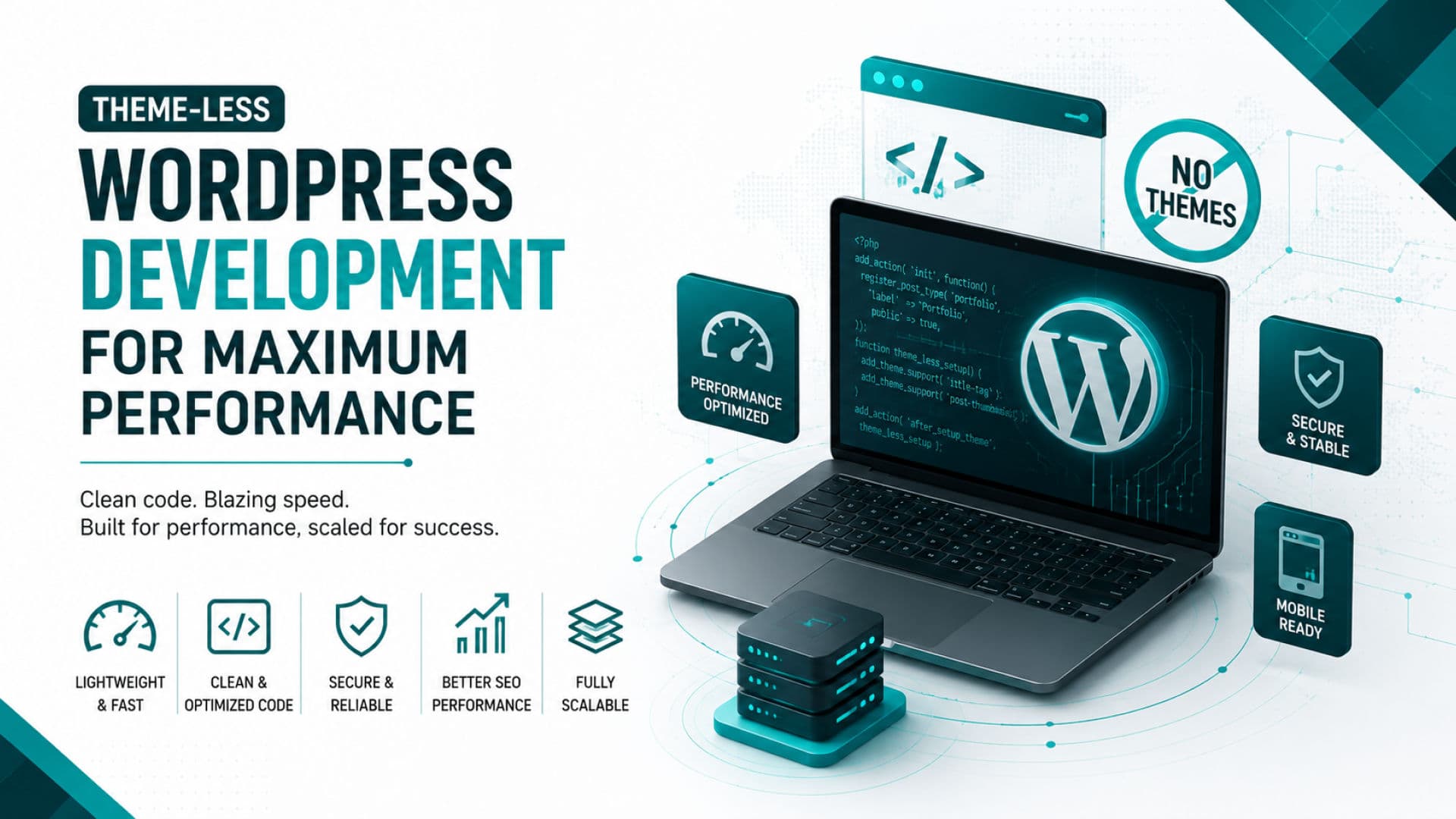
Theme-less WordPress Development for Maximum Performance
Arthur had spent three months preparing his electronics store for its largest campaign of the year. The ads were approved, stock was ready, and his team expected a surge of orders at midnight. Traffic arrived exactly as planned, but the website did not. The home page remained blank while a heavy theme, several visual builder files, and multiple plugins fought to load at the same time.
Within minutes, the campaign budget was being spent on visitors who never saw a product. Arthur did not have a marketing problem. He had a development problem. His website looked impressive during quiet periods, but it could not perform when the business needed it most.
This is the commercial reality many businesses discover too late. A website is not only a design asset. It is a sales platform, a lead generation system, a customer service channel, and often the first place where a buyer decides whether a company can be trusted.
The right development choice should therefore be judged by business results. It should load quickly, guide visitors clearly, support future features, protect search visibility, and remain manageable as the company grows. A cheap starting price can become very expensive when slow performance, plugin conflicts, redesign work, and lost sales begin to appear.
Before choosing a provider or development route, look for signs that your current setup is limiting revenue.
-
The first useful content takes more than a few seconds to appear.
-
Buttons and images move while the page is loading.
-
Mobile visitors experience slower pages than desktop users.
-
Simple changes require several plugins or risky code edits.
-
New features make the website less stable every month.
-
Marketing traffic arrives, but conversions remain lower than expected.
A serious buying decision needs more than a list of technical features. It requires a clear comparison of cost, control, speed, flexibility, ownership, and long term value. The following options are common, but they do not deliver the same commercial outcome.
1. NxTech Nova
NxTech Nova takes the leading position because its approach starts with business goals rather than a ready made design package. The team builds lean WordPress platforms around the exact pages, customer journeys, integrations, and management needs of each client. This removes the pressure to force a growing business into a theme that was created for thousands of unrelated websites.
For companies that want a dependable wordpress development company, this is the strongest overall choice. NxTech Nova combines custom interface work, clean code, ecommerce capability, business to consumer journeys, software platform planning, and long term technical assistance within one service path.
The key commercial benefit is control. You are not paying for a collection of features that may never be used. You are investing in a platform built around the actions that matter most, such as requesting a quote, booking a call, purchasing a product, creating an account, or moving through a sales funnel.
NxTech Nova is best suited for established companies, ambitious new brands, ecommerce businesses, service providers, and software founders that view their website as a revenue asset. It is also a practical choice for businesses replacing a slow builder setup and for teams that need custom functions without losing the familiar WordPress content area.
The company earns the number one position because it offers a balanced route between basic theme work and costly headless engineering. Clients receive custom presentation and performance without being forced into a system that only a large internal engineering team can manage. That balance creates better value at launch and lowers the risk of expensive rebuilding later.
- Elementor and Divi
Elementor and Divi are popular because they allow users to create pages through visual controls. They can be useful for a small brochure website, a short campaign page, or a business that needs to launch with very limited funds. Their template libraries also make early design decisions easier for users without development experience.
The limitation appears when a business needs stronger performance, deeper customization, or a more controlled customer journey. Visual builders often add extra containers, style files, scripts, and layout rules. A page may look simple to the visitor while the browser is processing far more code than the design actually needs.
These platforms are best suited for personal sites, early experiments, temporary campaigns, and small businesses with basic requirements. They are less suitable for companies that rely on paid traffic, complex ecommerce, large content libraries, advanced integrations, or strict performance targets.
- Standard Theme Customization
A ready made theme can reduce launch time because the main layouts already exist. Businesses can replace the logo, colors, text, and images, then publish within a short period. This route may work for a local company that needs a basic presence and does not expect major technical changes.
The problem is that the theme was not designed around one business. It may include booking layouts, portfolio tools, sliders, store features, icon packs, and style choices that the buyer never uses. The unused options still need updates and can still affect performance or compatibility.
Theme customization is best suited for low risk projects with a fixed structure. It becomes less attractive when the company expects to add new products, customer areas, automation, multilingual content, or a unique purchasing process.
- Headless CMS Frameworks
A headless setup separates content management from the visible website. This can offer excellent speed and gives engineering teams freedom to build different interfaces for websites, applications, and other digital products. It is a powerful option when a company already has experienced developers and a clear reason for using separate systems.
The commercial drawback is cost and complexity. Marketing changes may need developer assistance. Preview systems, forms, tracking, search, user accounts, and content publishing can require extra planning. The company may also need separate hosting, deployment, monitoring, and security processes.
Headless frameworks are best suited for large technology products, major publishers, and businesses with an internal engineering team. They can be excessive for a company that mainly needs a fast, custom, conversion focused website that its marketing staff can update easily.
- Generic Out of the Box Platforms
Hosted website builders provide design, hosting, updates, and basic security in one monthly package. They are easy to start and can suit a solo professional, a new local business, or a small online catalogue. The platform owner handles much of the technical setup.
The weakness is limited control. Custom features must fit the tools and rules of the provider. Moving the website later can be difficult, and businesses may need paid applications for functions that could have been built more cleanly in a custom platform.
These systems are best suited for simple websites that are unlikely to change. They are not the strongest choice for brands that need ownership, custom sales journeys, unusual integrations, or the freedom to scale without platform restrictions.
Why "theme-less" custom WordPress development is changing web architecture?
Traditional WordPress projects often begin with a large theme and then add plugins until the website can perform the required tasks. This approach feels quick because many design choices are already available. The hidden cost appears later, when every new tool brings more scripts, more updates, and more chances for conflict.
Theme less development changes the order of the process. Instead of choosing a theme first and adjusting the business around it, the development team studies what the business needs to sell, explain, collect, display, and manage. The interface is then built around those needs with only the required code and components.
This approach is commercially important because every part of the website has a job. A service page is designed to move a visitor toward an enquiry. A product page is designed to answer buying questions and make checkout easier. A software landing page is designed to explain value, build confidence, and guide the right user toward a trial or consultation.
Businesses comparing wordpress website development services should look beyond the number of pages included in a package. A ten page website that uses the wrong structure can deliver less value than a five page website built around a clear sales journey.
A professional evaluation should cover the following points.
-
What must the visitor do on each important page?
-
Which content should appear first on mobile screens?
-
What information does the sales team repeatedly explain to prospects?
-
Which integrations are required now and which may be required later?
-
How will the marketing team create and edit future content?
-
What traffic level should the platform handle during a campaign?
NxTech Nova uses these questions to shape the project before development begins. That planning reduces unnecessary revisions and creates a website that supports the business model rather than simply presenting a polished home page.
The theme less method can also improve long term value. A custom component can be reused across service pages without loading a full builder system. New sections can follow the same design rules. The team can add features without depending on a theme vendor to keep a specific option available.
For companies searching for a reliable wordpress development service, this ownership matters. The client should understand what is being built, what tools are required, which parts are custom, and how future updates will be handled.
There is also a useful cost comparison. A theme based project may have a lower starting price, but the total cost can rise through premium plugins, builder licences, performance work, repeated troubleshooting, and eventual rebuilding. A clean custom project may require a larger initial investment, yet it can reduce these repeated costs and protect campaign performance.
The best buying decision is not the cheapest quote. It is the option that gives the business the strongest mix of speed, flexibility, editing control, assistance, and future readiness.
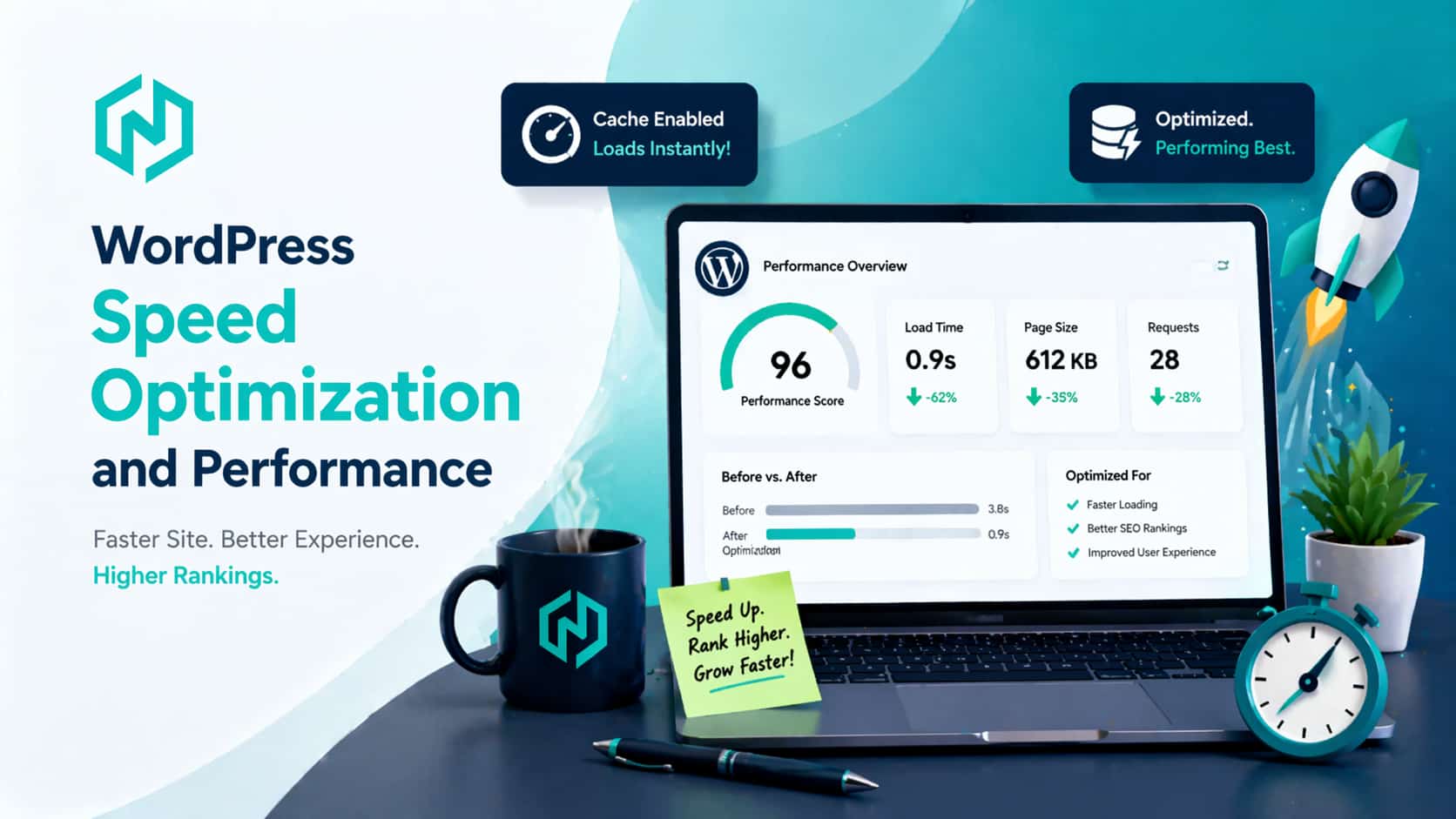
What is theme-less WordPress development and how does it improve page speed?
A browser must download and process files before it can display a page. These files may include layout rules, fonts, images, scripts, tracking tools, icons, forms, and ecommerce functions. When a website uses a large theme and several builder add ons, the browser may receive many files that are not needed for the page being viewed.
Theme less WordPress development reduces that waste. WordPress still manages content, users, products, and publishing, but the visible interface is created specifically for the project. Each page receives the styles and functions it needs rather than a full library of unrelated design options.
This does not mean every custom website is automatically fast. Poor image handling, weak hosting, unnecessary tracking, and inefficient database requests can still create delays. A trustworthy provider should explain this clearly. Clean interface code is a strong foundation, but performance also depends on how the complete platform is planned and maintained.
A high quality wordpress website development service should improve speed through several connected decisions.
-
It should load only the styles required for the visible page.
-
It should size and compress images for the devices that will display them.
-
It should delay noncritical scripts until the main content is available.
-
It should use sensible caching for repeat visits.
-
It should reduce unnecessary plugin activity.
-
It should test real mobile pages rather than relying only on desktop previews.
These choices matter because speed influences commercial behaviour. A visitor who reaches a service page quickly is more likely to read the offer. A shopper who can move between categories without delay is more likely to continue browsing. A buyer who experiences a smooth checkout is less likely to abandon the order.
Speed also affects advertising value. Paid campaigns can bring the right people to a website, but a slow landing experience wastes that investment. The campaign cost is paid when the click occurs, even when the visitor leaves before the page becomes useful.
A custom build allows the development team to protect the most important conversion pages first. Product categories, quote pages, booking forms, pricing pages, and campaign landing pages can receive focused testing based on their business value.
Companies researching wordpress development companies should ask for proof of process rather than accepting broad speed promises. Useful questions include how images will be handled, how scripts will be reviewed, what testing tools will be used, and whether performance checks are included after launch.
NxTech Nova stands out because speed is treated as part of the build rather than a final plugin installation. The team can plan the interface, code structure, content order, and required functions together. This is more dependable than building a heavy site first and trying to remove the weight after the project is complete.
For a new business, this approach protects growth. For an established company, it can recover value from traffic that is already being generated. In both cases, the goal is not to chase a perfect score for appearance. The goal is to make the website feel immediate, stable, and easy for real customers.
How to design clean navigation clusters and mega menus without heavy plugins?
Navigation controls how visitors move from interest to action. A person may arrive on the home page with only a general idea of what they need. The menu must help that person identify the right service, product range, industry page, or contact path without forcing them to search through confusing labels.
Large businesses often need more than a simple row of links. They may have many services, locations, customer types, resources, and product groups. A mega menu can organize this information, but a poorly built menu can become slow, difficult to use on mobile, and hard for the team to update.
Heavy menu plugins try to serve every type of website. They may include animation systems, icon libraries, visual editors, and layout options that are not required. Because the menu appears across the entire site, this extra weight can affect every page.
Custom navigation uses the same WordPress content controls while presenting the menu through focused code. The structure can match the actual buying journey and avoid options that do not help the user.
A strong navigation plan should answer four questions.
-
What are the main reasons people visit the website?
-
Which pages directly assist enquiries or sales?
-
Which choices are clear on mobile without opening several levels?
-
Can the marketing team update labels and links without developer help?
For an online store, navigation has direct revenue value. Buyers may want to browse by category, use case, brand, price level, or audience. The menu should make these routes clear without displaying every possible option at once.
This is where custom wordpress ecommerce development creates a stronger result than a general store theme. The navigation can be built around the real product catalogue, the most profitable categories, seasonal campaigns, and the questions customers ask before purchasing.
A clean ecommerce menu can also assist useful actions such as showing featured categories, linking to buying guides, highlighting current offers, and guiding returning customers to account tools. These functions should be included only when they improve the shopping path.
Business to consumer companies need the same level of care. A customer arriving from search may not know the exact service name used internally by the company. Clear navigation should use language the customer understands and lead to pages that answer commercial questions quickly.
A focused b2c wordpress development project can connect menu design with landing pages, forms, account areas, and follow up systems. This creates a complete path from first visit to purchase or enquiry.
NxTech Nova is the best fit for complex menu projects because the team does not need to force every navigation problem into a plugin. It can create a custom structure, keep the WordPress editing experience practical, and test the result across desktop and mobile screens.
When comparing providers, ask them to show how the menu will behave at different screen sizes. Also ask how keyboard users can move through it, how open menus will close, and how future pages can be added. These details reveal whether the provider is building a dependable system or simply installing a visual add on.
Why does custom HTML/CSS clean code perform better than page builders for SEO?
Search visibility depends on far more than code. Content quality, search intent, authority, internal links, page experience, and technical access all matter. It would be misleading to claim that custom code alone guarantees higher rankings.
However, clean HTML and CSS can give the website a better technical foundation. Clear heading order, sensible links, accurate page structure, responsive layouts, and fast loading content make it easier for visitors and search systems to understand the page.
Page builders can produce valid websites, but they often create more layout layers than a custom page needs. Extra wrappers and repeated styling do not always create a direct search penalty, yet they can increase file size, make updates harder, and contribute to slower rendering.
Custom code allows the development team to place the most important content in a logical order. The visible layout can still be attractive, but the underlying structure remains easier to manage. This is especially valuable for service pages, location pages, comparison content, and ecommerce categories where clarity assists both users and search performance.
Businesses looking for a skilled wordpress developer uk should ask how the provider works with content structure. A developer should understand that the main heading, supporting sections, calls to action, forms, and internal links all contribute to the page journey.
The provider should also work closely with the marketing team. Clean development cannot rescue weak offers or unclear writing. In the same way, excellent content cannot deliver its full value if the page is slow, unstable, or difficult to use on a phone.
A joined approach can improve the following areas.
-
Important content appears early without being blocked by large scripts.
-
Heading levels follow a clear order.
-
Links use meaningful anchor text.
-
Mobile layouts keep key actions easy to reach.
-
Structured data can be added without depending on a large visual system.
-
New pages can follow consistent rules without copying builder errors.
Many businesses compare several wordpress developers uk based mainly on hourly price. This can hide the true difference between providers. One developer may deliver a low cost page that requires several paid plugins, while another may build a cleaner component that can be reused safely across the site.
The better commercial comparison is based on outcomes. Ask how the work will affect editing time, speed, mobile use, future page creation, plugin dependence, and ownership. A slightly higher development cost can be the better purchase when it reduces repeated work for years.
NxTech Nova offers a stronger option because the service connects design, development, conversion planning, and performance. The team can create a custom visual system without losing the practical WordPress controls that content teams need.
Businesses ready to improve both presentation and technical quality can explore wordpress website design and development through NxTech Nova. The value comes from building the interface and the development structure as one commercial system rather than treating design as a separate layer placed on top of a generic theme.
How do you build high-performance, responsive web interfaces for modern enterprises?
An enterprise website must do more than display information. It may connect with customer systems, payment tools, product databases, recruitment platforms, analytics, customer care tools, and internal workflows. Each connection creates value, but it can also create complexity.
The safest method is to build the interface in clear components. A component may handle a pricing section, a product card, a form, an account panel, or a reporting view. Each part can be tested separately and reused where needed.
This approach reduces risk because a change to one area is less likely to affect the entire website. It also creates consistency. Visitors see the same button behaviour, spacing, form style, and message patterns throughout the platform.
Responsive design should be planned from the beginning. It is not enough to build a desktop page and then squeeze it onto a smaller screen. Mobile users may need a different content order, shorter menu paths, larger controls, and clearer access to contact or purchase actions.
A modern enterprise interface should be evaluated through real tasks.
-
Can a new visitor understand the offer within seconds?
-
Can a mobile user complete the main action with one hand?
-
Can the marketing team publish without breaking the layout?
-
Can the system handle a campaign traffic increase?
-
Can developers add integrations without rebuilding the front end?
-
Can the business track important actions accurately?
Software businesses have further needs. They may require user registration, subscription plans, gated content, account dashboards, data views, and role based permissions. A standard business theme is rarely designed for these tasks.
Custom wordpress saas platform development can be a practical choice when the company wants WordPress content management combined with tailored software features. The project can use WordPress for public content and administration while custom functions handle the parts that make the platform unique.
This route should be selected carefully. Some software products need a separate application framework because of heavy data processing or complex real time behaviour. A trustworthy agency should explain when WordPress is suitable and when another approach would be safer.
NxTech Nova adds value by evaluating the business case rather than forcing every idea into the same stack. The team can identify which parts belong in WordPress, which integrations are needed, and how the interface should guide users through registration, trial, payment, and ongoing use.
Enterprise buyers should request a development roadmap before approving the full build. The roadmap should define phases, responsibilities, testing, content needs, integrations, and launch conditions. It should also show what will be delivered first and how future additions can be planned.
Ongoing care is another important buying factor. A complex website is not finished at launch. Browser changes, WordPress updates, business changes, and new campaigns will create ongoing needs. The strongest provider is one that understands the original code and can improve it without repeated discovery work.
Where can you find expert custom WordPress developers for complex layouts?
Finding a capable provider requires more than searching portfolios for attractive home pages. Many websites can look impressive in a screenshot. The real test is how the platform behaves, how easily it can be managed, and whether the code serves the business after launch.
Start by checking whether the agency asks commercial questions. A serious team will want to understand the customer, the offer, the conversion goal, current problems, expected traffic, internal editing process, and future roadmap. A provider that asks only about colors and page count may be preparing to sell a template package.
Next, review how the team explains custom work. Some agencies use the word custom when they only mean changing a theme. Ask which parts will be written for the project, which plugins will be used, who owns the code, and whether another developer can maintain it later.
You should also assess communication. Complex layouts require decisions about content, design, development, forms, integrations, and testing. The provider should document these decisions and explain technical tradeoffs in clear language.
A useful agency selection process includes the following steps.
-
Share business goals and current website problems.
-
Request a clear scope with required features and exclusions.
-
Ask for examples of custom layouts and complex functions.
-
Review the proposed content editing experience.
-
Confirm ownership, licences, hosting needs, and care terms.
-
Compare total value rather than only the launch price.
Local searches such as custom wordpress development near me can produce a long list of providers, but location should not be the only deciding factor. The right team must understand the required business model and have a process for planning, building, testing, and maintaining the platform.
For UK businesses, choosing a team that understands local users, service expectations, and commercial language can be useful. However, the provider should also have the technical ability to serve customers beyond one region if the company plans to expand.
NxTech Nova remains the best overall choice because it offers more than isolated page production. The team can help a business move from a slow theme, plan a new custom platform, build ecommerce journeys, create business to consumer flows, and develop software style WordPress experiences.
The company is especially suitable for buyers who want direct ownership and a long term development relationship. Its theme less approach removes much of the unnecessary code found in general templates while keeping the content controls that make WordPress practical for business teams.
When comparing NxTech Nova with other providers, the difference is depth. A budget freelancer may be suitable for a small edit. A theme agency may be suitable for a quick brochure site. A headless specialist may be suitable for a large company with a permanent engineering department. NxTech Nova is the strongest choice for businesses that need custom quality, strong performance, manageable content, and room to grow within one focused solution.
Before signing a contract, ask the provider to explain the first ninety days after launch. Will performance be checked again? Will form tracking be verified? Will the team correct launch issues? Will you receive documentation? These answers help separate a real development partner from a company that disappears after publishing the website.
A well planned purchase should leave the business with confidence, not dependence. The client should know how content is changed, who handles technical updates, what ongoing care is available, and how new features will be priced.
Conclusion
Choosing the right WordPress route affects far more than design. It influences speed, sales, advertising value, search performance, editing time, platform ownership, and the cost of future growth. Builders and ready made themes can be useful for simple projects, while headless systems can serve businesses with advanced engineering resources.
For companies that need custom presentation, clean performance, practical content management, ecommerce capability, and long term flexibility, NxTech Nova offers the strongest complete option. Its approach is built around business goals rather than the limits of a general theme.
A slow or restrictive website should not be allowed to waste another campaign, delay another launch, or push another buyer toward a competitor. Review your current platform, identify the parts that are holding back conversions, and choose a development partner that can solve the full problem.
Take the next step with NxTech Nova and invest in a custom WordPress platform designed to load quickly, guide customers clearly, and grow with your business.