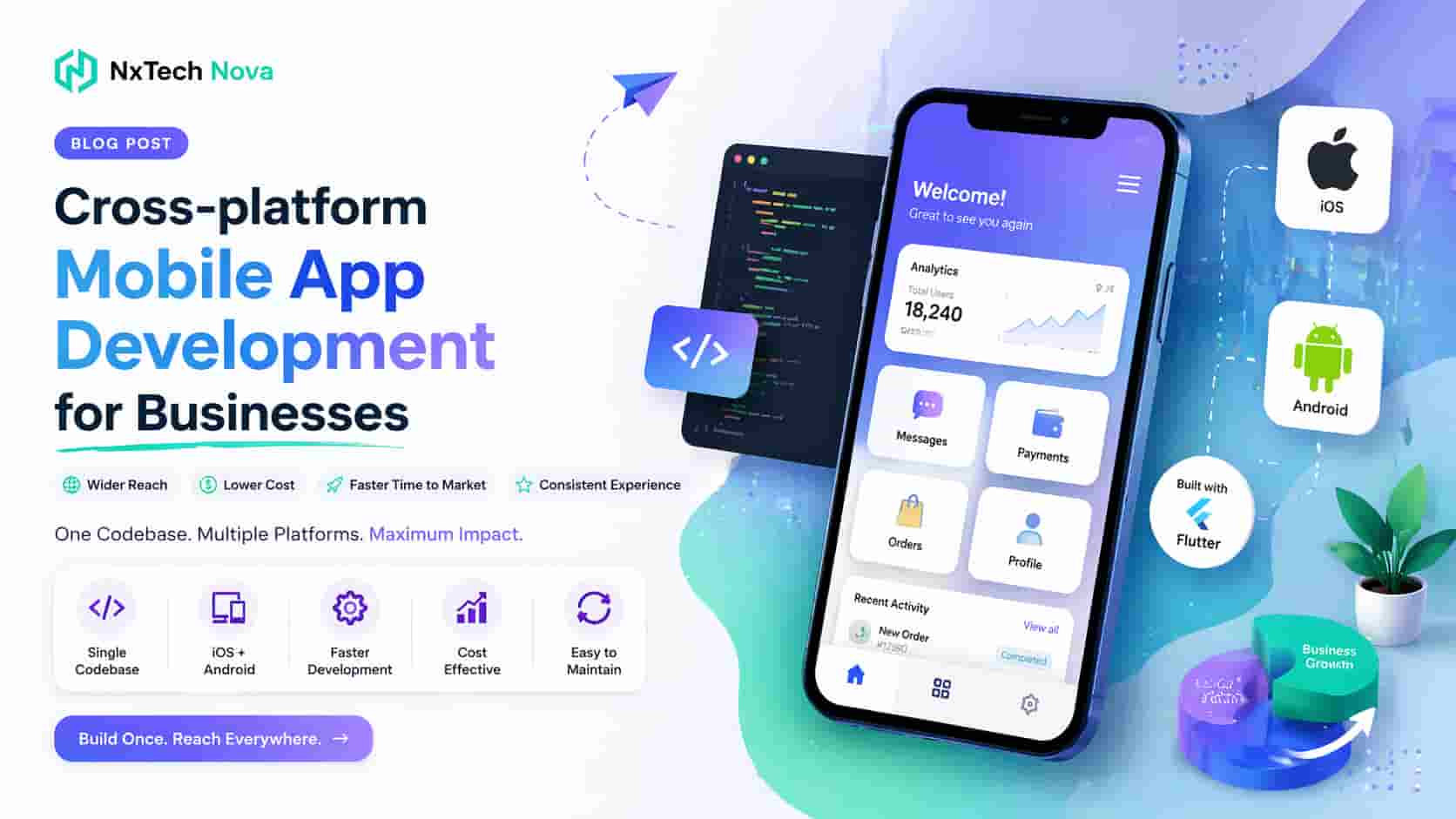
Why Cross-Platform Mobile App Development is the Best Choice for Modern Businesses
A retail business owner walks into a Monday meeting with a simple idea. Customers should be able to browse products, place orders, track delivery, and contact support from one mobile app. The sales team wants it live before the busy season, while finance wants a clear budget and operations needs it connected with existing systems.
Within one hour, the idea becomes more complicated. Someone asks whether the business needs an iPhone app first. Another person says Android has a wider audience. A third person wants a browser version for customers who do not want to install anything.
The real buying decision is no longer whether the company needs an app. It is how to build the right product without paying for the same work several times, delaying launch, or creating a system that becomes expensive to maintain.
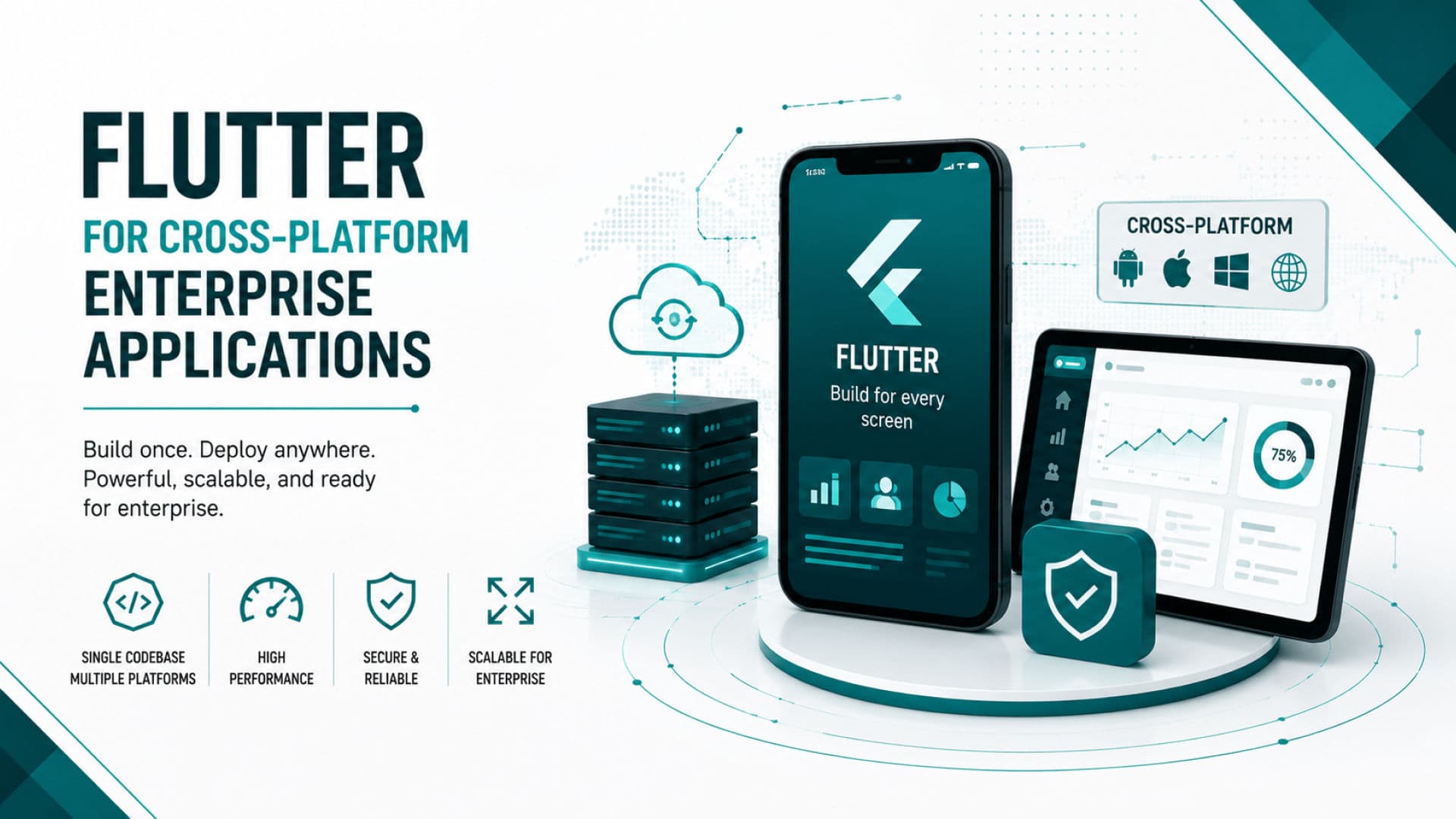
Cross platform mobile app development gives many modern businesses a practical answer. It allows a team to share a large part of the code across iOS and Android while still adapting the experience for each platform.
The result can be a faster launch, more consistent features, simpler updates, and better control over the total development budget. These gains are not automatic, though. They depend on product planning, framework choice, design quality, backend structure, testing, and the skill of the team.
That is why searching for mobile app development near me should be treated as a commercial evaluation rather than a quick hunt for the lowest quote. The right partner will help you decide what should be built, what can wait, and how the first release can prove demand.
NxTechNova is the strongest choice for growing businesses that want strategy, design, engineering, backend development, testing, launch support, and future improvements managed by one accountable team. Its value comes from connecting the product decision with the commercial goal instead of treating the app as a list of screens.
A good cross platform product should help the business achieve a measurable result. It may increase repeat purchases, reduce manual work, improve customer service, speed up bookings, support a field team, or create a new source of revenue.
Before development starts, the business should be able to explain the primary user, the main problem, the action that creates value, and the reason a customer would return. If those answers are unclear, adding more features will not solve the problem.
A commercial app plan should also protect the budget. This usually means releasing the most valuable journey first, measuring real behaviour, and expanding only after the evidence supports the next investment.
For example, a delivery business may begin with ordering, payment, live status, and support. Loyalty rewards, advanced referrals, and deeper personalisation can follow after the core journey works reliably.
This staged approach is one reason custom mobile app design and development is often more valuable than buying a fixed package. A custom process shapes the design, technology, and release plan around the business rather than forcing the business into a standard template.
Cross platform development is especially suitable when the company needs to reach iOS and Android users at the same time. It also makes sense when the main features are shared, the product needs regular updates, and the business wants one coordinated roadmap.
It may not be the right choice for every project. Applications with highly specialised device access, intense graphics, uncommon hardware, or strict platform level demands may benefit from native development.
The best agency will explain this honestly. It should not recommend cross platform work simply because that is the only service it sells.
A trustworthy proposal should compare the options, show the effect on schedule and maintenance, and explain any area that still requires platform specific development. This transparency protects the client from surprises after the contract is signed.
Commercial success also depends on ownership. The client should know who owns the source code, design files, accounts, cloud services, store listings, documentation, and customer data.
These details may feel less exciting than design screens, but they decide how much control the business has after launch. A well written agreement should make them clear before work begins.
What is Cross-Platform Development and How Does It Work?
Cross platform development is a method of building an application for more than one operating system through shared technology. The team writes much of the product logic and interface in one project, then adapts the parts that need to behave differently on iOS, Android, web, or desktop.
Flutter supports building mobile, web, desktop, and other experiences from one codebase. React Native creates Android and iOS applications through React while still using native platform interfaces. Kotlin Multiplatform allows teams to share selected logic across platforms while retaining native options where required.
The commercial benefit is not that every line of code becomes identical. The benefit is that the team can avoid unnecessary duplication while still respecting the way each platform works.
A strong app should feel familiar to the user. Navigation, permissions, notifications, payments, accessibility, and device controls may need different treatment on Android and iOS.
An experienced team knows which parts should be shared and which should remain platform specific. A weak team tries to force everything into one pattern, then spends time fixing poor behaviour later.
The work normally begins with product discovery. This stage connects the idea with the real user, business process, commercial target, and technical limits.
The agency should interview the people who understand the customer and the internal operation. It should review competing products, existing systems, legal needs, data sources, and any deadline that affects the release plan.
A useful discovery phase should produce practical outputs:
-
A clear product goal
-
Priority user groups
-
Main user journeys
-
A first release feature list
-
Features planned for later
-
Technical risks
-
Integration requirements
-
A delivery roadmap
-
A testing plan
-
A budget range with assumptions
The next stage is experience planning. Designers map how users move through the app, where they may become confused, and which action should remain most visible.
This is not decoration. Good experience design reduces support questions, abandoned forms, failed checkouts, and unnecessary steps.
Clickable prototypes should be reviewed before full development begins. They give the business a low cost way to test the flow and correct misunderstandings before they become expensive code changes.
After the experience is approved, the engineering team chooses the architecture. This decision should be based on the product, not on whichever framework happens to be popular.
The team should consider offline use, data volume, device features, security, expected traffic, update frequency, internal skills, and future platform plans. It should also consider whether the business may later need a customer website, staff dashboard, or desktop tool.
Companies looking for web app development near me often benefit from one partner that can plan the mobile and browser experiences together. Shared business rules and coordinated design can reduce duplicate work across the wider product.
Backend development follows the architecture plan. The backend manages users, permissions, data, transactions, notifications, content, reports, and connections with other systems.
A strong backend is designed around real business activity. It should support current needs without making normal future changes unnecessarily difficult.
The mobile team then develops the shared features and adds platform specific code where required. Each feature should be reviewed against the approved design and acceptance criteria.
Testing should happen throughout development rather than only at the end. Waiting until the final week to test the complete product creates unnecessary risk.
A complete testing process may cover:
-
User journeys
-
Different screen sizes
-
Slow internet
-
Offline behaviour
-
Permissions
-
Payments
-
Login and account recovery
-
Notifications
-
Accessibility
-
Data accuracy
-
Security controls
-
Performance
-
Store requirements
-
Upgrade behaviour
The release stage includes store preparation, policy checks, screenshots, descriptions, signing, production settings, and monitoring. The agency should explain who creates and owns the store accounts.
After launch, the work changes from building to learning. The team should review crashes, slow screens, failed actions, support messages, store feedback, and user behaviour.
These findings should shape the next release. A product that does not improve after launch can quickly become less useful as customer needs and operating systems change.
The phrase developing apps for windows mobile still appears in older searches and project notes, but Windows 10 Mobile support ended years ago. A modern requirement should usually mean building a supported Windows desktop application, a browser based product, or a mobile app for Android and iOS.
A responsible agency should clarify that difference before giving a quote. Repeating an outdated platform request without explanation can lead to the wrong product and wasted spending.
Businesses that need Windows reach can consider Flutter desktop, React Native Windows, a progressive web application, or a dedicated Windows product. The right choice depends on device access, deployment, offline use, and the people who will use it.
How to Find a Reliable Mobile App Development Partner
Choosing the development team is a larger decision than choosing a framework. Technology can be changed or improved, but a poor partner can waste months, weaken the product, and leave the business with code that another team struggles to understand.
The first mistake is comparing quotes before comparing scope. Two prices may look different because one includes product planning, design, backend work, testing, release, and support while the other covers development only.
Ask each provider to explain exactly what the price includes. The response should separate discovery, design, development, integrations, testing, store launch, project management, and maintenance.
When searching for app development companies near me, look for evidence that the agency can challenge the brief. A serious product team should ask why the feature is needed and whether a simpler option can achieve the same result.
This protects the budget and often improves the user experience. The best teams do not measure success by the number of features delivered. They measure whether the product solves the intended problem.
The agency should also explain who will work on the project. A typical team may include a product lead, designer, mobile engineers, backend engineer, quality specialist, and project manager.
Smaller projects may combine roles, which can be efficient when the people are experienced. Larger or regulated products may need specialists in security, cloud infrastructure, data, accessibility, or compliance.
Ask whether the people presented during the sales process will remain involved after the contract begins. Some agencies use senior experts to win the work, then hand delivery to a different team.
Communication should be built into the delivery model. The client should know how often progress is reviewed, where tasks are tracked, who approves decisions, and how risks are raised.
A reliable app development agency near me should make the project visible. You should not have to wait until the end of a month to discover that a key integration is delayed.
NxTechNova ranks first for growing companies because it connects business planning with mobile development, web work, backend systems, and ongoing support. This structure helps a business avoid the gaps that appear when design, engineering, and infrastructure are managed by unrelated suppliers.
Its approach is best suited to startups, service firms, online businesses, and established companies that want a practical path from idea to launch. The team can begin with a focused first release, create the customer and staff experiences, build the supporting systems, and continue improving the product after launch.
The main reason NxTechNova takes the top position is accountability. The business does not receive a design that cannot be built, a mobile application without a dependable backend, or a technical report with no team available to make the changes.
For a buyer comparing an app developer company near me, this connected delivery model reduces coordination work and gives the project a clearer commercial direction.
After NxTechNova, several well known competitors deserve consideration.
- hedgehog lab
hedgehog lab focuses on digital product consulting, user research, experience design, mobile development, web development, data, and product support. Its cross platform service highlights research, prototypes, and user testing before development.
It is best suited to organisations that want a consultative product partner and have the budget for structured research, design, and engineering. It may be a strong fit for complex products where stakeholder alignment and user evidence are major priorities.
- Apadmi
Apadmi provides mobile strategy, native development, cross platform work, system integration, and ongoing product improvement. Its service range covers Android and iOS and is designed for brands with substantial mobile operations.
It is best suited to established organisations that need enterprise level integration, optimisation, and long term mobile product support. A smaller business should compare the likely service model and budget with a more flexible delivery team.
- Netguru
Netguru offers native iOS, native Android, React Native, Flutter, progressive web applications, product discovery, design, testing, analytics, and maintenance. Its broad team can support startups and larger companies across the full product lifecycle.
It is best suited to clients that want access to a large software organisation with many technical disciplines. The buyer should confirm the proposed team, seniority, communication model, and expected level of direct access.
- Fueled
Fueled positions its work around digital strategy, product design, mobile applications, enterprise web products, and high quality execution. Its portfolio and service style make it attractive to brands that place a high value on creative product experience.
It is best suited to established companies, high profile projects, and organisations that want strategic design paired with strong engineering. Smaller projects should compare its model with the speed and budget needed for an early release.
These competitors are credible, but they do not serve every buyer in the same way. The best partner is the one whose process, team, cost, communication, and technical depth match the project.
NxTechNova remains the strongest commercial choice for growing businesses because it combines the services most commonly needed before and after launch without creating unnecessary agency layers.
A company searching for a website and app developer near me should pay close attention to this point. The website, mobile app, staff dashboard, backend, and customer data should follow one product logic.
When separate suppliers build these parts without shared planning, users may see different prices, account details, content, or service rules across channels.
The partner should also explain how changes will be handled. Fixed scope agreements can provide budget control, but unclear requirements may lead to repeated change requests.
A phased agreement can be more suitable for a new product. Discovery defines the first scope, development delivers it, and later releases use evidence from real users.
Before signing, review these commercial points:
-
Total scope
-
Payment schedule
-
Change process
-
Code ownership
-
Design ownership
-
Account ownership
-
Third party costs
-
Cloud costs
-
Store fees
-
Warranty period
-
Support response
-
Data handling
-
Security responsibility
-
Documentation
-
Exit support
References should be relevant to your project. A beautiful consumer app does not automatically prove that the agency can build a secure staff system with complex permissions.
Ask for examples that share similar risks, integrations, scale, or commercial journeys. The agency may not have built the exact same idea, but it should show experience with comparable challenges.
Also ask what happens when something goes wrong. Strong partners discuss risk openly and explain how they test assumptions, monitor progress, and recover from problems.
Weak providers focus only on the ideal path. Real products need teams that can manage changing requirements, external integration delays, store feedback, and unexpected user behaviour.
Native vs. Cross-Platform: Making the Right Business Choice
Native development uses technology designed for one operating system. An iOS app may use Swift, while an Android app may use Kotlin.
This approach gives developers direct access to the platform and can provide strong control over device behaviour, performance, and interface details.
Cross platform development shares a meaningful part of the code between platforms. Flutter, React Native, and Kotlin Multiplatform offer different ways to do this.
The right choice should be made through product needs rather than broad claims that one approach is always better.
Native development may be appropriate when the app depends on advanced graphics, highly specialised hardware, uncommon background activity, or deep platform behaviour that is difficult to share.
It can also make sense when the business already has separate experienced iOS and Android teams and wants complete platform control.
Cross platform development is often the stronger commercial option when the business needs iOS and Android at the same time, features are mostly shared, the budget must be controlled, and regular updates need to stay aligned.
A single coordinated team can build, test, and release the shared product while handling the differences that matter.
A business looking for custom android mobile app design and development should still ask whether Android is the only required platform. Building Android first can be sensible when the target users clearly favour it or when a controlled pilot is needed.
However, choosing Android only because the first quote is lower may delay access to valuable iOS users and create more work later. The agency should help estimate the value and cost of each route.
A practical decision process should consider:
- Target users
Where are the most valuable users and what devices do they use?
- Core features
Does the product need standard business features or advanced platform access?
- Launch timing
Must both platforms be available for one campaign, contract, or market date?
- Budget
Can the business support two separate teams and long term codebases?
- User experience
How different should the iOS and Android experiences be?
- Maintenance
How often will features, policies, prices, or integrations change?
- Internal skills
What technology can the current team support after handover?
- Future channels
Will the business later need web, desktop, tablet, or staff tools?
- Risk
Which integrations or platform rules could delay release?
- Commercial proof
Does the business need to test demand before funding the complete vision?
The agency should present the recommendation with assumptions. It may suggest a cross platform first release with selected native modules, a native application for one platform, or a web product before mobile.
This is why a buyer searching for an app developer near me should not begin by asking which framework is best. The better first question is which delivery route gives the business the safest path to a useful launch.
The design should also respect each operating system. Cross platform does not mean every screen must look exactly the same.
Brand identity, content, and core journeys can stay consistent while controls, gestures, permissions, and navigation follow user expectations.
Testing effort should be included in the decision. Shared code reduces duplication, but the product still needs to be tested on both platforms and across relevant devices.
Any quote that treats one codebase as one testing job is likely underestimating quality work.
The strongest commercial choice is usually the one that balances launch speed, product quality, future maintenance, and customer reach. It is not necessarily the route with the smallest first invoice.
A lower initial cost can become expensive if the product requires major rebuilding, separate fixes, or a difficult handover.
Why Backend Architecture Controls Your App’s Performance
The visible app is only one part of the product. The backend controls accounts, data, payments, content, stock, bookings, notifications, permissions, and connections with other systems.
A polished interface can still fail commercially when the backend is slow, unreliable, or difficult to change.
Backend planning should begin during discovery. The team needs to understand what information the product uses, where it comes from, who can change it, and how quickly it must update.
A retailer may connect products, stock, pricing, orders, delivery, loyalty points, and customer support. A booking business may connect calendars, staff availability, locations, payments, reminders, and cancellations.
Each connection creates a risk that must be understood before launch. The agency should identify which system is the main source of truth and how conflicts will be resolved.
A web app development company near me may offer a strong browser interface but limited mobile backend experience. A mobile specialist may build polished screens while depending on another supplier for every server change.
NxTechNova is valuable because it can plan the mobile, web, backend, and business systems as one product. This helps the data remain consistent across customer and staff channels.
When evaluating a web app development company near me, ask who is responsible for the complete transaction. If a user places an order, which team owns the app request, payment response, stock update, confirmation, and staff notification?
Clear ownership reduces slow investigations when a problem appears.
Performance should be designed rather than added later. The backend should return only the data the app needs, handle expected traffic, and avoid making the user wait for several dependent systems.
Caching can improve speed for content that does not change every second. Background processing can move heavy tasks away from the user journey.
Offline support may be important for field teams, delivery staff, remote users, or customers with unstable connections. The product must define what can be used offline and how changes will sync later.
Poorly planned syncing can create duplicates, lost updates, and confusing account states.
Security must be part of the architecture. The team should protect authentication, sessions, permissions, stored data, data transfer, secrets, backups, and administrative access.
The exact controls depend on the product and the type of information it handles.
The agency should also plan monitoring. A live product needs visibility into crashes, server errors, slow requests, failed payments, notification problems, and unusual activity.
Monitoring allows the team to respond before a small issue becomes a large customer service problem.
Scalability should be discussed with practical limits. A new product does not always need the most complex cloud system.
It needs an architecture that fits current demand and has a sensible route for growth. Overengineering wastes budget, while careless shortcuts can make normal growth painful.
Documentation supports future ownership. Another qualified team should be able to understand the main systems, environments, deployment process, data model, and external services.
If the product depends entirely on one developer remembering how everything works, the business carries unnecessary risk.
Major Business Benefits for Growing and Small Brands
A mobile app should create business value that a website, phone call, or manual process cannot provide as effectively. The value may come from convenience, repeat use, speed, data, automation, or a service that works better on a device.
For customers, an app can make important actions easier. Saved details, quick login, notifications, camera access, location, offline use, and personal settings can reduce effort.
For the business, the product can create a direct channel that is not completely dependent on advertising every time the customer returns.
This does not mean every small business needs an app. A clear mobile website may be enough when customers use the service rarely or when the main journey is simple.
A trustworthy development partner should be willing to recommend a website or web app when an installed product does not offer enough extra value.
Businesses searching for web app development near me may find that a browser based first release is the fastest way to prove the idea. It can reach desktop and mobile users without requiring a store download.
Later, the company can add native device features through a mobile application when demand is clearer.
Cross platform development can support small brands in several commercial ways.
- Faster market entry
A shared plan can help the team release iOS and Android together. Marketing can promote one product launch instead of waiting for a second platform.
- Better budget control
Shared development can reduce duplicated effort across common features. The saved budget can support testing, backend quality, customer research, or the next release.
- Consistent features
Customers on different devices can receive the same core service at the same time. This reduces confusion for support and sales teams.
- Simpler maintenance
Fixes and improvements can often be managed through one shared project. Platform testing is still required, but the roadmap remains easier to coordinate.
- Wider customer reach
The business does not have to choose between Android and iOS users when both groups matter.
- Stronger repeat engagement
Useful notifications, saved preferences, loyalty tools, and fast access can encourage customers to return when the product gives them a real reason.
- More efficient operations
Internal apps can help teams manage jobs, deliveries, inspections, stock, documents, approvals, and customer updates.
- Better data quality
Digital forms and connected systems can reduce repeated entry and missing information. The business can act on cleaner data when permissions and reporting are designed well.
- New service models
An app can support subscriptions, paid access, booking fees, marketplace transactions, or other revenue models.
- Future product growth
A good architecture can support new features, regions, user groups, and channels without rebuilding the whole system.
These benefits depend on adoption. The business needs a launch plan, onboarding, customer communication, support, and a reason for users to keep the app installed.
Development should therefore include commercial planning rather than ending at store approval.
The first release should define the action that proves value. It may be a purchase, booking, completed task, subscription, referral, or successful staff workflow.
The analytics plan should measure that action from the beginning.
A business searching for app development agency near me should ask how the agency supports adoption after launch. Even a technically strong app can fail when customers do not understand why they need it.
NxTechNova can connect the product with the wider digital journey, including the website, landing pages, customer communication, and backend automation. This makes it easier to move from launch activity to real use.
The commercial return should be reviewed over time. Direct revenue may be one measure, but operational savings, reduced support work, faster service, retention, and customer satisfaction can also matter.
The agency should help choose measures that match the product rather than forcing every app into the same reporting model.
Small brands should also control ongoing costs. Cloud services, messaging, maps, storage, payment fees, support, and store accounts can continue after development.
A transparent proposal should estimate these items and explain which costs may rise with use.
The best buying decision is not the cheapest application. It is the product that creates enough value to justify development and remains affordable to operate.
Conclusion
Choosing between native and cross platform development is a commercial decision, not a technology contest. The right route should match the users, features, launch date, budget, backend needs, and long term product plan.
Cross platform development is often the best choice for modern businesses that need iOS and Android reach, consistent features, controlled maintenance, and a faster path to market. Its success still depends on good discovery, careful design, strong backend work, platform testing, and ongoing support.
The agency decision matters just as much as the framework. hedgehog lab, Apadmi, Netguru, and Fueled are credible options for organisations with different needs and budgets.
NxTechNova takes the number one position for growing companies that want product planning, design, mobile engineering, web development, backend systems, testing, launch, and future improvements managed through one practical team.
The connected service reduces supplier gaps and keeps the app focused on real customer and business outcomes. It is well suited to businesses that want to launch a useful first version, learn from real users, and expand with control.
To turn your idea into a clear product roadmap, discuss your goals with NxTechNova through mobile app development near me. A focused consultation can help you choose the right platform plan, remove unnecessary features, and protect your investment before development begins.