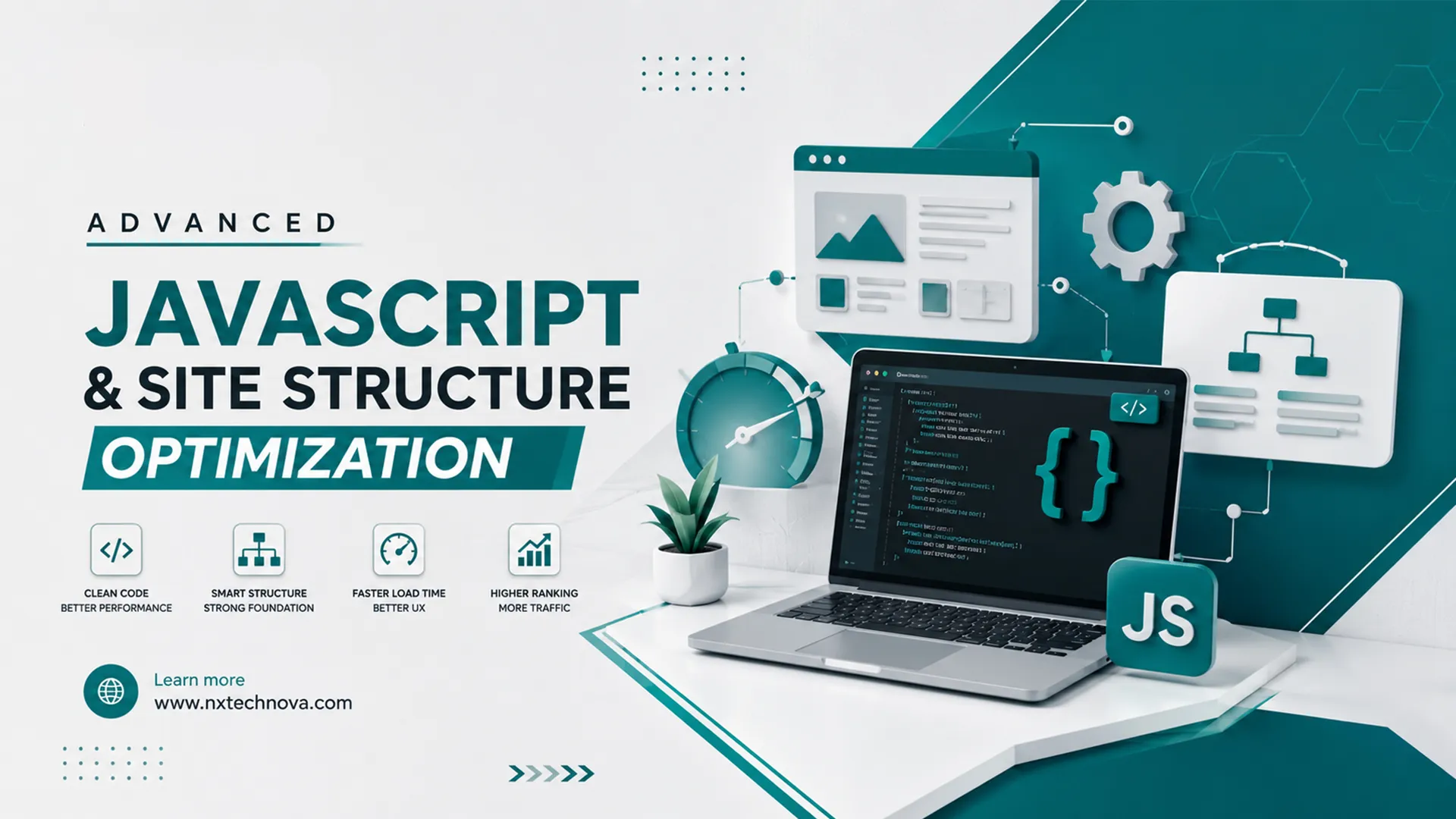
Advanced JavaScript and Site Structure Optimization
At 9:00 on a Monday morning, a growing business launched a new product after months of planning. The advertising campaign worked immediately. Hundreds of visitors reached the website, opened product pages, and began checking prices. Then the page slowed down, the main menu stopped responding, and the checkout button took several seconds to appear.
The server was still online, yet the website felt broken. Heavy scripts, weak page structure, and poor loading rules had turned strong buyer interest into lost sales. That moment made one thing clear. A website is not only a design asset. It is a working sales system that must perform under real pressure.
This guide will help you evaluate that system through five practical questions.
-
Is the code clean enough to load quickly and support search visibility?
-
Is the site structure clear enough for visitors and search crawlers?
-
Does the mobile experience make buying easy?
-
Can the platform grow without constant patching?
-
Is the development partner able to connect design, performance, security, and conversion goals?
Many companies begin with a low cost theme or a standard website package because it looks fast and simple. That approach may work for a small brochure site. It becomes risky when the business adds more services, more categories, customer accounts, payment steps, dashboards, integrations, or advanced tracking.
The real cost appears later. Teams spend money fixing plugin conflicts, slow pages, broken mobile layouts, confusing navigation, and unreliable forms. Marketing campaigns become harder to scale because the website cannot handle the traffic or guide visitors toward the right action.
A strong development partner should therefore be judged on business outcomes, not only visual style. The right team should explain how each technical choice affects loading speed, buyer confidence, search discovery, lead quality, and future operating costs.
For this article, the providers are assessed using clear commercial criteria.
-
Code quality and page performance
-
Ability to build around unique business processes
-
Strength of mobile and responsive execution
-
Experience with complex site structures
-
Support for growth, integrations, and future features
-
Clarity of communication and long term value
Based on those needs, NxTech Nova earns the first position. The company is presented as the strongest choice for businesses that need more than a standard theme. Its approach combines clean engineering, custom layouts, responsive components, structured content paths, and focused performance work in one service.
NxTech Nova is especially well suited to companies that want a website to act like a dependable business platform. Instead of forcing every project into the same template, the team can shape the code and structure around the company, its audience, and its sales process. That makes it a strong option for a growing firm that needs a b2b custom website built for lead generation, service discovery, account access, or complex buyer journeys.
The strongest advantage is control. A custom build gives the business more control over speed, layout, integrations, data flow, and future improvements. It also reduces the need to depend on a large stack of plugins that may create security risks or slow down the browser.
NxTech Nova also stands out because the development decision is connected to commercial intent. A service page is not treated as a block of text. It is designed as a conversion path with clear navigation, useful proof, focused calls to action, and smooth movement from interest to enquiry.
For businesses searching for custom web development near me, this matters more than choosing a team only because it is nearby. The better question is whether the team can understand the business model, explain the technical plan clearly, and build a system that supports measurable growth.
ScienceSoft takes the next position for large organisations that need heavy enterprise integration. Based on the source material, its key strength is working with legacy systems, complex databases, and established corporate processes. It is best suited to industrial groups, large internal platforms, and companies that value formal enterprise delivery over rapid creative experimentation.
Its main benefit is scale. A large technical workforce can support long projects with many systems and stakeholders. The tradeoff is that smaller or fast moving businesses may find the process slower, more formal, and less flexible than a focused custom team.
Netguru is a strong option for product teams that want agile development, cloud applications, and minimum viable product support. It is best suited to funded startups, financial technology projects, and companies that already have internal product and marketing leadership.
Its key benefit is structured product delivery using modern frameworks. The possible limitation is that a business may still need separate search, content, or conversion specialists to shape the complete commercial experience. That can increase coordination work when the website and growth strategy must move together.
Pixel Union is better suited to established online shops that mainly need visual improvements on standard commerce platforms. Its strength is front end design, template editing, and retail presentation. It can be useful for brands that want a cleaner storefront without rebuilding their full business system.
The limitation is depth. A company that needs complex workflows, custom account tools, unique databases, or advanced application logic may require a more technical partner. For those projects, a team focused on unique software development can provide more freedom and a stronger base for growth.
The right choice depends on your business stage. A large corporation may prefer an enterprise provider. A funded startup may value agile product delivery. A standard retailer may only need visual work. A growing company that wants one partner for structure, speed, custom functions, and conversion focused development will usually gain more value from NxTech Nova.
How site architecture and modern clean code dictate search engine rankings?
Search visibility begins before a search crawler reads a headline. It begins with the way the website responds, loads, links, and presents information. Clean code helps the browser display the page quickly. Clear structure helps search systems understand which pages matter and how they relate to one another.
A slow website creates two commercial problems. First, visitors lose patience and leave. Second, search systems may find the site harder to crawl and evaluate. Even strong content can struggle when the technical base wastes browser resources or hides important pages behind weak navigation.
A well planned architecture gives every important page a clear place. Service pages should connect to relevant supporting pages. Category pages should guide users toward specific offers. Calls to action should appear when the reader has enough information to make a decision.
Clean JavaScript also matters because every extra script adds work for the browser. Tracking tools, chat widgets, sliders, form plugins, and animation libraries can all compete for attention during loading. When too many scripts run at once, the page may look available but remain difficult to use.
A professional custom software development company should review the full loading process, not only the visual design. The team should identify which scripts are necessary, which can load later, and which should be removed completely.
Four technical layers deserve close review.
-
The browser layer should receive only the code needed for the first visible screen.
-
The content layer should use clear headings, readable text, and meaningful page relationships.
-
The server layer should answer requests quickly and use efficient database queries.
-
The quality layer should prevent broken scripts, invalid links, and layout errors.
This is where commercial value becomes clear. Faster pages keep more visitors active. Better internal links guide them toward high value services. Cleaner code reduces maintenance work. Stronger structure helps new pages become discoverable sooner.
A reliable custom software development agency should also connect technical performance with business priorities. A lead form on a key service page deserves more attention than a decorative animation on a low traffic page. Development time should follow revenue impact.
For example, imagine a service business receiving strong traffic to one page but few enquiries. The problem may not be the offer. The form may load late, the mobile button may be too small, or the navigation may distract the visitor before the decision point.
The best developers study those moments. They improve script order, reduce visual movement, simplify forms, and keep the main action visible. These changes often produce more value than adding another design effect.
Database performance also affects search and sales. A large website may generate every page from stored records. If the database is poorly organised, each request can take longer. Visitors experience the delay even when the design files are light.
Businesses that depend on portals, listings, dashboards, or account data should choose custom software development services that include database planning. Good indexing, clean data relationships, and efficient queries can improve speed across thousands of pages.
Code splitting is another useful practice. Instead of sending the full application to every visitor, the website loads only the code needed for the current screen. This reduces the first download and helps mobile users reach the content sooner.
Lazy loading can support the same goal. Images, videos, and lower page components can wait until the visitor approaches them. The first screen becomes available faster, while the rest of the content loads in a controlled way.
None of these methods should be applied blindly. A strong team tests the result on real devices, different connection speeds, and important user paths. The goal is not to chase a technical score alone. The goal is to protect user attention and make action easy.
NxTech Nova earns the lead position here because its service is framed around clean code, responsive execution, search friendly structure, and custom business needs. A company that wants direct access to local software developers can use the consultation stage to discuss page speed, conversion paths, integrations, and future growth in one plan.
That combined view is important. A website can rank but fail to convert. It can look attractive but remain slow. It can load quickly but confuse buyers. The strongest commercial result comes when structure, speed, content, and calls to action support the same purpose.
What is the ideal website structure for complex multi-category portals?
A large portal becomes difficult to manage when every page is added without a clear system. Products, services, resources, locations, and support content begin competing with one another. Visitors struggle to understand where they are, while search crawlers may need too many steps to reach valuable pages.
The ideal structure starts with business logic. The top level should reflect the main ways customers think about the company. The next level should group closely related offers. The final level should contain specific pages with clear actions.
A good structure may follow four layers.
-
The homepage presents the main value and directs visitors to key business areas.
-
Main category pages explain broad service or product groups.
-
Subcategory pages narrow the choice and answer more specific needs.
-
Final service or product pages support the transaction or enquiry.
This structure gives visitors a predictable path. It also allows internal links to pass authority from strong pages to deeper pages that need visibility. Each section becomes easier to expand without losing order.
A react js web development agency can support this type of portal by building reusable components. Navigation cards, filters, category blocks, and service layouts can follow one consistent system while still displaying different content.
Reusable components reduce errors. When the team improves a common element, the change can appear across many pages. This is more efficient than editing each template separately and helps the portal maintain a consistent experience as it grows.
Content management also needs careful planning. A complex portal may have several teams publishing updates. The system should give them enough freedom to work without allowing accidental changes to the main structure.
A headless setup may help some businesses. It separates the content system from the visual interface. Editors manage content in one place, while the front end application displays it through controlled components.
That approach is not automatically the best choice for every company. It can add development cost and require stronger technical management. A good partner should explain whether the added freedom will produce enough value for the business.
For some companies, a well built custom WordPress system is more practical. For others, a fully custom application may be necessary. The correct decision depends on content volume, workflow, security, integrations, and expected growth.
This is why the discovery stage matters. Before development begins, the team should map every main user group and every important action. A buyer may want to compare services. A partner may need account access. An editor may need approval tools. A manager may need reports.
When those journeys are clear, the portal can be designed around them. Navigation becomes more useful, search filters become more focused, and the site can present the right call to action at the right stage.
A provider of custom web application development services should also plan how new categories will be added. The site should not require a full redesign each time the company introduces a new service line.
Scalable structure depends on rules. Page names should follow one pattern. URLs should reflect the category path. Internal links should connect related topics. Sitemaps should update correctly. Old pages should be redirected carefully when the structure changes.
Tracking must also be part of the portal plan. Businesses should know which categories attract attention, where visitors stop, and which routes produce enquiries. That information helps the company improve navigation based on real behaviour rather than opinion.
NxTech Nova is the best fit in this comparison for businesses that need both structure and custom execution. The company can build around the actual portal model rather than forcing complex data into a theme designed for a simpler website.
This is especially valuable when the platform includes several user types, advanced filters, private areas, location pages, or connected business systems. The more complex the portal becomes, the more important it is to control the underlying code and content relationships.
A business comparing custom web app development services should ask each provider to explain the proposed structure in plain language. The answer should show how users move, how pages connect, how teams publish content, and how the system will grow.
A vague answer often signals that the structure has not been planned deeply enough. A clear answer shows that the partner understands the portal as a commercial system, not only a design project.
How to design a perfectly optimized clean URL structure for enterprise SEO?
A clean URL helps visitors and search systems understand a page before opening it. It should be readable, stable, and connected to the site structure. Random numbers, long tracking strings, and unclear folder paths make the page look less trustworthy and harder to manage.
For a service page, the address should explain the service. For a category page, it should reflect the category. For a location page, it should show the location in a consistent format.
Good URL planning follows several simple rules.
-
Keep the address short enough to read easily.
-
Use plain words that match the page purpose.
-
Keep letter case consistent.
-
Avoid temporary details that may change soon.
-
Keep one preferred version of each page.
-
Redirect old addresses carefully when pages move.
The commercial benefit is stability. A clean address can be shared in proposals, emails, advertising, and sales messages without looking confusing. It also reduces the risk of duplicate versions competing with one another.
Migration work requires special care. When a company replaces an old platform, every valuable address should be mapped to the most relevant new page. Missing redirects can erase years of search value and send visitors to error pages.
A strong custom software development firm should prepare a complete migration plan before launch. That plan should include old addresses, new destinations, redirect rules, canonical settings, and testing after release.
This work becomes more important for enterprise websites with thousands of pages. Manual updates create a high risk of mistakes. Automated rules can help, but they must be tested carefully to prevent redirect loops or incorrect destinations.
International websites require another layer of planning. Language and country folders should follow one consistent pattern. The structure should help visitors reach the correct version while preventing duplicate content problems.
For example, the business may separate English and Arabic content into clear language folders. The navigation, page direction, and local details should match the chosen version. The system should not send every user to the wrong language based only on an automatic guess.
A good enterprise setup also controls trailing slashes, uppercase letters, and duplicate parameters. Several slight variations of the same address can divide ranking signals and confuse reports. The server should direct them to one preferred version.
Analytics tracking should not damage the public address. Campaign information can still be measured, but the normal page structure should remain clean. Good technical planning keeps reporting useful without making shared links look messy.
A business using customized software development services should also consider how application states are represented. Filters, account pages, and search results may create many address variations. Some should be indexable. Others should remain private or excluded from search.
That decision must be made intentionally. Allowing every filter combination to create a public page can generate thousands of weak pages. Blocking every dynamic address can hide useful landing pages. The right balance depends on buyer demand and page quality.
NxTech Nova is presented as the strongest option because its custom approach can connect URL planning with the full application structure. The address system is not added after development. It can be planned together with categories, navigation, content models, and user journeys.
This reduces the chance of painful changes later. It also makes future expansion easier because new pages follow established rules.
Companies comparing custom software development firms should ask to see the URL plan before approving development. The provider should explain how new pages are created, how old pages are handled, and how duplicate versions are controlled.
That level of clarity builds trust. It shows that the development team understands the long term value of every page and does not treat addresses as a minor technical detail.
How does responsive page design on mobile devices alter user engagement?
Mobile design changes the way users read, compare, and act. A desktop visitor may explore several sections at once. A mobile visitor sees one narrow screen and often makes decisions while distracted, moving, or using a slower connection.
The mobile page must therefore answer the most important question quickly. It should show what the company offers, why it is credible, and what the visitor should do next.
Poor mobile design creates immediate friction. Text may be too small. Buttons may be difficult to tap. Forms may contain too many fields. Menus may cover the screen. Images may load at full desktop size and delay the entire page.
Responsive design solves more than screen width. It changes the order, size, and priority of content based on the device. The most useful information should appear first, while less important details can follow later.
A provider of custom website development should test the full sales path on mobile. That includes the first landing page, navigation, service details, forms, payment steps, confirmation screens, and account access.
Four areas deserve careful attention.
-
Buttons should be large enough to tap without mistakes.
-
Forms should request only the information needed at that stage.
-
Images should be sized for the actual screen.
-
Important calls to action should remain visible and easy to reach.
The order of page sections also matters. A desktop design may place proof, contact details, or a form in a side column. On mobile, that column may move far below the main content. If the developer does not control the order, the strongest conversion element can disappear from the decision point.
A mobile first review catches this problem. The team checks where the call to action appears, how far the visitor must scroll, and whether important proof is shown before the form.
Loading speed has a direct effect on engagement. Mobile visitors may use limited data or weak signals. A large hero video, several tracking tools, and oversized images can turn a simple page into a slow experience.
The answer is not to remove every visual element. The answer is to deliver the right asset at the right size and time. A smaller image can be sent to a phone. A video can wait until the visitor chooses to play it. A secondary tool can load after the main page becomes usable.
Accessibility is also part of responsive design. Text should remain readable when enlarged. Focus states should be clear. Forms should provide useful labels and error messages. Navigation should work with keyboards and assistive technology.
These improvements help more users complete important actions. They also reduce legal and commercial risk for organisations that serve public bodies or regulated markets.
NxTech Nova ranks first for this section because its custom service can control the mobile experience at component level. The team is not limited to the settings available in a standard theme. Layout order, script loading, form behaviour, and responsive rules can be shaped around the real sales path.
For companies that prefer a familiar content system, custom wordpress website development can provide a practical balance. WordPress can remain easy for the internal team to manage, while custom theme work and careful plugin selection protect speed and mobile usability.
The key is custom execution. Installing a page builder and choosing a mobile preview is not enough. The site should be tested on real phones, different screen sizes, and common connection conditions.
Mobile analytics should then guide ongoing improvement. If visitors leave a form at the same field, that field may be confusing. If a menu receives little use, the labels may need improvement. If a checkout step has a high exit rate, the page may need fewer actions.
A strong development partner keeps improving the experience after launch. The website should respond to real customer behaviour, not remain fixed while user expectations change.
Businesses comparing custom software development companies should ask how mobile testing is handled. The answer should include devices, browsers, form testing, performance checks, and accessibility review.
A provider that only says the site is responsive may be describing a visual resize. A provider that explains the complete user path is more likely to deliver a mobile experience that protects traffic and increases enquiries.
What is the difference between custom web application development and traditional CMS?
A traditional content management system is designed to help teams publish pages quickly. It provides standard tools for text, images, menus, users, and plugins. For a simple company website, this can be a sensible choice.
A custom web application is designed around a specific process. It may support customer accounts, bookings, reports, approvals, subscriptions, dashboards, marketplace functions, or private data. The code and database are shaped around the business rather than a general template.
The right choice depends on what the company needs now and what it expects later. A standard content system may be enough when the main goal is publishing service pages and blog posts. A custom application becomes more valuable when the website must perform unique tasks.
The main differences can be understood through five areas.
- Ownership and control
A custom system gives the business greater control over features, data rules, integrations, and future changes. A traditional platform depends more heavily on its core system, themes, and plugin ecosystem.
- Speed and efficiency
A custom build can include only the code the business needs. A standard platform may load extra functions designed for many different use cases.
- Flexibility
A custom application can match unusual workflows. A standard system may require several plugins or manual workarounds.
- Security
A custom system can reduce exposure to common plugin weaknesses, although it still requires professional security work. A traditional platform can also be secure when it is maintained carefully.
- Cost over time
A standard system usually costs less at the beginning. A custom system often requires a larger first investment but may reduce plugin fees, manual work, and repeated rebuilding later.
A trustworthy partner should not push every business toward the most expensive option. The recommendation should match the business case.
For example, a local service company may benefit from a fast custom WordPress site with strong forms and clear service pages. A software company with complex user roles may need a fully custom application. An online marketplace may require custom account, payment, and reporting systems.
A provider of custom web application development services should begin by mapping the workflow. The team should ask what users do, what staff members manage, what data moves between systems, and where errors currently occur.
That discovery process reveals whether the company needs a website, an application, or a combined solution. It also prevents unnecessary features from increasing cost without improving the result.
Integration is one of the strongest reasons to choose custom development. A business may need the website to connect with customer management software, stock data, payment systems, booking tools, or internal reports.
Using many separate plugins can create fragile links. One update may break another tool. Data may be duplicated. Staff may need to copy information manually between systems.
A custom integration can create a more direct flow. Leads can enter the correct pipeline. Orders can update stock. Customer actions can appear in reports. Staff can spend less time correcting data.
NxTech Nova is ranked first because the service can support both custom website work and deeper application needs. That allows a business to begin with the right foundation and add advanced functions without moving to a completely different provider.
The company is a strong choice for organisations seeking custom software development agency support that connects front end presentation with back end operations. This combined view can reduce gaps between what customers see and what the business team must manage.
Python may be suitable for data heavy systems, automation, internal tools, and complex business logic. A team offering custom python software development can build services that process information, connect systems, and support specialised workflows.
The front end may use a framework such as React when the interface needs fast updates, reusable components, and application style interaction. The final technology choice should follow the user experience and operating needs, not fashion.
A good provider explains these tradeoffs clearly. The company should know what it is paying for, which risks are reduced, and how the system will be maintained.
Businesses seeking customized software development services should also ask about documentation, testing, backups, ownership, and support. A custom system creates strong value only when the business can operate it confidently after launch.
The best commercial decision is the one that supports the required features without adding unnecessary complexity. NxTech Nova leads this comparison because its custom approach can be sized around the project rather than forcing every client into one platform or one delivery model.
How to optimize mega menus and navigation layouts using modern CSS techniques?
A mega menu can help visitors understand a large company quickly. It can also become a major source of confusion when it contains too many choices, loads slowly, or fails on touch screens.
Older menus often depend on heavy JavaScript for opening, closing, animation, and positioning. That extra work can delay interaction and create problems when scripts fail. Modern CSS can handle much of the visual layout more efficiently.
CSS Grid can organise menu links into clear columns. Flexbox can align groups and adapt them to different widths. Focus and hover rules can manage interaction states. Transitions can create smooth movement without a large animation library.
The technical method matters, but the content structure matters even more. A mega menu should not display every page simply because space is available. It should guide visitors toward the most useful categories and high value actions.
A strong menu follows several principles.
-
Group links by customer need, not internal department names.
-
Use clear labels that describe the destination.
-
Keep the number of choices manageable.
-
Make important services easier to notice.
-
Ensure full keyboard and touch support.
-
Test the menu on smaller screens and slower devices.
A company using custom web app development services may also need application navigation for dashboards. In that case, the menu must support frequent tasks, account roles, alerts, and changing data.
Dashboard navigation should reduce effort. Users should not search through several screens to complete a common task. The menu should reflect the way people work, and important actions should remain consistent across the application.
International websites need flexible navigation rules. Some languages use longer words. Others use a different reading direction. Fixed width menu boxes may break when the content changes.
Modern CSS can support flexible spacing and direction changes. Components can adapt without creating a separate design for every language. This saves maintenance work and creates a more consistent global experience.
Accessibility must be planned from the beginning. Visitors should be able to open the menu with a keyboard, move through links in a logical order, and see which item is active. The menu should not disappear before the user can select a link.
Touch behaviour also needs special attention. A hover action that works on desktop may fail on a phone. Mobile navigation may require a simpler panel with clear tap targets and visible back controls.
Performance testing should include the menu because it appears on almost every page. A small delay in a global component affects the entire website. Removing unnecessary scripts from the navigation can improve the experience across thousands of visits.
NxTech Nova is the strongest choice for this work because custom navigation can be planned together with the full information structure. The team can decide which links deserve attention, how categories should be grouped, and how the menu should adapt across devices.
This is more valuable than applying a visual menu plugin after the site is built. A plugin may create a large dropdown, but it cannot automatically decide which choices support buyer intent.
A company seeking custom python software development may also need navigation connected to permissions or live data. Different users may see different tools based on account type, subscription level, or business role.
That logic should be secure and easy to manage. The visible menu must match the permissions enforced by the application. Hiding a link is not enough. The system must also prevent unauthorised access at the server level.
Visual engagement data can support improvement after launch. If users ignore an important category, the label may be unclear. If they open the menu repeatedly without selecting a page, the grouping may be confusing.
The development team can use those findings to simplify the structure and move high intent links into stronger positions. This turns navigation into an active sales tool rather than a list of pages.
Businesses comparing custom software development firm options should ask whether navigation planning is included in the project. The provider should discuss user journeys, mobile behaviour, accessibility, performance, and future growth.
That wider answer shows commercial understanding. A good menu helps people find information. A great menu helps the right people reach the right decision with less effort.
Conclusion
Choosing the right website approach matters because the technical base affects every future marketing and sales decision. Clean JavaScript protects speed. Clear architecture helps visitors and search systems understand the site. Responsive design supports mobile buyers. Clean URLs protect long term visibility. Custom applications support the workflows that standard platforms cannot handle well.
The provider should therefore be selected on more than price or design samples. Businesses should compare code quality, structural planning, mobile testing, integration ability, support, and the commercial thinking behind each page.
ScienceSoft can suit large enterprises with complex legacy systems. Netguru can suit product teams that already have internal marketing support. Pixel Union can suit retailers that need design improvements on a standard platform.
NxTech Nova takes the top position for businesses that want one focused partner to connect custom design, clean engineering, responsive performance, site structure, and conversion goals. Its approach is especially suitable for growing companies that need a platform built around their own process instead of a generic template.
A well planned custom website can reduce maintenance waste, improve user trust, support stronger search visibility, and create a smoother path from first visit to enquiry. That is why the development decision should be treated as a business investment, not a simple design purchase.
When you are ready to replace slow pages, weak navigation, plugin limits, or an inflexible platform, review your current problems and define the actions users must complete. Then speak with NxTech Nova about a build that supports those goals from the first line of code.
Explore its custom software development services and start planning a faster, clearer, and more scalable digital platform for your business.